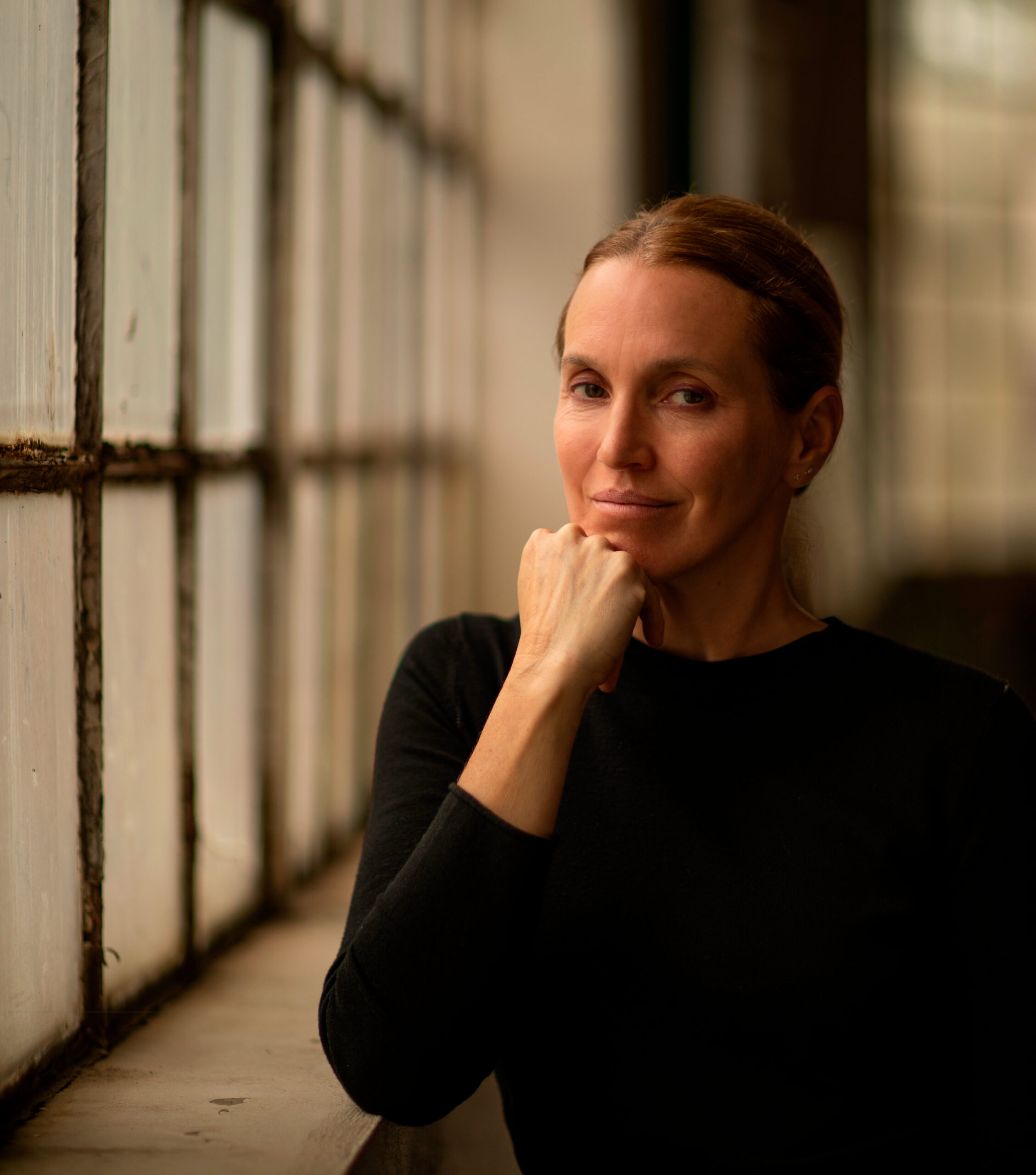
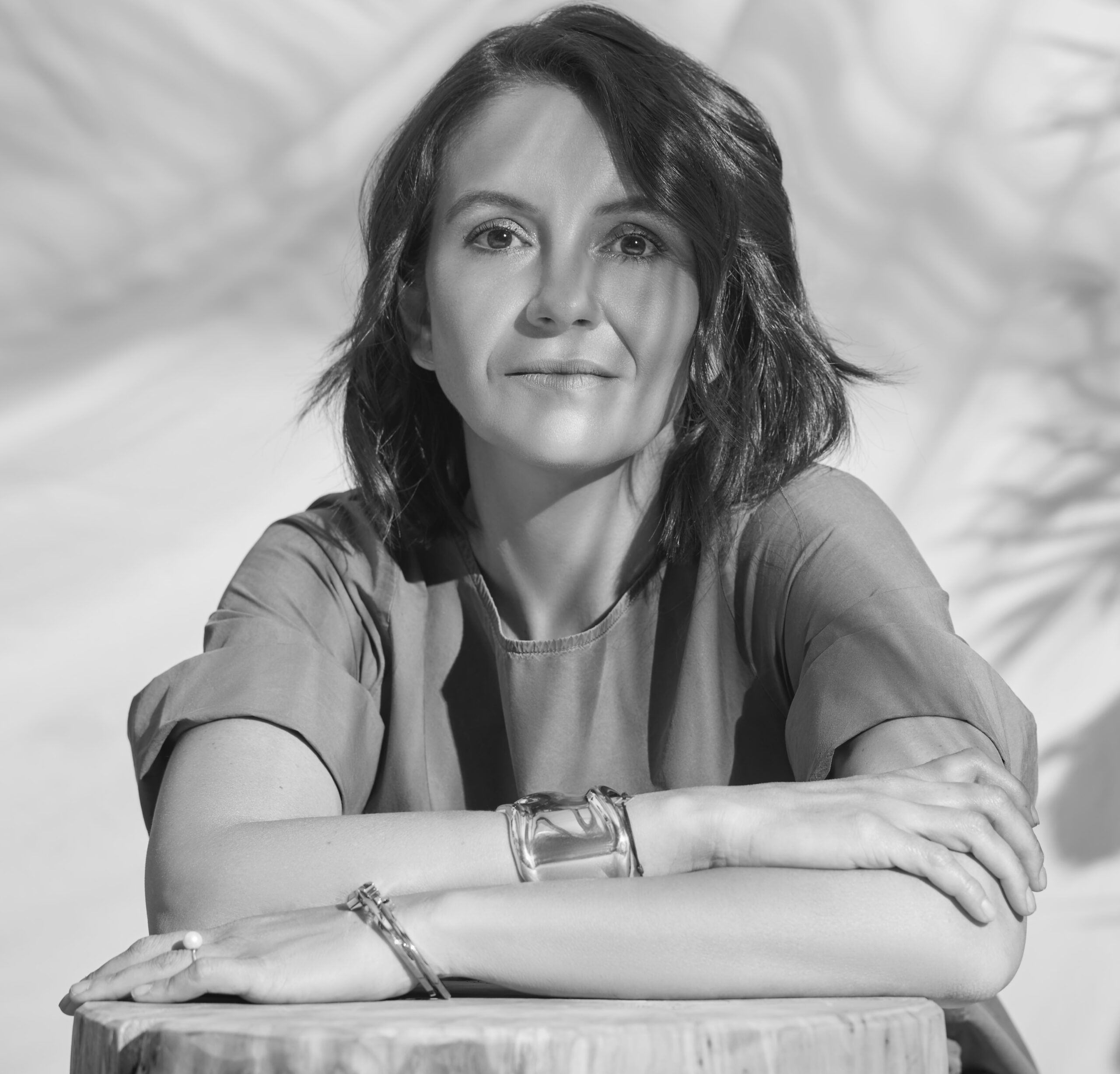
DIVIA Award 2023 Finalist Noella Nibakuze: “Creating spaces for women for mutual support is so essential.”

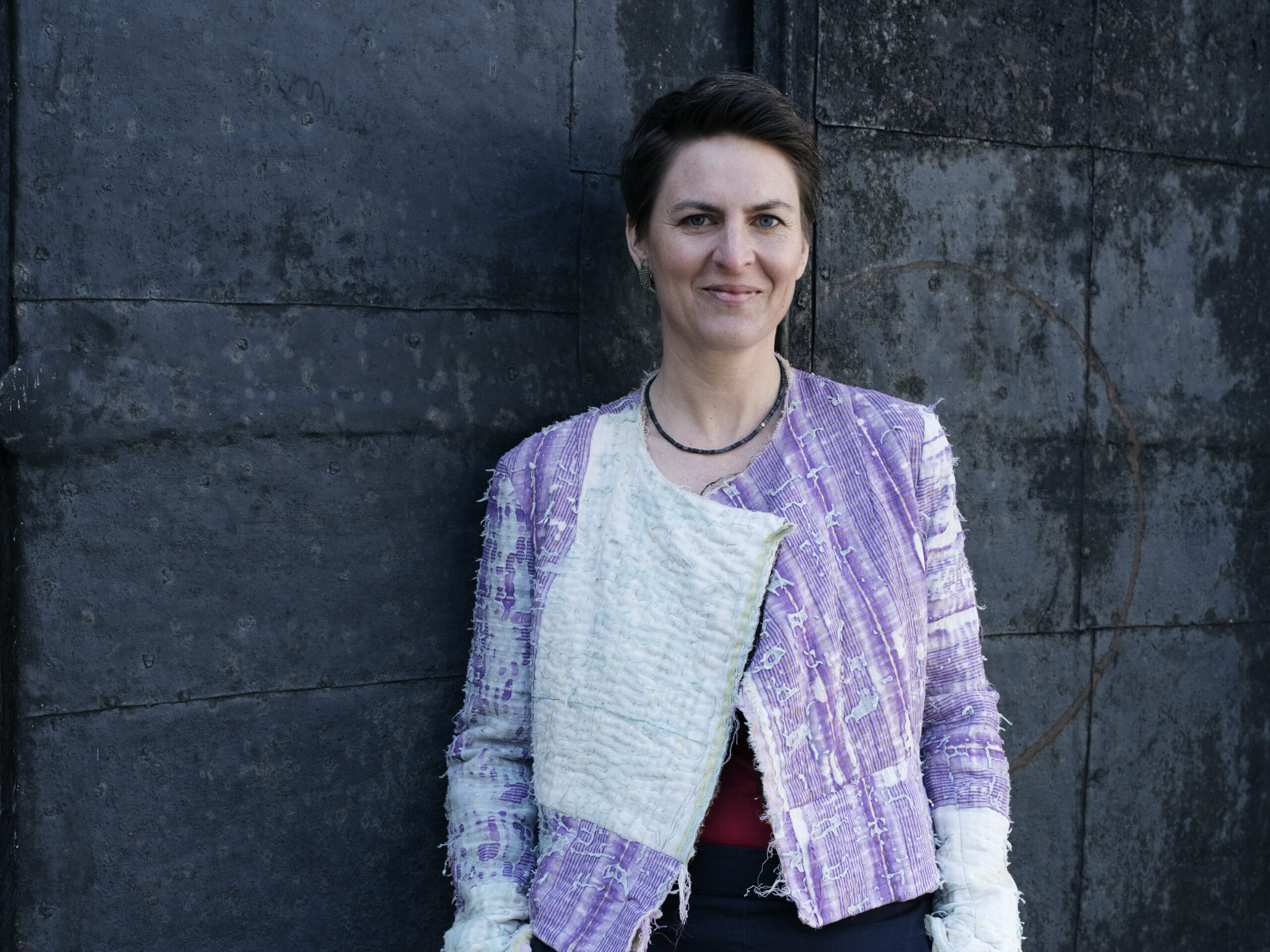
Credit: MASS Design Group

Words: Veronika Lukashevich

A year and a half after the first DIVIA Award Ceremony in Venice, we catch up with finalist Noella Nibakuze to discuss her journey into motherhood, the transformative power of mentorship, and her mission to leave an enduring legacy on Rwanda’s architectural landscape.

The past year has brought many changes to Noella Nibakuze’s life. When we first met in person at DIVIA’s inaugural award event during the 2023 Biennale in Venice, she was a newlywed, having recently married her husband, Nelson. Today, as we connect online, she is at home, juggling life as a new mother with working remotely full-time after maternity leave.

“Flexibility has been key,” she reflects, crediting her employer, MASS Design Group, where she works as Design Director in the Kigali office. “When I first started at MASS, most of us were young and didn’t have children. Over time, the company culture shifted to accommodate family life.”

MASS sets a high standard for family-friendly policies, particularly in Rwanda, where parental leave is often limited—maternity leave generally lasts 16 weeks, while typical paternity leave is just four days. At MASS, however, fathers are entitled to three and a half months off. “Parents can even extend that to up to four and a half months, depending on holidays,” Noella notes. “It’s a significant step forward, though there’s still room for improvement.”

“Families or partners often struggle to understand the long hours, which can discourage women from continuing in the profession.”

The family-focused ethos has led to tangible changes, such as the creation of a dedicated pumping room for mothers—a need identified by Noella and her colleagues through the company’s Women’s Group. “The idea came out of our discussions,” she explains. “We realized how important it was to provide a private, safe space for mothers.”

The women’s group serves as a platform for mentorship and support—not only within MASS but also in the broader architectural community—breaking down barriers for women in the profession while addressing challenges such as work-life balance and time management. 

With its notoriously demanding hours, architecture remains a challenging field for women. In Rwanda, only 13% of architects are women, with even fewer represented in engineering. “Motherhood adds another layer of complexity,” Noella explains. “Families or partners often struggle to understand the long hours, which can discourage women from continuing in the profession. That’s why creating spaces for mutual support is so essential.”
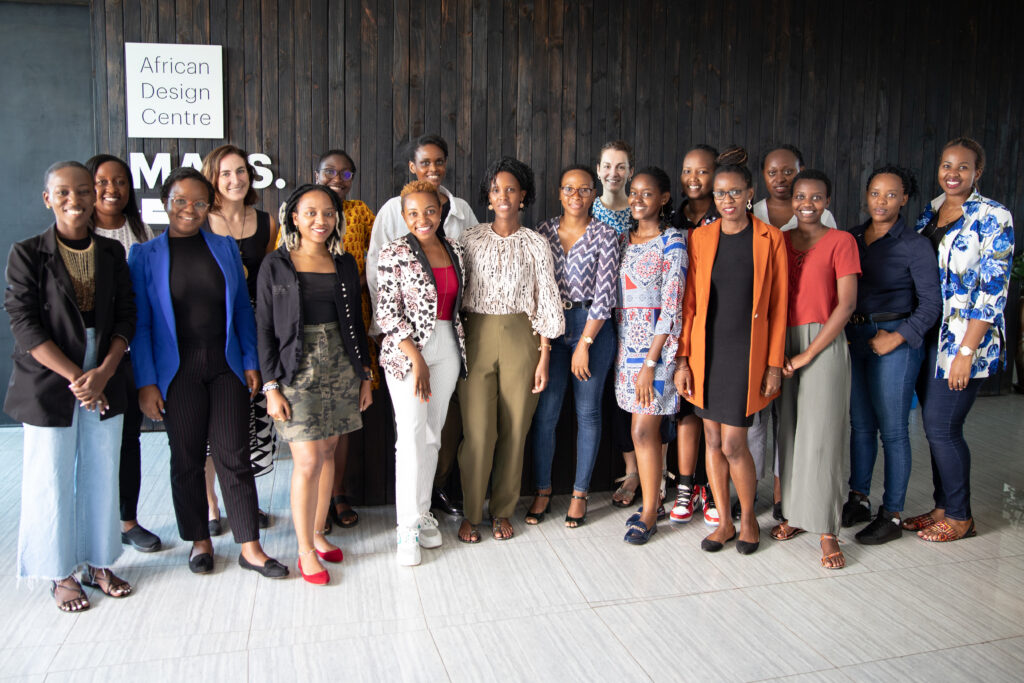
MASS's Women's Group. Photographer: Roger Biziyaremye

Motherhood has profoundly influenced Noella’s personal perspective and shaped the direction of her work. “It’s made my work feel even more personal,” she shares. “I think about the schools I’d want my child to attend. That’s why I’m so passionate about designing spaces for children and families.”

This focus aligns with one of the key priorities of MASS’s new three-year strategy, which places a strong emphasis on the educational and entrepreneurship sectors. “We are working with governments and education stakeholders to develop policies and design guidelines for schools and workspaces,” she says. The strategy also includes fundraising for additional research, with plans to publish their findings—potentially in a book—on how classrooms in Africa can support both formal and informal learning through play and creativity.

Building on this foundation, the team is also dedicated to innovating and creating improved learning environments, which should help “tackle issues like student dropouts at primary and secondary levels and provide opportunities for employment or entrepreneurship.”

“There isn’t a single architectural language [in Rwanda]. Most of us studied abroad, so our work reflects a mix of influences.”

When I ask Noella to describe her idea of the perfect school, she mentions the importance of learning in one’s native language: “It fosters pride in our culture and identity as Rwandans and Africans.”

Today, many children in Rwanda attend private schools with Westernized curriculums, which can create confusion about their identity. Public schools, on the other hand, are often underfunded with poorly trained teachers. “My dream is for schools in Kigali and rural areas alike to provide equal standards in facilities, curricula, and teaching quality,” she says.

Noella’s expertise and insight into the architectural world make it hard to envision her in any other profession. Growing up with a father who was both a contractor and a sculptor, she developed an early fascination with building. Yet, the path ahead was anything but clear. “Back then, architecture wasn’t something people talked about in Rwanda. I didn’t even know any architects,” she reflects.

At the time, Rwanda had no architecture schools—the first opened in 2008—so she moved to South Africa to pursue her studies. It was an opportunity to expand her horizons and gain knowledge beyond her home country. “Once I started studying, I fell in love with architecture. Despite the pressure, I never considered dropping out—I knew I’d made the right choice,” Noella says.

“I would want to create a smaller, more nimble version of MASS, making services that are feasible for every Rwandan.”

Her early career unfolded against a backdrop of significant challenges. At the time, much of the construction work in Kigali was driven by engineers focused on speed rather than sustainability, as the city faced the pressures of rapid urbanization. This marked a stark contrast to earlier decades, such as the 1980s and 1990s, when there was a focus on environmental consciousness and the use of local materials. By the 2000s, architectural trends began to shift toward imported styles, heavily influenced by China, favoring designs featuring extensive glass and other unsustainable materials.

Thankfully, over the past 10 to 15 years, there’s been another shift back toward sustainability. “Organizations like MASS have shown what’s possible with local materials and environmentally friendly designs,” Noella says. People are becoming more aware of architecture’s potential, and the building codes now reflect these priorities. “It’s exciting to see a growing interest in architecture that combines global influences with local needs.”

Group photo at the DIVIA Award 2023 ceremony in Venice by Nicanor Garcia: f.l.t.r.: Jury member Martha Thorne, DIVIA editor Veronika Lukashevich, DIVIA finalists Tosin Oshinowo, Noella Nibakuze, DIVIA winner Marta Maccaglia, DIVIA finalist Liza Fior, DIVIA Founder and Chair Ursula Schwitalla

Together with a group of fellow Rwandan architects, Noella is currently at the forefront of shaping her country’s architectural identity, striving to define what it means to build authentically in Rwanda. “There isn’t a single architectural language here,” she explains. “Most of us studied abroad—in South Africa, the U.S., or Europe—so our work reflects a mix of influences.”

This blend of perspectives has also influenced her aspirations as she dreams of opening her own studio someday. “I would want to create a smaller, more nimble version of MASS, making services that are feasible for every Rwandan,” she shares.

Noella’s vision includes sustainable housing designs that cater to local needs while empowering women in architecture and related fields. She hopes to make this transition sometime in the future, acknowledging the learning curve ahead. Managing a business is a whole other skill set, so she’s considering taking a course to prepare for it, all the while feeling supported by her company. “I believe it’s possible, especially because MASS’s philosophy has always been about mentoring local architects, with the potential outcome of them opening their own offices if they choose to,” she reflects.

This philosophy of mentorship and empowerment resonates deeply with Noella, who has also found support in being a finalist for the DIVIA Award 2023. The honor not only celebrated her achievements but also connected her with a global network of women, including fellow finalist May al-Ibrashy from Egypt, Tosin Oshinowo from Nigeria, and winner Marta Maccaglia from Peru, with whom she continues to stay in touch.

For her, this recognition has been about more than personal success. “Coming from Rwanda and being on these big platforms—it’s not easy, trust me,” she says. (Following her recognition as a finalist, she also served as a judge for the Dezeen Awards 2024.) “I’m very aware of that and of how privileged I am to be there. I see it as a duty. It’s about showing others that it’s possible—you can come from Rwanda, from Africa, and achieve great things.”

As Rwanda’s architectural language evolves, Noella continues to bridge global influences with local traditions. Her work challenges stereotypes, empowers women, and envisions a future where architecture is a tool for social transformation.

In her own words, “Representation matters. When young women see someone like me—a mother, an architect, a leader—they realize they can do it too. That’s the legacy I want to leave.”

And it’s a legacy that’s already well underway.
To learn more about Noella Nibakuze and other DIVIA Award 2023 finalists, please check out this catalogue by clicking on the image.

Did you like this profile? Make sure to share it on your socials and tag us!

LinkedIn

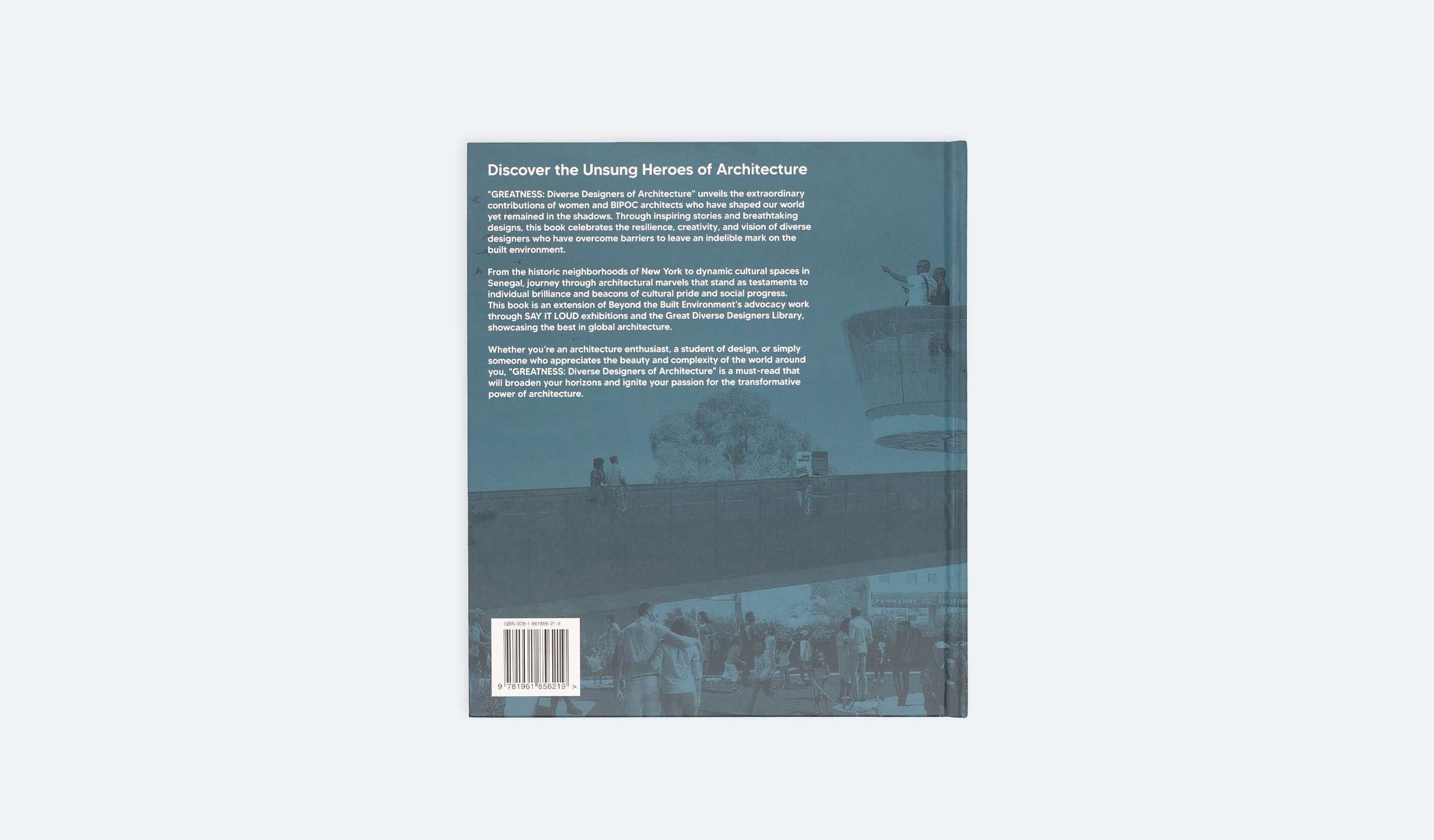
Architect and activist Pascale Sablan on standing up for marginalized communities and her new book Greatness

Photographer: Stanley Jordan

In a profession that often overlooks marginalized communities, woman architect Pascale Sablan is redefining the narrative. She shares her experiences with discrimination, the value of self-worth, and the inspiration behind her new book GREATNESS.

For those familiar with the wide-ranging work of Pascale Sablan (and, let’s be honest, in the architectural field that’s most people), it might come as a surprise that her journey into the profession began entirely by accident. Speaking over Zoom from her New York apartment, she recalls a story: “As I’m drawing and laying it out with a pencil first, a person walks by and he goes, ‘Wow, you can draw straight lines without a ruler. That’s a great skill for an architect to have,’ and just keeps walking.” She tells me about the day she was painting a mural for the Pomonok Community Center in Queens. “When he said it, I was like, ‘Oh my God. That’s it!”’

It’s not lost on her that without that brief encounter, her path to becoming an architect might never have unfolded. Still, the moment planted a seed in the then eleven-year-old Pascale, who was already skipping ballet lessons to join her brother in art classes. Her mother, however, was less enthused about her newfound interest. “She’d already bought me a tutu,” Pascale says, smiling.

“I identify my leaders and the superpowers of everybody in the office.”

Following that stranger’s advice certainly paid off. Today, Pascale Sablan stands as the 315th living African American woman to achieve licensure as an architect in the United States. In January 2024, after joining the firm as an associate in 2021, she was appointed CEO of Adjaye Associates’ New York studio. In this role, she leads projects across North and South America and the Caribbean while shaping the office’s strategic direction by prioritizing community-centered projects, engagement programming, and advocacy initiatives.

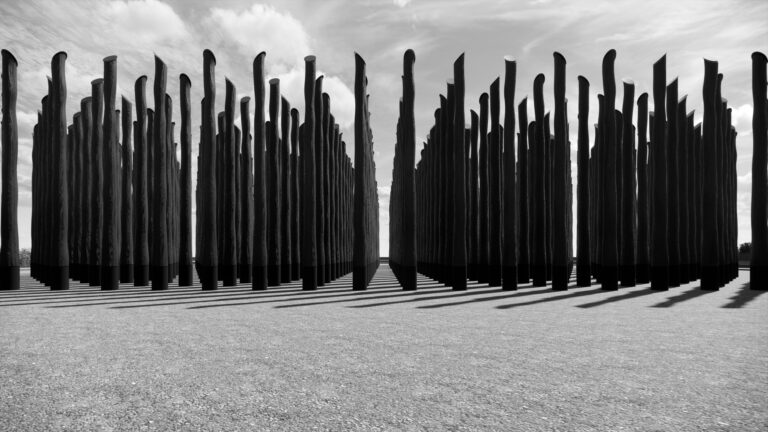
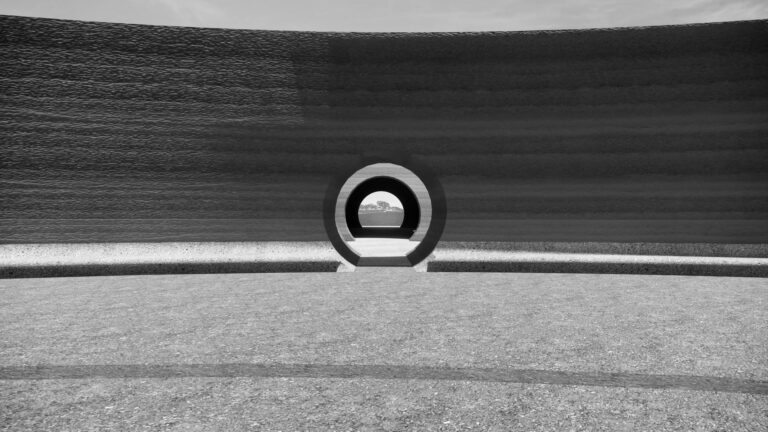
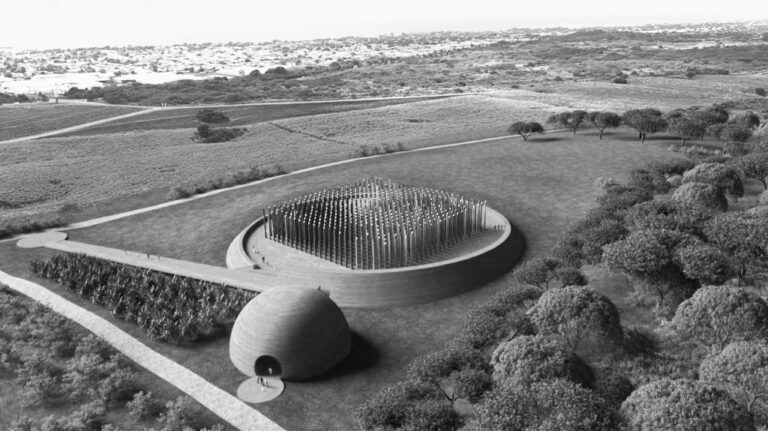
One such project is the Newton Enslaved Burial Ground Memorial in Barbados. The area was designated a UNESCO Slave Route in 2001 following an Archaeological investigation revealing evidence of the internment of approximately 570 enslaved Africans. It is a part of Barbadian history that has been overlooked and the project will not only serve as a dignified memorial to the interred souls, but also as a global research institute with access to the Barbados National Archives.

“David [Adjaye] designed the memorial to be constructed from compressed soil, clay, minerals and stone, so that it is literally built of the earth,” Pascale explains. “Not only is this the most natural and sustainable way of making a building that coexists with nature, but it is also a physical manifestation of the past, reformed into a narrative that speaks of hope and renewal.”

[The credit of the renderings below belongs to Adjaye Associates]

This deep sense of connection—to history, to nature, and to people—extends to Pascale’s approach to leadership. Despite her demanding responsibilities, she doesn’t let the hierarchical nature of office life dictate her personal working culture. She prefers to have her desk in the middle of the room, staying in the thick of it with everyone else. Pascale is also intentional about giving everyone her undivided attention, be it a seasoned employee or an intern. “I identify my leaders and the superpowers of everybody in the office, allowing them to flex that, as well as say, ‘Hey, here’s where I need help’, and provide resources, support, mentorship,” she explains. “Also, everyone requires a different tongue when you speak to them, which is something I learned from my numerous siblings.”

Growing up in a lively household in Queens as the second oldest of ten children, Pascale learned the value of effective communication early on. “If I wanted my youngest brother to do something, I’d have to frame it as cool. If I wanted my younger sister to do something, I’d talk about how impactful it will be,” she says. “Communication is not just saying what you feel, but also knowing your audience. That’s been a really helpful professional tool as well.” 

Pascale wasn’t just the sister keeping a watchful eye; she was also the one enthusiastically celebrating her siblings’ achievements. “They would be afraid to tell me their accomplishments because they knew the minute they told me, I would tell everyone,” she admits. “And I realized I just feel so proud of people that I find that highlighting and elevating other people brings me joy. And my siblings were the first test case for that.”

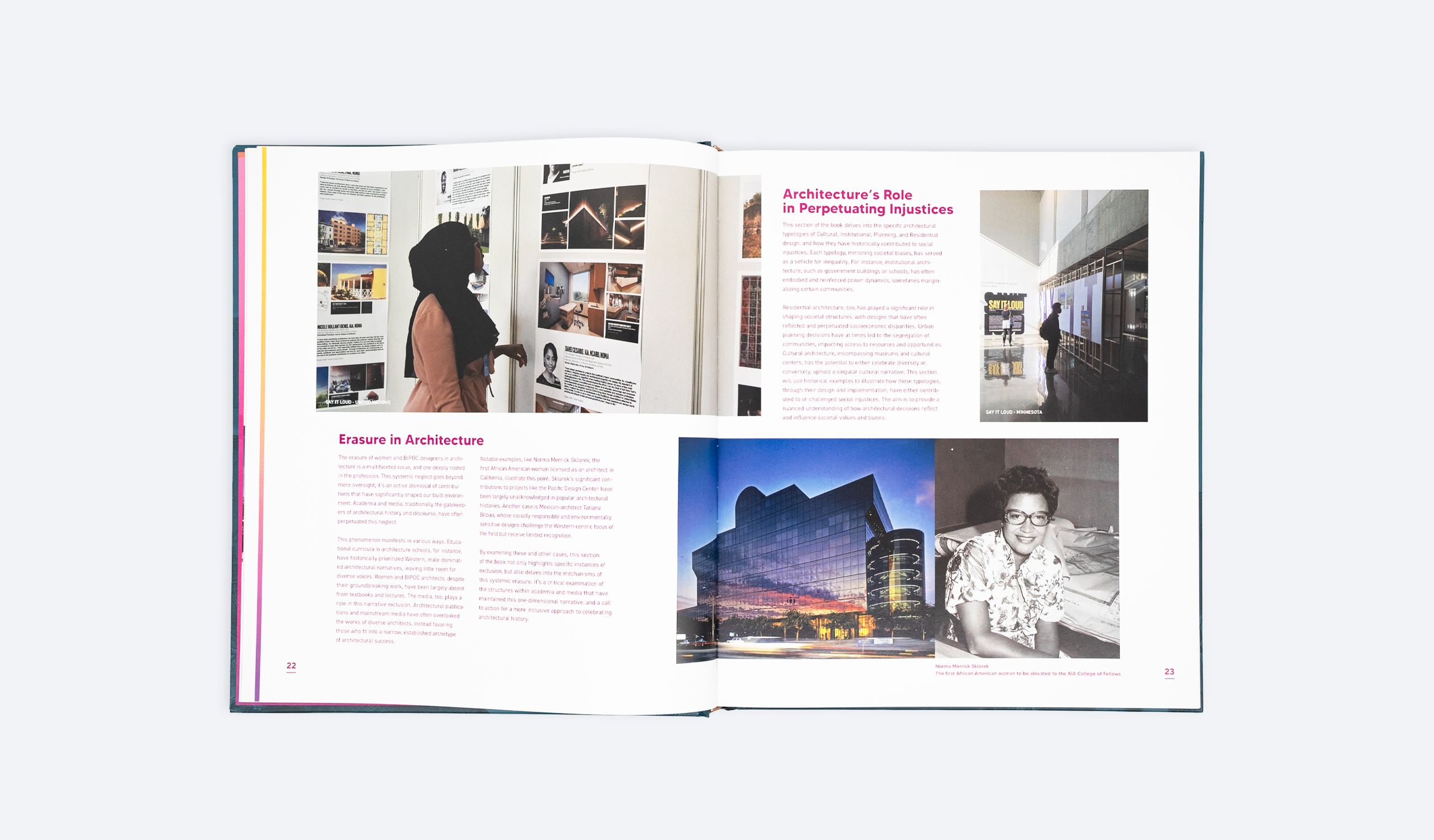
Knowing her talents, Pascale wasted no time putting them to positive use. In 2018, she founded the nonprofit Beyond the Built Environment, driven by the need to uplift women and BIPOC designers to help marginalized communities. Together with her team, she provides various opportunities for education, mentorship, and professional development. Among their standout initiatives is the SAY IT LOUD traveling exhibition, which has celebrated and amplified the contributions of local women and BIPOC designers in 50 exhibitions worldwide. In 2020, amidst the COVID-19 lockdowns, she transformed all past exhibitions into accessible virtual galleries to ensure the mission continued.

When I ask her about the accomplishment of the exhibition, she is quick to point out the collective effort. “It’s not about my idea; it’s about thousands of people coming together to create something impactful,” Pascale says. “The most stunning aspect of architecture is the collaborative nature of it. Nothing takes one person to do—not even these curls, right?” She smiles, pointing at her head.

“The most stunning aspect of architecture is the collaborative nature of it. Nothing takes one person to do—not even these curls, right?”

As you might have guessed, her advocacy doesn’t end here. Since 2023, Pascale has also been serving as the fifth woman president of the National Organization of Minority Architects (NOMA) in its 53-year-old history. During her tenure, which is about to conclude at the end of the year, she has expanded the organization’s global footprint by establishing two international chapters—a move that elevated the organization’s work and broadened its influence. But this wasn’t just about increasing reach; it was about recognizing the shared threads that connect the challenges faced by architects of color in the United States with those faced globally.

“We have unique experiences here, but there are universal through-lines in how these issues manifest around the world,” she explains. By fostering international connections, she ensured that NOMA’s members could participate in global conversations, leverage international resources, and collaborate on a broader scale. This vision has empowered NOMA’s members to look beyond domestic borders and contribute to meaningful change on a worldwide stage.

Balancing all these duties and responsibilities is no small feat, especially when a NOMA presidency alone requires up to 20 trips per year. “I’m very intentional about where I need to be and how long I need to be out,” Pascale shares. “I usually travel super early in the morning or very, very late at night so that I can keep and hold and respect the work day. I try to be as present with people as possible.”

Her discipline extends to her personal life. She wakes up at 4:30 a.m., carves out time for prayer, journaling, and exercise before arriving at the office about an hour before everyone else. On top of that, as I can tell by all the Legos scattered around her table, Pascale is also a mom. She is raising her 8-year-old son, so when her day at the office ends, she ensures work doesn’t intrude on family time. “When I’m home, my computer stays closed. He has my undivided attention.”

“We definitely tend to celebrate people after they pass, and this book is an intentional thing of saying ‘no, these are people who are currently practicing and providing design justice, and I want you to know all about them.”

Pascale’s activism and dedication are undoubtedly rooted in her personality, however, there was a defining incident early in her career that ignited her drive even further. When she was a student, a male professor asked her and a colleague to stand, declaring they would never become architects because they were women and Black. She shared the story in her inspiring keynote at DIVIA’s first Mind the Gap conference on November 1st at AEDES in Berlin, which she concluded with an encouraging declaration: “Many moons ago I was asked to stand, and I’ve been standing and fighting for us ever since. I hope you are inspired to stand with me.”

Watching her refuse to be discouraged is a powerful message for young women who have ever been told they don’t belong or can’t achieve something. This experience not only taught Pascale the importance of speaking out and boldly pursuing her ambitions but also the value of demanding what she rightfully deserves.

“I say it all the time, close mouths, don’t get fed, right? Understanding that aspect is also probably why most of my inhibitions or fear go out the window,” she says.

Photos: Oro Editions

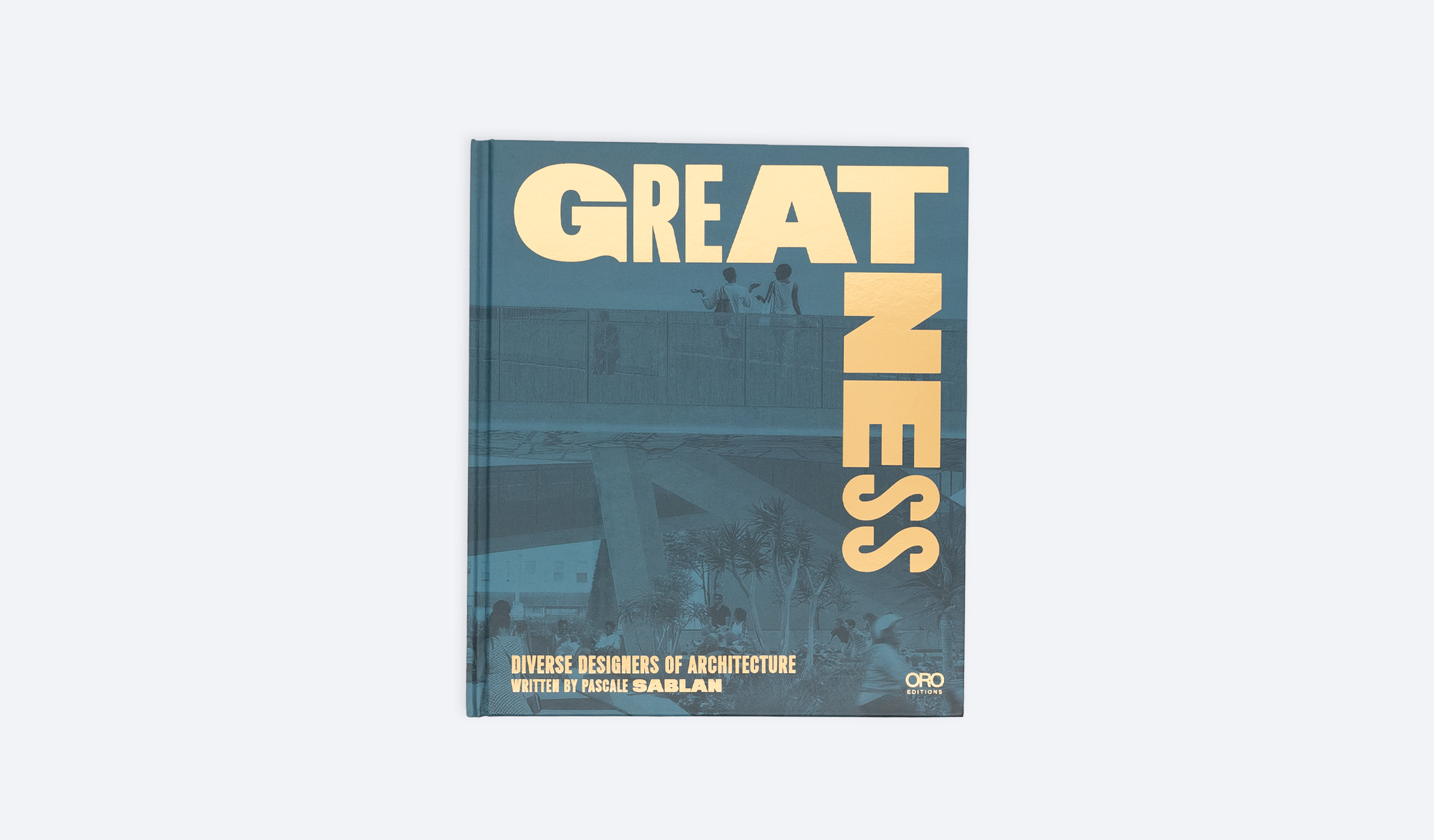
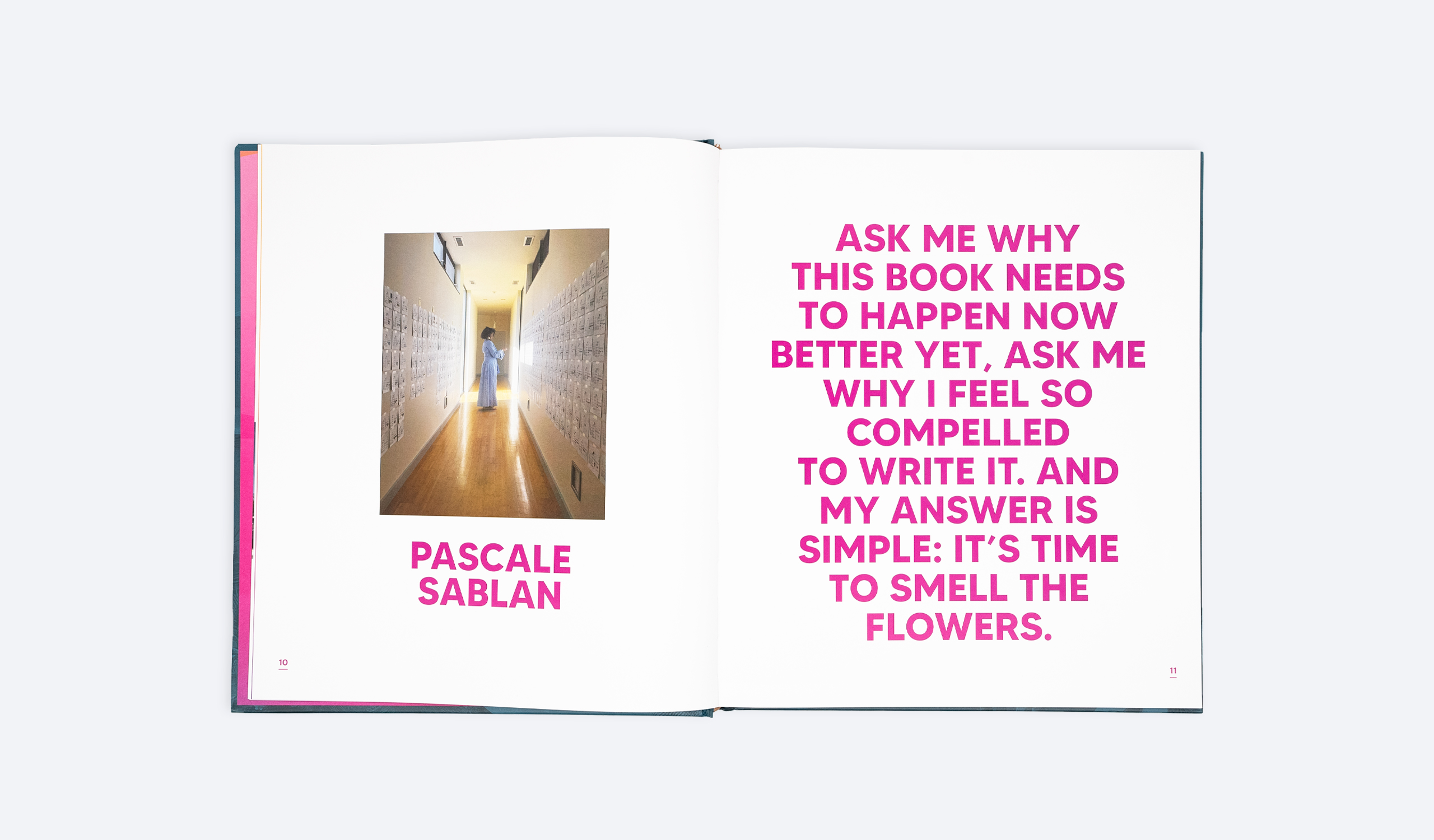
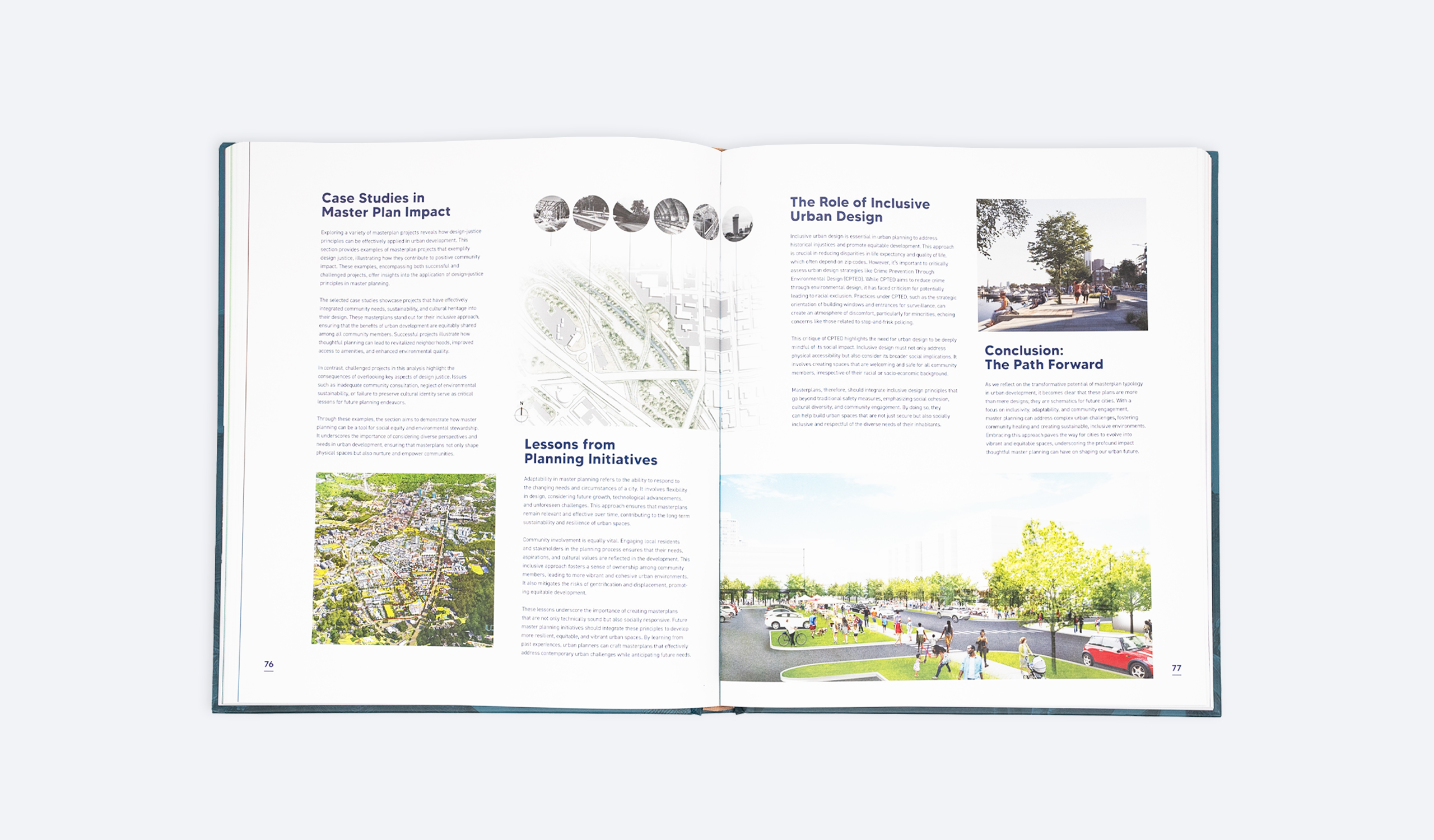
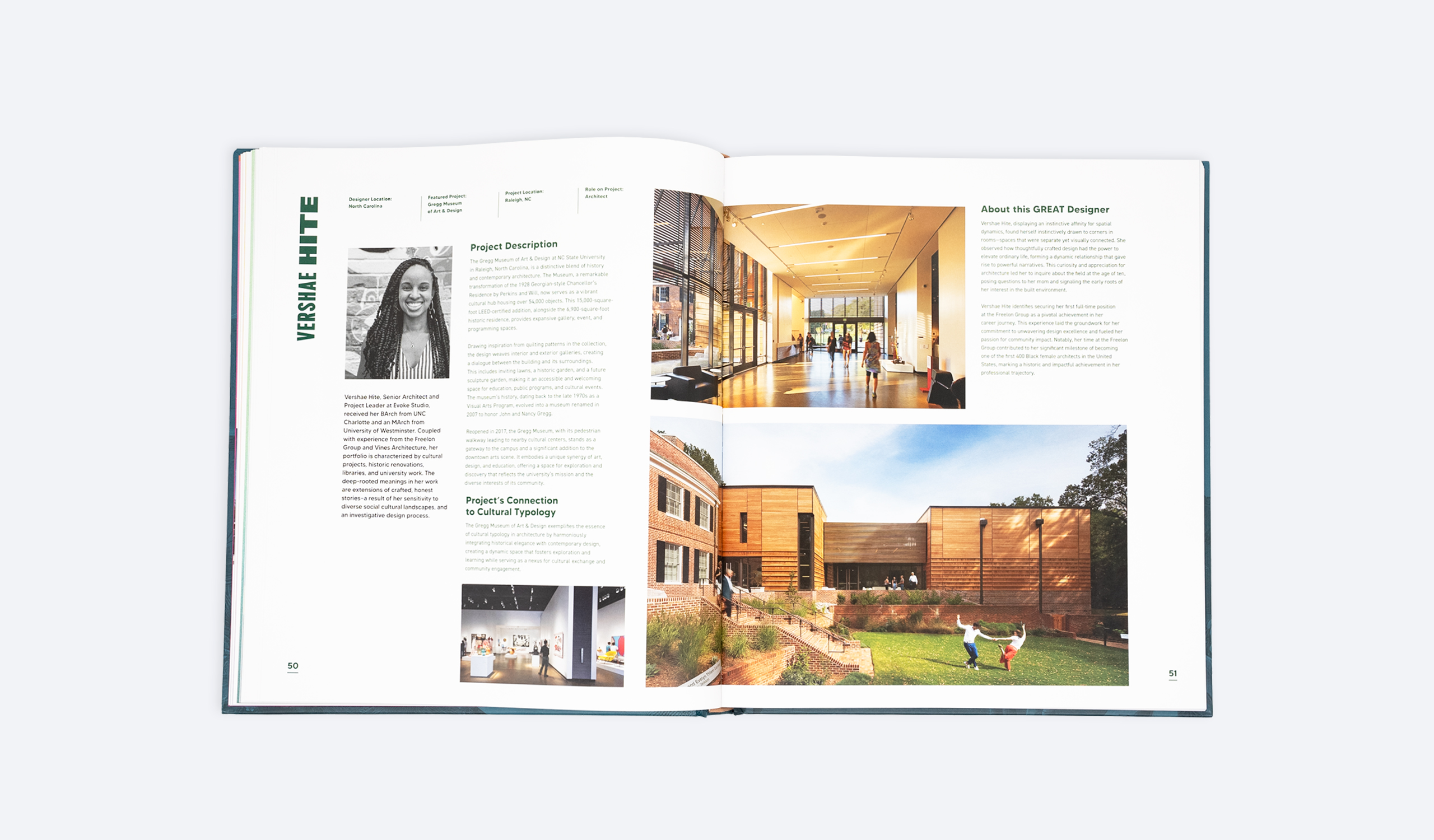
Pascale channels this spirit into her forthcoming book, GREATNESS: Diverse Designers of Architecture, set for release in February 2025 and already available for pre-order on Amazon, where it has topped several new release categories (Pascale’s goal is to make it on The New York Times bestseller list). GREATNESS reflects the mission Pascale has cultivated with her team at Beyond the Built Environment: celebrating the contributions of diverse designers and advocating for equitable communities.

The book, featuring 1,130 diverse designers from the GREAT Diverse Designers Library, offers a beautifully illustrated collection of stories that highlight the brilliance of 47 visionaries shaping the future of the architecture industry. It also examines how architectural design has historically perpetuated social injustices and erased women and BIPOC architects from history.

With this book, Pascale not only sets out to challenge the dismissive views of a former professor but also, as she writes, to “give folks their flowers—hopefully while they still have time to smell them.”

“I’m proud of it and really hope and pray that it makes a real impact in our literature and publishing world,” she shares. “We tend to celebrate people after they pass, but this book is an intentional effort to say, ‘No, these are people currently practicing and advancing design justice. I want you to know all about them.’”

Publisher Oro Editions fully embraced Pascale’s vision, ensuring that the entire team working on the book reflected the diversity it celebrates.

The book feels more relevant than ever, especially amid the troubling retreat of some American firms from their DEI initiatives due to economic pressures. “It’s important for me to leave the world a little easier and more accessible than I found it,” Pascale says.

While her journey is far from over, her remarkable achievements have already created a lasting legacy.

Did you like this profile? Make sure to share it on your socials and tag us!
LinkedIn

Anna Heringer: “Beauty has nothing to do with money”

German architect, sustainability advocate, and UNESCO honorary professor Anna Heringer wears many hats, but they all align with a single vision: to show that architecture is a tool for improving lives. To mark the first anniversary of HER STORY, Veronika Lukashevich spoke to DIVIA’s co-founder about working with clay, and creating a building for female tailors and people with disabilities in Bangladesh

Environmentalism runs in Anna Heringer’s veins. “I have green blood,” she says with a smile, speaking to me over Skype from her office in Laufen, the Bavarian town on the Austria-Germany border where she also grew up. Raised in a household that was largely self-sufficient in food and clothing—her father is an ecologist—Heringer spent her summers as a Scout, living what she describes as a “fully unplugged life.” “We’d spend two weeks in remote places, building small settlements with materials we found in nature. It was amazing to see how much you can create on your own, even at twelve years old.” These experiences, where she learnt firsthand how versatile architecture can be, left her feeling empowered. “Architecture provides identity and protection, but it also fosters team spirit and community. That was a significant lesson for me.”

Today, with two decades of experience building primarily in Asia, Africa and Europe, an honorary UNESCO professorship in Sustainable Development, and an Order of Merit awarded by Germany’s president Frank-Walter Steinmeier in 2022, Heringer is one of the most respected architects in the world. Celebrated for her use of natural materials like clay and bamboo, she is committed to socially responsible design and honoring local communities. A self-proclaimed “stubborn idealist,” she continues to embody the values that were instilled in her during childhood, perfectly combined in her first major project—the METI (Modern Education and Training Institute) School in Rudrapur, Bangladesh.

Completed in 2006 as the culmination of her diploma thesis, METI earned Heringer international recognition when it won the Aga Khan Award for Architecture in 2007. During construction, everyone was allowed to help out. “I wanted to give my future users, the kids who were the same age as I was when I was with the Scouts, the chance to participate,” Heringer says. “You never just build a building; you also build up a community—if you do it the right way. That’s something that we have forgotten in our part of the world.”

“If we make our decisions out of love for others, society, and the planet, sustainability happens in a completely natural way.”

Heringer first traveled to northern Bangladesh at 19 years old to volunteer with the NGO Dipshikha, the same organization with which she would later build the METI School. Initially, she had hoped to go to Senegal or Côte d’Ivoire (“I was very much into African music and learning percussion”), but was offered a volunteering position in Bangladesh instead. At first, the change in plans left her skeptical: “We have so many prejudices when it comes to the Global South. My head said: ‘absolutely no,’ but my gut feeling said, ‘just go.’ Luckily, I followed my gut, and it was the best decision. Now, the moment I get off the plane there, I’m home.”

Already during her early days in Rudrapur, Heringer learned about the importance of using local resources after observing villagers crafting everything they needed for daily life by hand. “I quickly realized that beauty has nothing to do with money, but with awareness, care, and love,” she says. Hearing this, it’s not surprising then that she has updated the famous design principle “form follows function” to “form follows love” and integrated it in her practice. “If we make our decisions out of love for others, society, and the planet, sustainability happens in a completely natural way,” she explains.

(The hardcopy of Heringer’s eponymous book Form Follows Love that introduces the reader to her career and practice in the Global South and Global North will be published with Birkhäuser on 3 September 2024. The ebook is already available for purchase.)

Over the years, Heringer’s relationship with Dipshikha has only grown “stronger and stronger.” Their latest project is Anandaloy, a therapeutic center in Rudrapur designed for people with disabilities—a novel concept in Bangladesh, especially in rural areas where a high percentage of newborns with disabilities is often attributed to bad karma from past lives. This belief leads to concealment rather than inclusion of the affected in society. Poverty exacerbates this issue, as many adults are forced to work, leaving individuals with disabilities to fend for themselves during the day. “[Therapy centers are] not something people know about there,” Heringer explains.

But the mission of Anandaloy goes beyond providing therapeutic treatment. “It also offers opportunities for people with disabilities to learn, work, and engage with the community.” I feel compelled to share with her about a disabled member of my family and my perception that Europe—particularly mountainous Austria, where this relative lives—also lacks inclusive and interactive spaces designed specifically for those with special needs. She nods: “Architecture is often used as a tool to prove power or show off, but it also has this fantastic capacity to focus on communities of people that are often overlooked.”

© Kurt Hoerbst

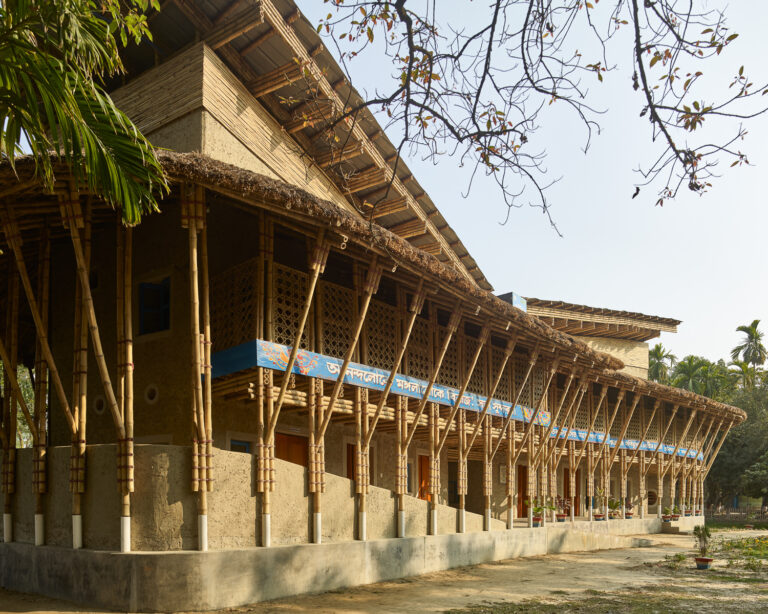
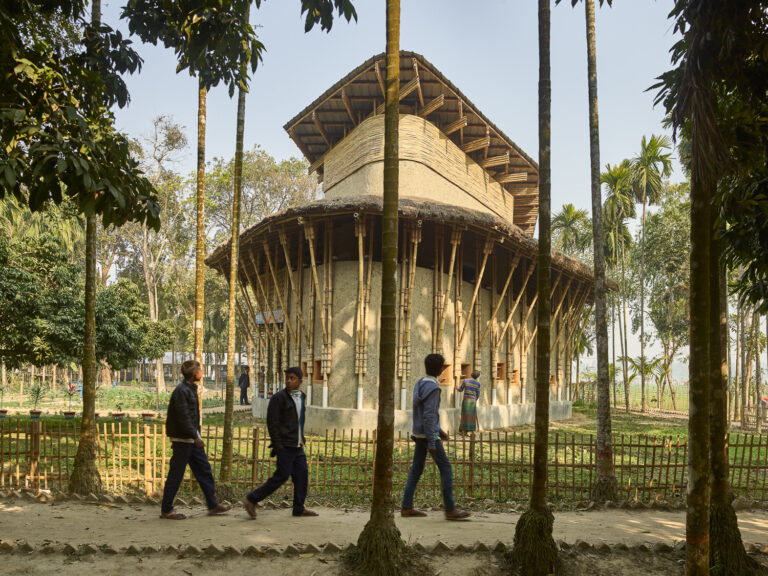
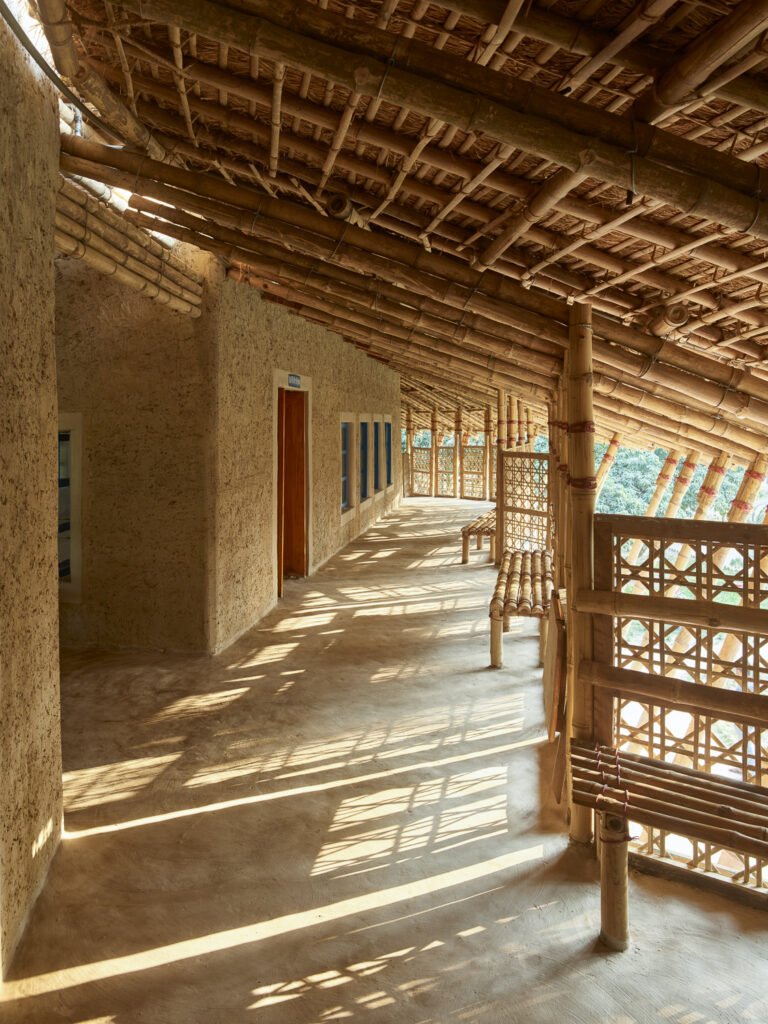
Constructed between September 2018 and January 2020, the Anandaloy center covers a floor area of 174 m² for rooms and 180 m² for the veranda. The building is made from locally sourced materials, including fired brick for the foundation, mud walls built using the cob technique (clay-rich soil is mixed with water, straw and a dough-like consistency and sculpted into walls while still wet), bamboo pillars and roof structure, a straw roof for the lower section, and a metal sheet roof for the upper part. The ramp, a dominant feature that “dances around the inner structure,” sparked conversation among the villagers. “People asked, ‘Why do we need a ramp?’ Then they thought about why it is important to include and provide spaces for everyone in the society. It’s beautiful how architecture can trigger these kinds of discussions,” Heringer reflects.

“… Within three months, you have 30 new tailors, but then these women end up in the textile factories that produce our cheap clothes under inhumane conditions.”

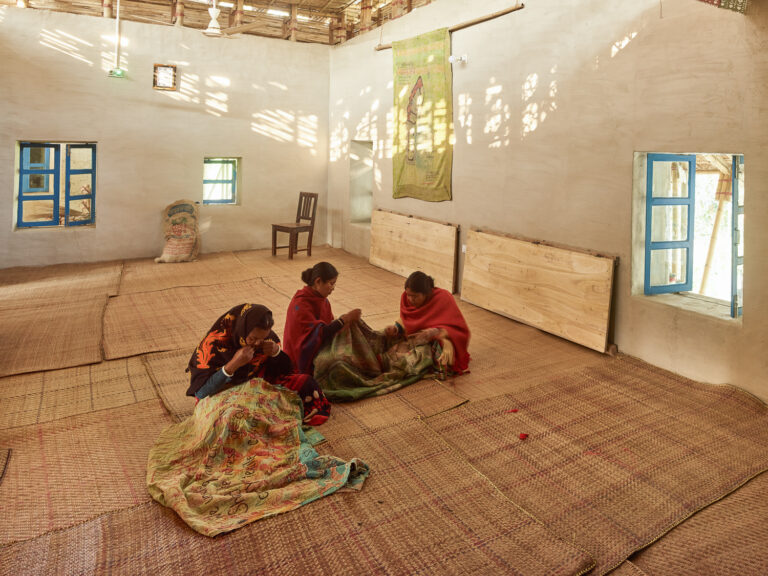
Due to land scarcity in Bangladesh, she also decided to add a second level to use as a workspace for female textile workers. She came up with the idea after witnessing severe environmental degradation, labor exploitation, and the misguided attempts of development aid to address these issues. “I noticed that the women were offered tailoring trainings because it’s one of the few professions available to them in that context,” Heringer says. Within three months, you have 30 new tailors, but then these women end up in the textile factories that produce our cheap clothes under inhumane conditions.”

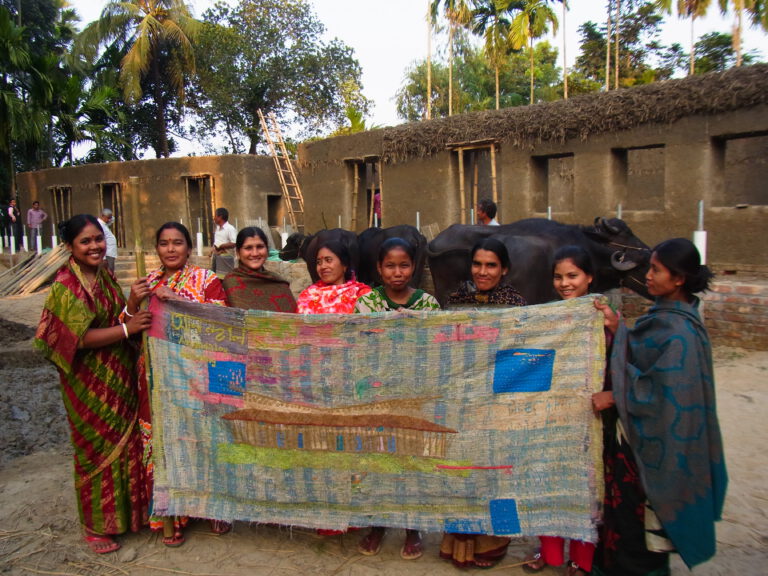
Wanting to create opportunities that would enable these women to stay in their village, Heringer, along with Bavarian tailors Veronika Lena Lang, Elke Burmeister, and long-term collaborator Dipshikha, established Dipdii Textiles, a label dedicated to fair textile production. “When it comes to urbanism, the driving forces for shaping those settlements in Bangladesh is the garment sector. I wanted to do something against this rural to urban migration,” she explains.


The employed tailors keep the traditions alive by hand stitching upcycled sari blankets and pillows. The role of a fashion label creator is somewhat unusual for an architect, as it keeps Heringer tied to the building after it’s been constructed. “It’s a challenge,” she admits. “But it is also beautiful when all your passions come together. Combining women empowerment with creativity and architecture is beautiful.”

Heringer’s dedication to women’s representation is deeply rooted in her purpose, which is also why she felt compelled to co-found DIVIA in 2021. “As a woman, I often feel like we have to fight on our own a lot of the time. Having hubs and groups of people to share [challenges] with is important.” But it’s more than that for her—it’s also about changing the system that has been favoring one specific approach over other useful alternatives. “What do we bring to the table that men cannot?” she poses the question before answering it herself: “A focus on the process, not just the outcome. It’s about care and empathy, which are also reflected in a good process. It’s about intuition and not just the facts, figures and research, or going for the most fascinating new tools, technologies and materials.”

© Kurt Hoerbst

“There are so many issues that you don’t face when you’re a man. It’s important to publicly discuss this because the building sector is a harsh climate. It’s important to have a network of women to say to: Is this happening to you too?”

The architectural field is currently structured in favor of her male counterparts. “There are so many issues that you don’t face when you’re a man. It’s important to publicly discuss this because the building sector is a harsh climate. It’s important to just, you know, be able to have a network of women to say to: am I completely paranoid? Is this happening to you too? How do you deal with it and what can we do to change it?”

Heringer has lectured widely both at universities and conferences and says that the masculine energy dominates the academia the most. She doesn’t let it deter her, though, and remains focused on her goals and the students, encouraging them to trust their inner voice through the method called “claystorming.” In this process, they work with large clay models, designing purely with their hands. “Typically, the higher a university tanks, the harder it is for students to let go of their intellect,” she explains. “This way, we train our intuition. The best projects are always those that follow the gut instinct and bring joy to the design—and you get feedback immediately.”

Over the years, Heringer has arguably proved better than anyone how modern and versatile building with clay can be, though the practice itself isn’t entirely new. “You know, we always think that mud is just a material for small African hut, but it’s not. We have examples where earth has been used for all sorts of structures—palaces, hospitals, temples, single farmhouses, even skyscrapers,” she says.

“Isn’t it your dream?” I ask, recalling her TED Talk. “To build a skyscraper made entirely of clay in the middle of Manhattan?”

She smiles. “Well, now it’s probably more a skyscraper in Accra. But the real question is: How high do you need to go? The height of a tree, like six or seven stories, where you’re still in contact with the street—that seems more fitting, so I wouldn’t necessarily call it a skyscraper anymore. But I would love to work in dense spaces because it would look beautiful.”

Heringer is selective about the projects she takes on, trying not to jump too much between continents and cultures and giving herself the time to adjust. “It’s never just architecture; it profoundly changes my life as well,” she says. Currently, she’s working on two sustainability campuses: one for the community in Tatale, Ghana and one in the Bavarian town Traunstein in Germany, for the Campus St. Michael. “It’s nice to do them simultaneously. Both are for the Catholic Church [the former was commissioned by the Salesians of Don Bosco, while the latter is being overseen by the Roman Catholic Archdiocese of Munich and Freising], so it’s essentially the same client.”

When I ask her about the future, she is optimistic. “I’m excited to continue to bring African elements to Bavaria and some of the learnings from here to Ghana,” she says. “And if we bring all the globally existing talents to the table, then I have a lot of hope for the future. We have this fantastic material underneath our feet. All we need is the creativity to use it.”

Photos of Anandaloy Center: Kurt Hoerbst
Photos of Dipdii Textiles Embroidery: Günter König

Tatiana Bilbao

on 20 years of doing architecture “with people, for people, on behalf of people”

Photographer: Ana Hop

One of Mexico’s most visionary and sought-after architects, TATIANA BILBAO, speaks to Veronika Lukashevich about building a monastery, the importance of a diverse team, motherhood, and the simple joys of lazy Sundays

Tatiana Bilbao has Covid. 

On a Thursday evening in February in central Mexico City, I am preparing to speak to one of the country’s most prolific architects when her marketing team emails to inform me that she has tested positive for Coronavirus and will not be able to meet me. But as disappointing as this is, Bilbao’s strong sense of commitment won’t allow her to cancel on such short notice. She suggests I tour her studio instead and we speak via Zoom right after. I gratefully agree.

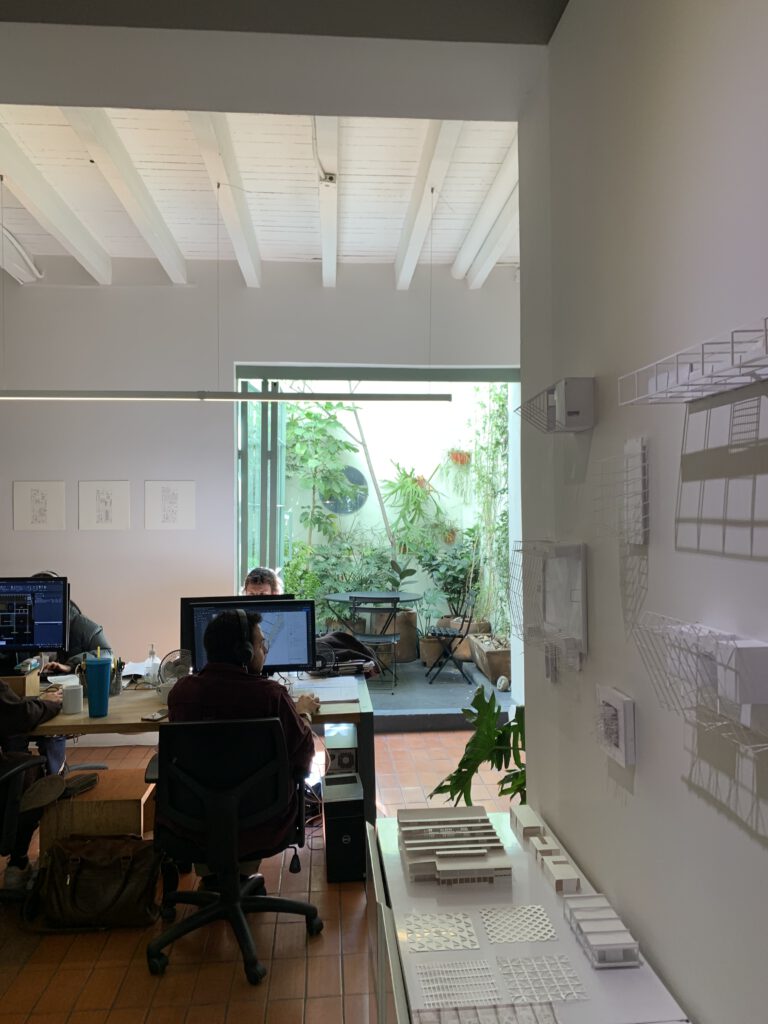
The next day, I am guided down a light-filled, colorful corridor to a room with glass doors adjacent to Bilbao’s office. As we pass an open office area (and a team of about 30 people hunched over their desks), I notice a wall covered with collages of photos, renderings, and drawings of a monastery she is currently building in Germany. I feel a surge of excitement—this is the project I am most eager to discuss with her.

Bilbao greets me cheerfully from the other side of the Zoom call, giving no hint that she’s been unwell. “I have had very few symptoms, so I feel fine,” she reassures me, then adds with a smile: “But I have nowhere to be now, so I have time for all your questions.”

“We’re never going to change anything just by saying it’s wrong. I always see failures as obstacles and look for ways to trespass them. As architects, we must rely on optimism.”

I indeed have many. Since opening her eponymous studio in 2004, one of the first women architects to do so in Mexico, Tatiana Bilbao has completed projects all over the world. Her work has been celebrated for her humanistic approach and sensitivity to cultural and environmental contexts—making her a leading figure in contemporary architecture. Known for integrating social values into her designs, Bilbao aims to create spaces that are both functional and emotionally resonant.

In a career spanning over 20 years, she has garnered international acclaim for projects such as the Sustainable Housing Model, which introduces affordable living solutions in Mexico, and the award-winning Culiacán Botanical Garden, a harmonious blend of art and nature. Last year, she completed the Sea of Cortez Research Center, an aquarium located in coastal Mazatlán, in the Mexican state of Sinaloa. The center aims to convey our connection to nature and demonstrate how architecture can help reintegrate us into our ecosystem.

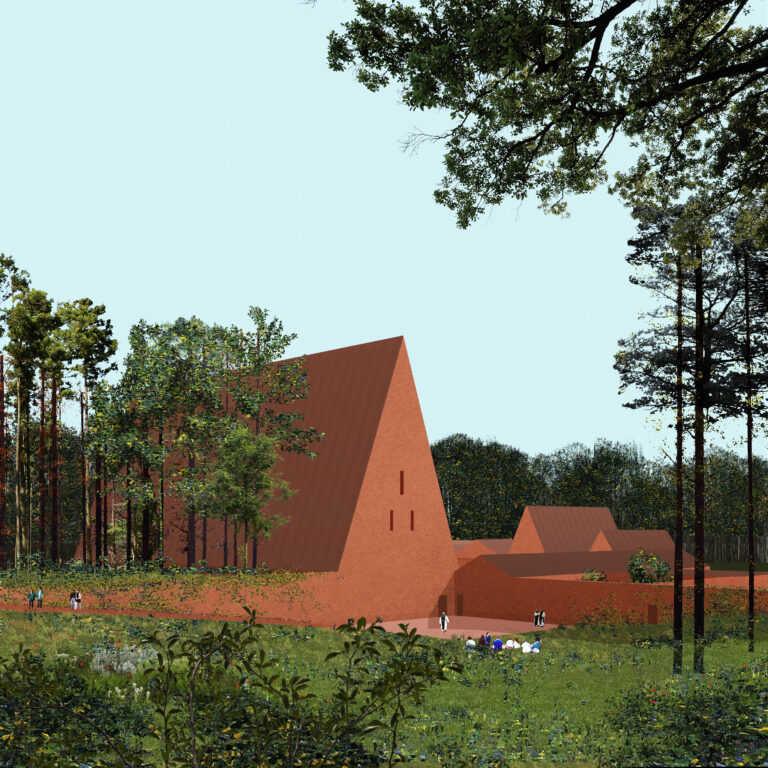
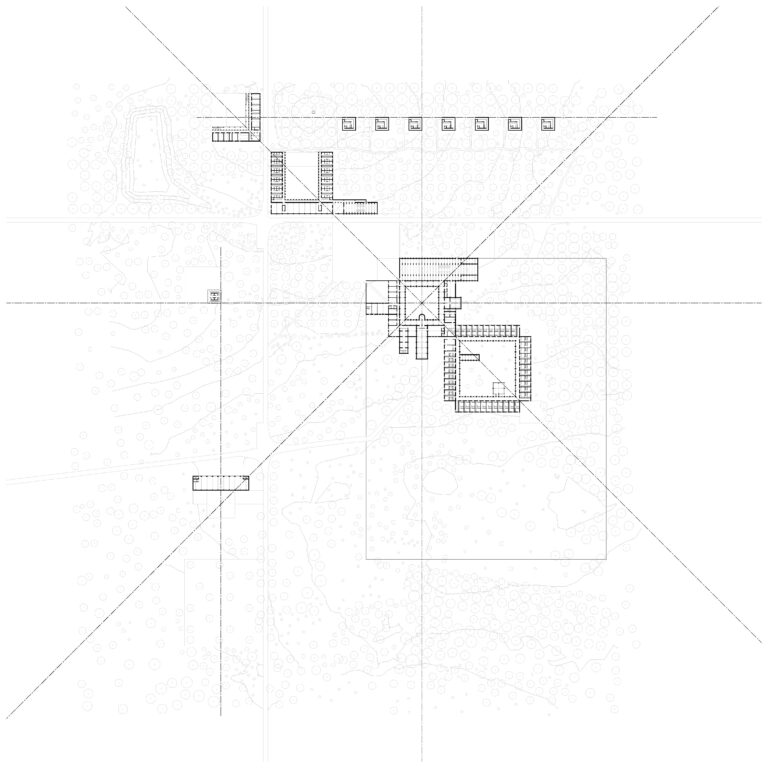
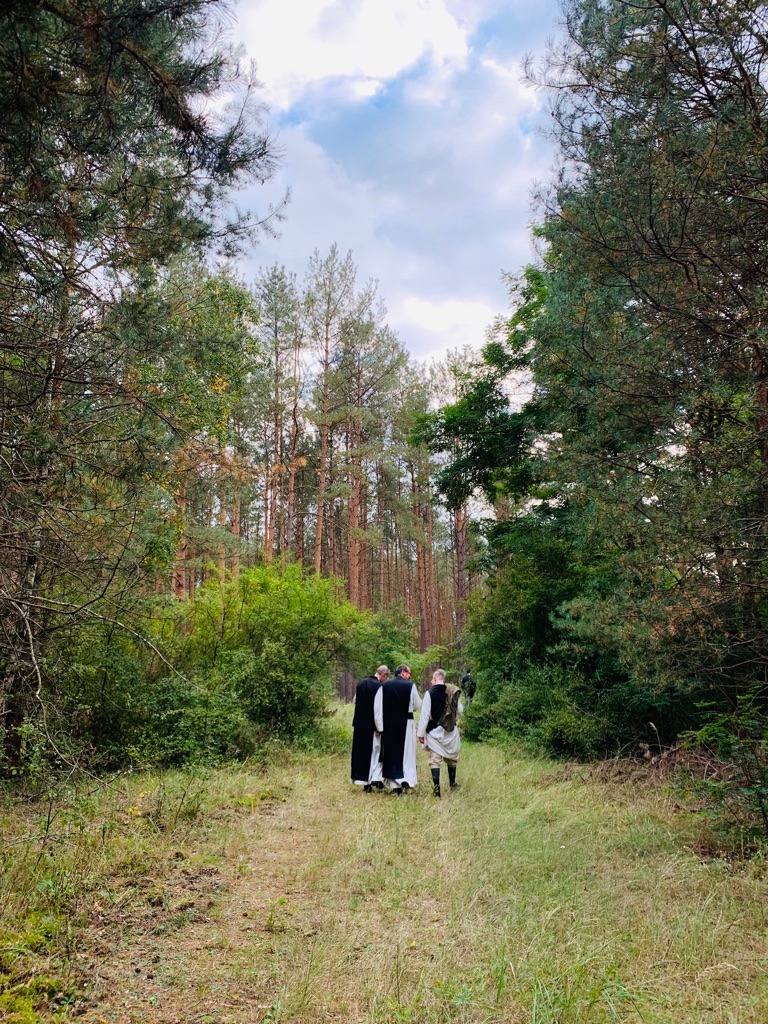
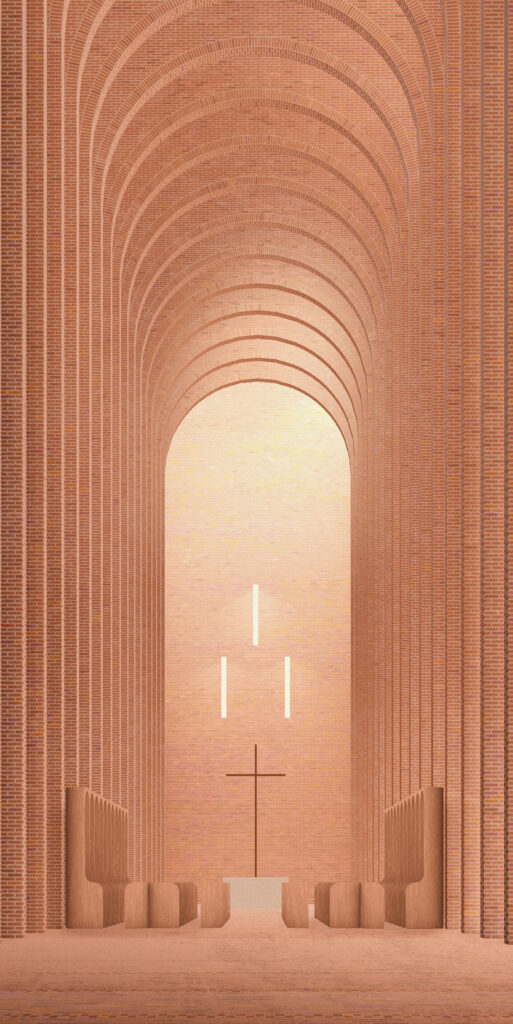
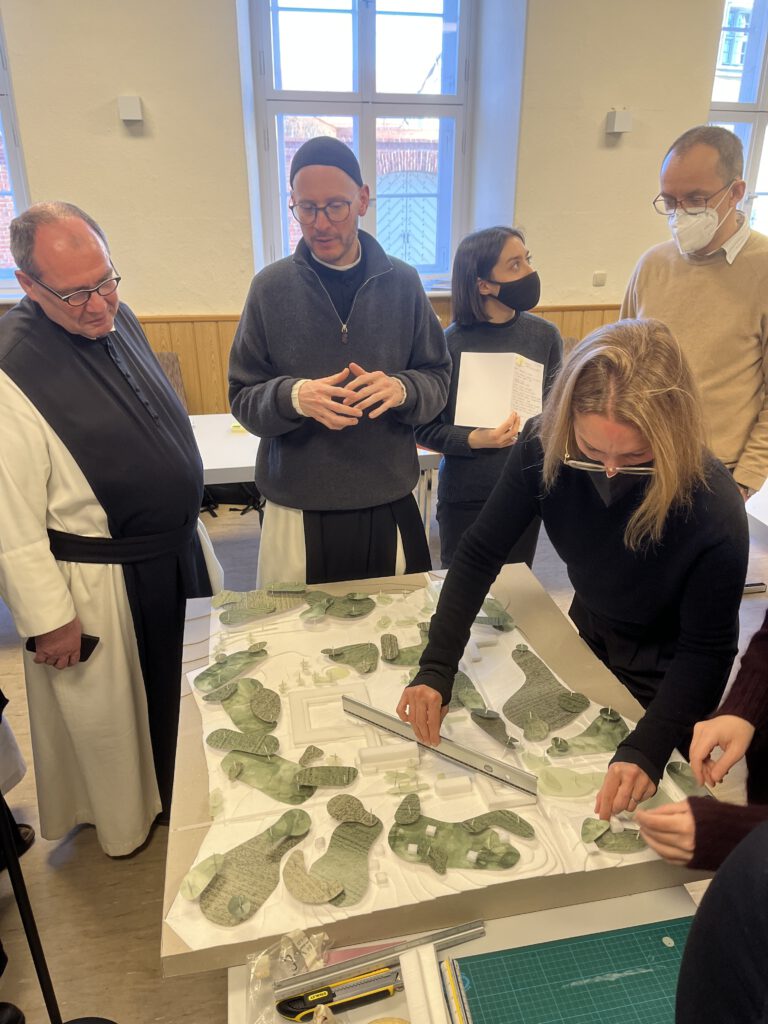
Few projects, however, can rival the ambition of her current endeavor: the new Cistercian monastery in eastern Germany. This monumental structure, the first of its kind to be built since the Middle Ages, is set in a secluded forest near the village of Treppeln (Neuzelle) in Brandenburg. “I have always said it is a lifetime project because it’s going to overpass my time [on Earth],” she says when I ask her how she’s processing this huge undertaking. “It’s [divided into] five phases, so it’s very ambitious, and I hope I’ll see at least two being built. But, for sure, it’s a life changing project in many regards.”

In what way? “It has changed my perception of time. The monks don’t live in the same time frame we do; for them, life is eternal, so they’re not anxious about when the building is going to be done,” she explains. 

The close interaction with the monks inspired her to reflect on longevity and the type of architecture we should be building. “Architecture is the representation of its time, but I’m not sure how aware we are of what that means, especially in contemporary society,” she begins. “I look at Dubai, for example, and it makes me wonder what of it will still be here in a thousand years—and I don’t see much.” 

Personally, Bilbao sets out to create buildings that can sustain the changes they will face throughout the years. “I always create architecture based on lives that haven’t passed through it [yet]. Building a monastery on these terms has helped me to think of time more profoundly. I think that it is a huge responsibility.”

From our conversation I realize that such leadership, especially for a project of this caliber, can only be successful when paired with the humility to recognize that nobody can do it on their own. Thankfully, Bilbao has never been the type of architect to shy away from collaborating with her peers. On the contrary. 

“I need them”, she says. “It’s a very selfish thing. Architecture has never been an individual act. If I were the only one to imagine how someone should live—poor them!” She widens her eyes for emphasis. For Bilbao, this also means surrounding herself with a culturally diverse team. “We will create many more opportunities for opening paths, accept more people, and discriminate less, if we have people with diverse visions on life sitting at the table.”

Bilbao is adamant about the importance of honoring the Cistercians’ deep connection to their living space and ritual practices. To ensure the new design aligns with the monks’ vision, she is collaborating with Dogma studio from Brussels, an architectural office experienced in monastic life, and MAIO from Barcelona, who she believes understand the balance between individual independence and community living. Together, they pay close attention to detail, from the structural layout to the acoustics, which are essential for the daily prayers and chants.

Neuzelle, Brandenburg, Germany. Photo credit: Tatiana Bilbao ESTUDIO, MAIO and Dogma

While faced with the challenge to create a modern building with such a rich historical legacy, Bilbao also went through a deep personal change.

“The project has impacted my relationship with faith incredibly. I come from a country that has a very difficult relationship with Catholicism. Our country was colonized through religion—it was the tool used to transform this territory into the Spanish regime,” says Bilbao, whose grandfather was the Spanish architect and politician Tomás Bilbao Hospitalet. When she first met the monks, Bilbao admits that her view of them could have subconsciously been influenced by her perception of the Catholic Church. Visiting the monastery, however, showed her that faith transcends the institution. “Faith is deeply personal. What I found beautiful about the monks is that they live their lives in their own way, without imposing their beliefs on others. So that was a very interesting process for me.”

Hearing this, it seems that Tatiana Bilbao approaches every project with deep care and empathy for diverse ways of living. She describes architecture as “a labor on which we rely to exist.” This also means, which says, deciding which projects to pursue and which professional requests to decline.

“For me, it is very difficult to understand how to do architecture only by thinking about composition, geometry, colors, or aesthetics. [We need] those tools, of course, but I always thought of architecture [as something to be done] with people, for people, on behalf of people. That is the overarching principle that really directs what I do in full.”

At the beginning of her career, Bilbao made these decisions intuitively, guided by a clear set of personal values. Today, her studio follows a written protocol outlining their principles and what they represent as an office. “We do not undertake any projects that prioritize the extraction of capital at the expense of people. No way,” she says, firmly.

“We will create many more opportunities for opening paths, accept more people, and discriminate less, if we have people with diverse visions on life sitting at the table.”

Photo credit: Tatiana Bilbao ESTUDIO, MAIO and Dogma

Bilbao is clear on what she stands for, but she is not naïve. She understands that architecture does not exist in a vacuum and is always intertwined with the larger system in which we live. Naturally, this means that any architectural pursuit hoping to effect change must respond to this reality. “We’re never going to change anything just by saying it’s wrong. I always see failures as obstacles and look for ways to trespass them. As architects, we must rely on optimism.”

Such insight could be expected from someone with decades of experience, yet Bilbao acquired this wisdom quite early in her career. After graduating from Universidad Iberoamericana in 1996, she began working for the Ministry of Urban Planning and Social Housing in Mexico City. As a young woman driven to improve accessibility in the city center, she believed she had landed her dream job. However, over the next two years, she quickly became disillusioned by the sobering reality and stifling bureaucracy of her tasks, none of which, she says, had anything to do with creating spaces for the city. Bilbao left the job to bet on herself instead but remained close with the Director of Urban Planning to help her put together lectures, which was Bilbao’s introduction into the academic world.

Then things unraveled quite organically: Soon after, she ran into a former friend from school; together with two other colleagues, they formed a practice. After four years, she was ready to open her own, clear about the mark she wanted to leave on this world. To pass on her knowledge she acquired though the years, Bilbao later accepted visiting scholar positions at renowned universities such as Yale and Columbia, and has lectured at institutions including the Royal Academy of London, Museum of Modern Art, Harvard Graduate School of Design, and Princeton. She has also won plenty of awards, including the Kunstpreis Berlin (2012), the Global Award for Sustainable Architecture Prize by the LOCUS Foundation (2014), and the Richard Neutra Award (2022).

Photo credit: Tatiana Bilbao ESTUDIO, MAIO and Dogma

“What I found beautiful about the monks is that they live their lives in their own way, without imposing their beliefs on others.”

No doubt, Bilbao’s success is hard-earned, but she also attributes part of her tenacity to her identity, saying that being an architect is “in my blood.” She means this not only in the sense of growing up in a family of distinguished architects but also as a fundamental part of being human—and, specifically, as a woman.

“Even our bodies are architecture,” she tells me.

I am intrigued and ask her to elaborate.

She begins by recounting a story about fellow architect Isabel Martínez Abascal, who once gave a lecture at ETH Zurich as part of Bilbao’s series on architecture as a form of care. “Isabel said: ‘I spent a lot of years mastering architecture, but I never really understood what it was until I became architecture.’ She meant until she became pregnant. And I was like, yes, because [this experience] really allows you to understand the importance of a protective shield.” 

She continues: “When I had my children, I understood much better how much we need each other to exist. For me, [motherhood] shapes architecture, because it gives us the possibility of relating to each other and existing on this planet.”

It seems impossible, wrong even, to try and separate Tatiana Bilbao from her identity as an architect, a role that is so integral to who she is. Still I wonder: beyond her busy schedule and intercontinental travels, what else fills her cup? Is there such a thing as a lazy Sunday for her?

As a matter of fact, there is. She paints the picture: “My husband would be cooking, and I would just hang in the house, fixing something or organizing a closet. The kids would be playing, and I’d probably go after them, saying, ‘You have to pick [your stuff] up.’” She smiles. “Then we’d listen to some music or go to the market. And I’d make a dessert.” 

This reminds me of a story I read online where she mentioned that in an alternate reality where she isn’t an architect, she would probably own a bakery. “Is that true?!” She nods. 

“But the thing is that I also really like to cook, and I married someone who loves it. It’s really his world now,” she says, telling me how her friends, who used to call her for recipes in the past, now try to reach her husband instead. “And I’m like, what?” she laughs.

Although trying one of Bilbao’s beloved desserts (“I bake Christmas cookies, sweet bread, and tarts”) would certainly be a memorable experience, I’m glad she chose architecture as her career, given all she has achieved in the last two decades. When I ask her about this year, which marks the 20th anniversary of her studio, she surprisingly seems unaware of the fact. I want to know if she’ll take some time to reflect on her achievements, but that’s not really Bilbao’s style. “I never believe much in those things. I don’t think in terms of anniversaries.”

She pauses then adds thoughtfully: “Past, future, presence—you just keep going.”

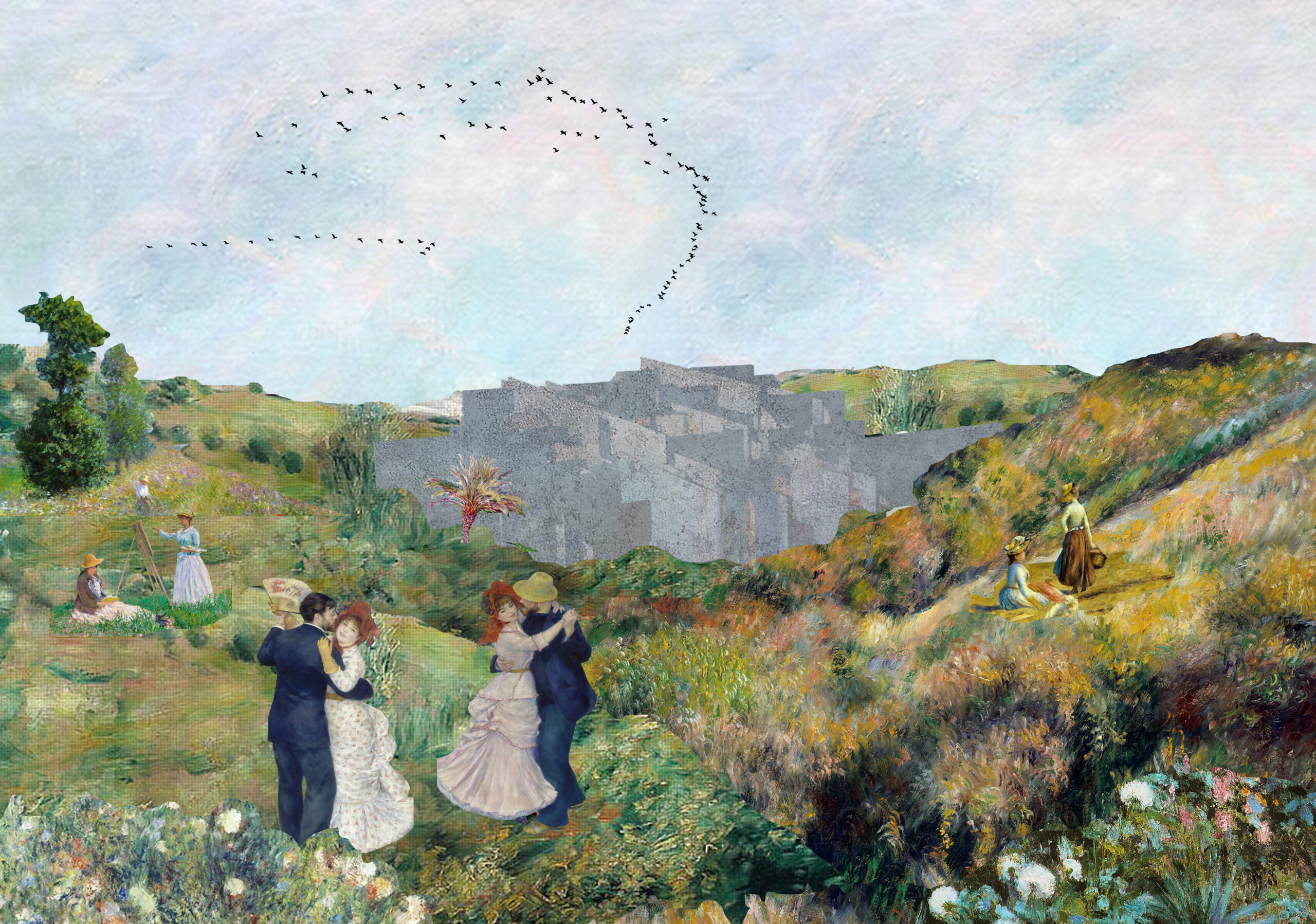
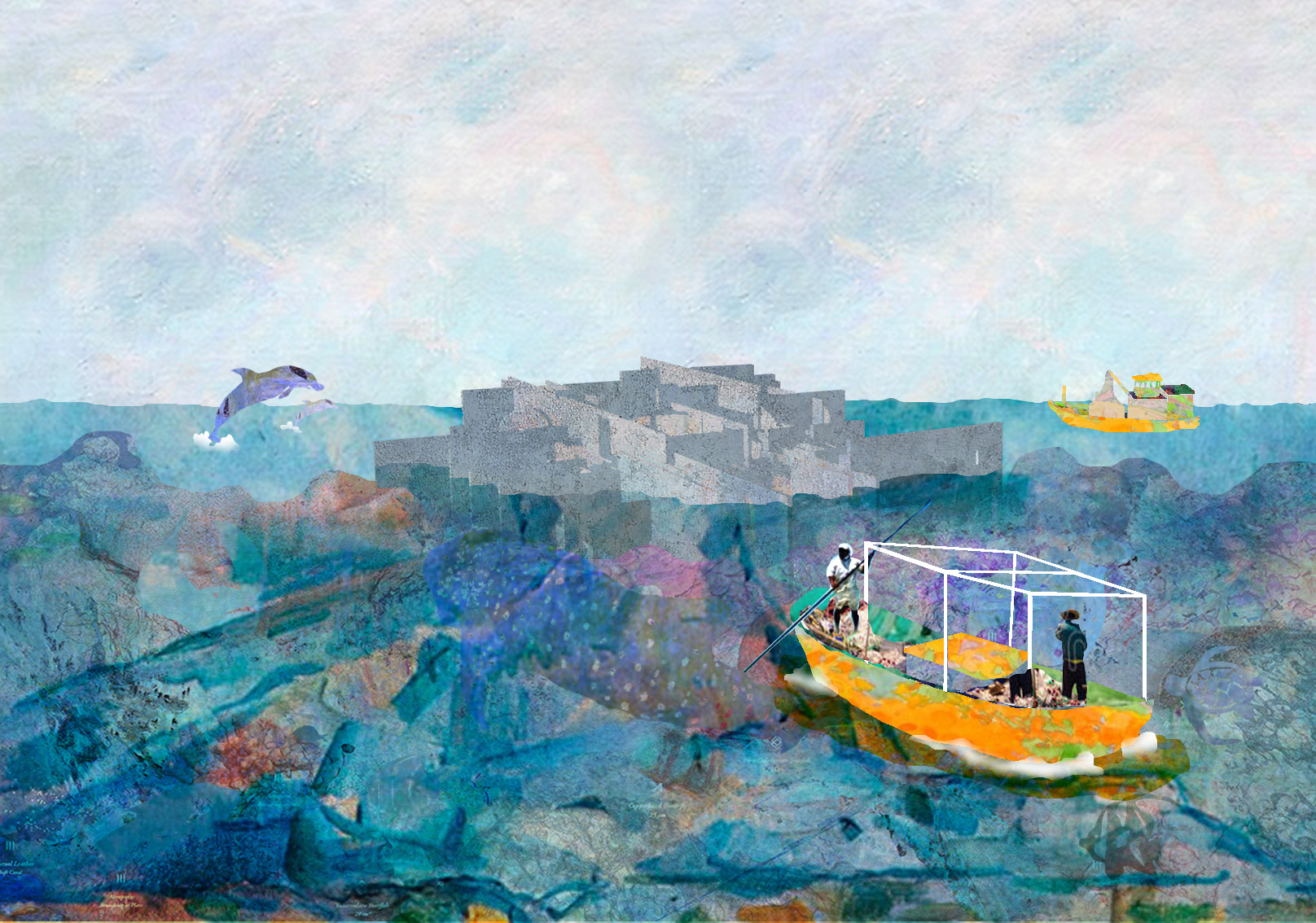
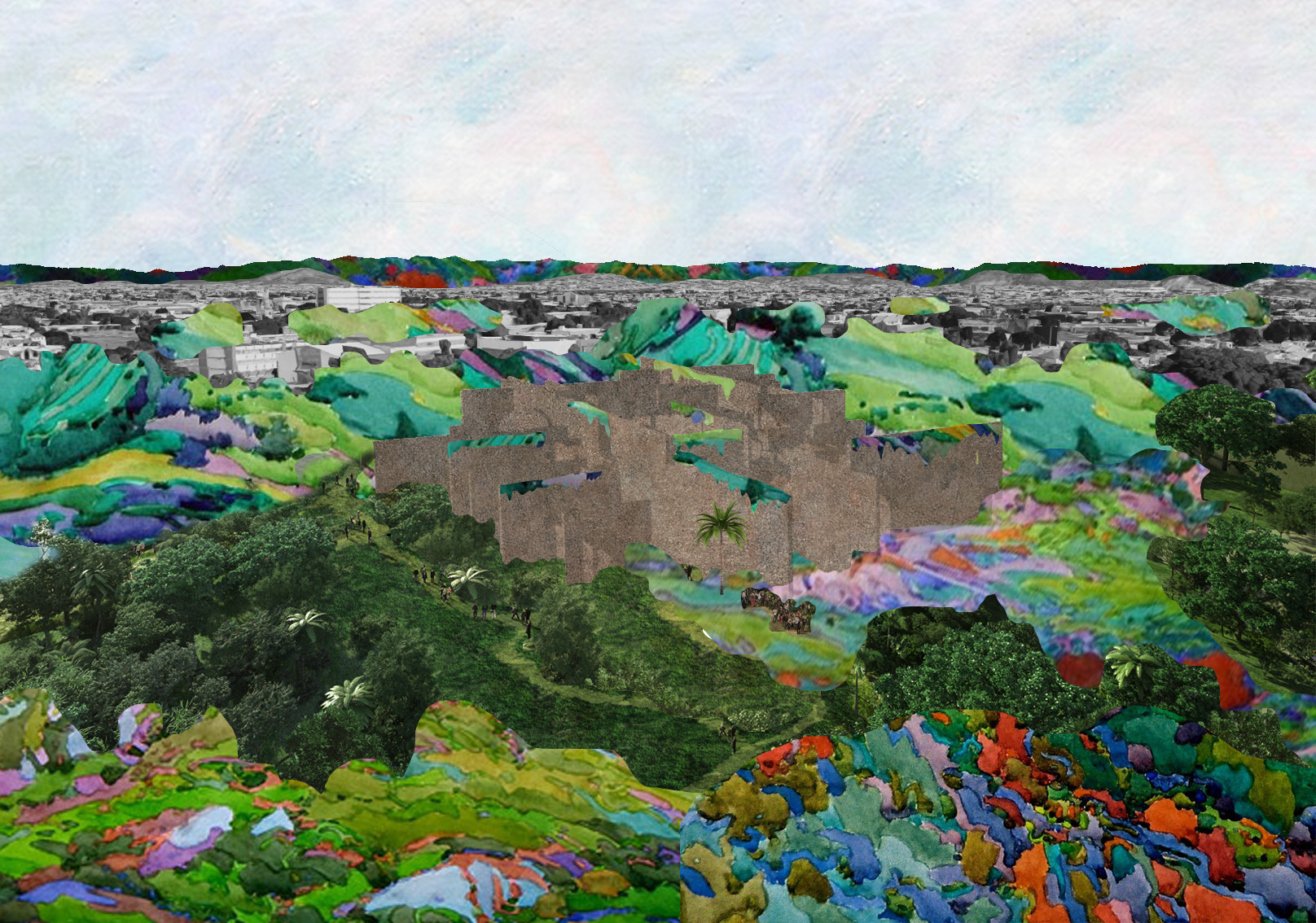
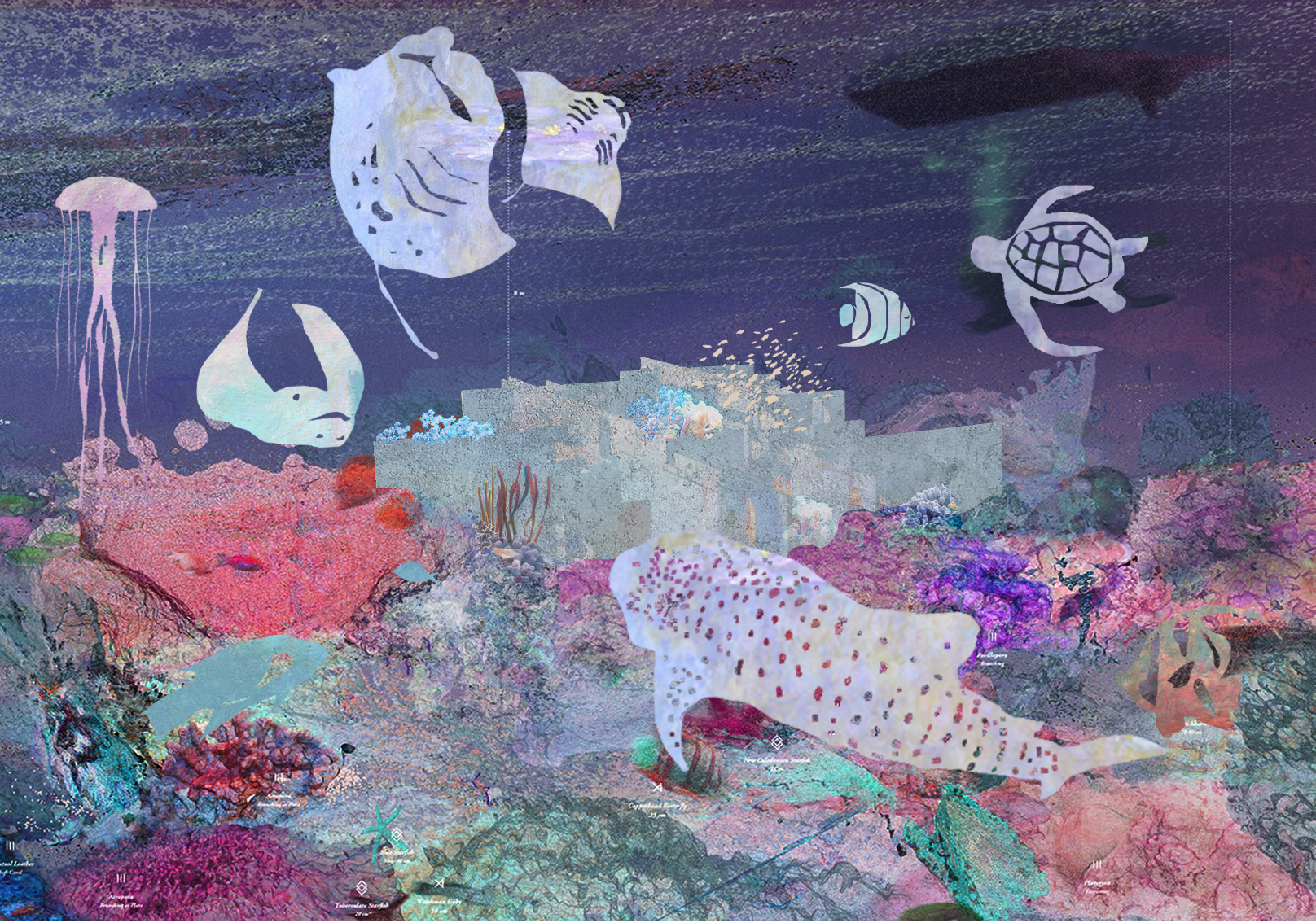
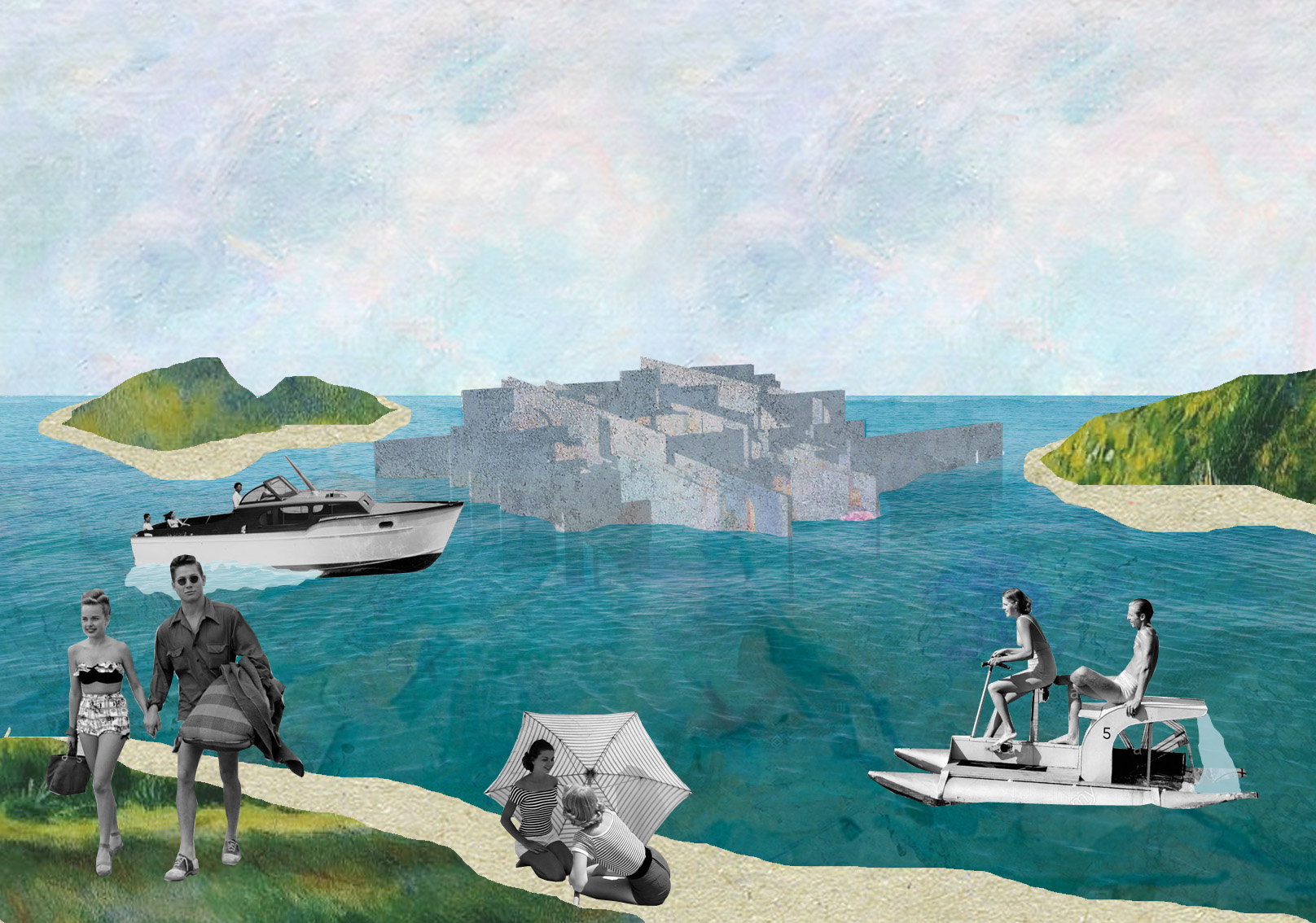
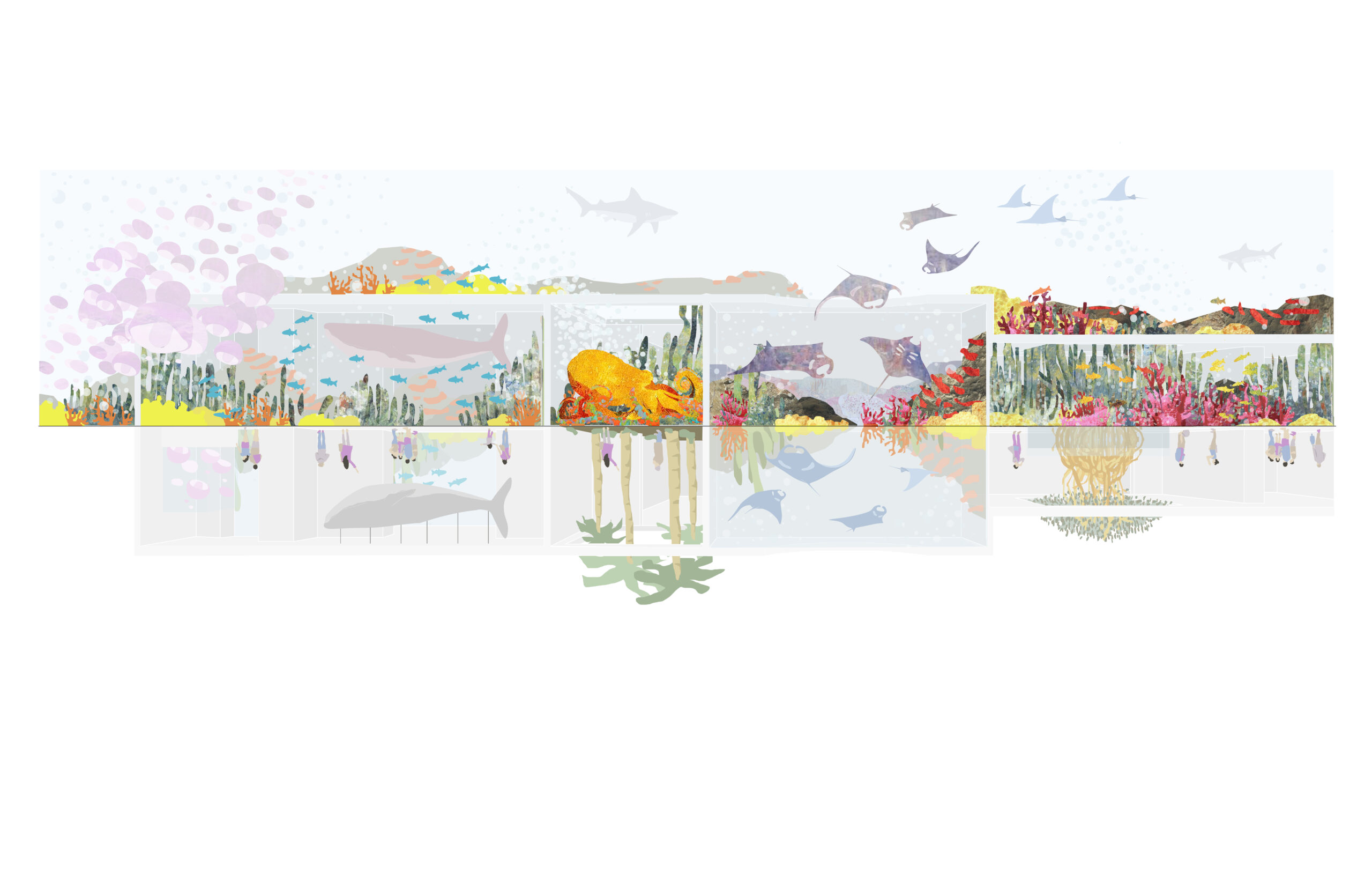
An interesting fact about Tatiana Bilbao’s approach is that she prefers collages to computer visualisations and renderings, as they help her stay creative and encourage collaboration during the design process. Above you can see some of her creations for the Sea of Cortez Research Center in Mazatlan, Sinaloa, Mexico. Credit: Tatiana Bilbao ESTUDIO.

Rozana Montiel

on “the active gaze,” launching a cultural space, and the importance of awards

Photographer: Sandra Pereznieto

From paving the way for women to merging art with design and teaching at prestigious universities—Rozana Montiel is that name in architecture that you can’t and don’t want to overlook. As she takes time this year to reflect upon her career, she spoke to Veronika Lukashevich about her beginnings in architecture, how art and cinema have impacted her thinking, and the new cultural space she opens in July

There is a scene in Michelangelo Antonioni’s Blow Up where the fashion photographer Thomas, played by David Hemmings, is examining a series of photographs he took in a park. When he notices something odd in one of the pictures, he enlarges the section in question and discovers what appears to be a body lying in the grass and a man with a gun hiding in the bushes. The more he “blows the photos up,” however, the grainer and more abstract they become, making us question: is what he sees real or just the product of his imagination?

“That’s what I call activating your gaze,” says Rozana Montiel as we speak via Zoom, about a month after I visit her cozy, light-filled studio in Mexico City. “It’s about making the invisible visible, being creative and slowing your mind. It’s about imagining an impossible building first, then figuring out how to make it possible. After a while, it becomes a whole methodology, and serendipity starts to happen, because you are alert, right?”, she says as if awaiting my approval. “You have eyes everywhere.”

Rozana Montiel has always been intrigued by different ways of seeing; she looks for clues in other disciplines, which is why she names the film as one of the main influences on her architectural process. With every brief, she challenges herself to think outside the box and seek out the hidden nuances.

That is, in fact, how she was raised. Both of her parents were art collectors, and her childhood home was a hub of creativity. Her father built a gallery inside their house, where friends would gather to admire works of Diego Rivera, David Alfaro Siqueiros, and José Clemente Orozco. Amid these notable male artists was a captivating piece by Spanish painter Remedios Varo, who took refuge in Mexico during the Second World War. “Varo painted these surreal and very imaginative works with beautiful stories,” Montiel says, calling Varo her inspiration. “It was as if we were connected.”

Montiel’s interest in the arts gradually transitioned to her love for spaces. When she was nine, she told her parents she wanted to design her own room. The result was so inviting that it became the go-to hangout spot for all her friends. “I was constantly changing it, creating, displacing, moving and doing something else with what I had,” she says.

“There’s not just one way of doing architecture, it’s not just laying bricks. I do architecture by constructing a whole new language.”

Her father noticed his daughter’s gifts and suggested that she study architecture to combine her love for art and design. It seemed like a reasonable idea, so she followed his advice and earned a degree in architecture and urban planning from the Universidad Iberoamericana in Mexico in 1998. Her passion for critical thinking then led her to pursue a master’s degree in architectural theory and criticism in Barcelona. During this period, Montiel fully immersed herself in her life abroad. She took advantage of the new environment to learn and broaden her mind by going to the cinema and museums. “I was also reading like crazy all day and learning Dada poetry recited by my teacher at a bar,” she adds.

Upon her return from Spain, Montiel joined forces with three female architects that she had met at university. Together, they gave lectures and worked on renovations, operating out of a small space in the back of a friend’s painting studio. “We were very proactive, it was our mentality,” she says. However, as the years passed, the team gradually dissolved, with some members starting families and others moving abroad. All of a sudden, Montiel was the only one left.

“Many women leave when they get pregnant. They stop working and then it’s difficult for them to come back,” she says empathetically. “Many of my friends were having kids in their early thirties, but I was not even married or had a partner then. So I was the only one who wanted to continue. It happened very organically.”

Embarking on this journey on her own was no easy feat, given the scarcity of studios led solely by women at the time. “There were many partnerships with men but just a woman leading—there were none. Then Tatiana Bilbao opened [her office], and step by step the number grew.”

What gave Montiel the dedication to proceed? “It was difficult for me to find a studio where I could fit all my interests. I wanted more than designing and building; for me it was also about critical thinking, doing research, relating and blurring the boundaries with art. So when I couldn’t find anything, I thought, ‘why don’t I just do it myself?’”

And so she did. In 2009, she established her own architectural firm, Rozana Montiel Estudio de Arquitectura, which has since undertaken an array of projects, from micro-objects to urban interventions. The beginning was challenging, however, as the men she worked with struggled to trust her professionally and acknowledge her independent success. This perception shifted as Montiel began receiving recognition and awards.

Back in 2001 she won the young creators grant called FONCA from the Mexican government. It is awarded annually to 100 young creators from all disciplines—architecture, cinema, sculpture, painting, music, choreography, writing—to develop a project over the course of a year. All 100 creators and their respective tutors travel together to various states in Mexico, using the time to interact and learn from each other. “It was a life-changing experience during which I developed a passion for researching the city and building artifacts from found materials,” Montiel says. “I met interesting creators; I still collaborate with many of them today.”

Inside Rozana Montiel Estudio de Arquitectura

This achievement got the ball rolling. In 2010, she became the first woman to receive a three-year grant for artistic creators from the Mexican government (and just last year, she was the first woman to win the Luis Barragán award). For Montiel, being given this grant meant more than just winning; it paved the way for other women to gather the courage to apply, too. “A lot of women didn’t even know that it was a possibility for them,” she says, noting that previously, it was primarily older men who took advantage of the opportunity. “I think my generation was pushing the boundaries to open things in a different way. The generation now, they have their own set of problems to deal with, but opportunities are open to them a bit more.”

She then mentions that she appreciates how the DIVIA Award helps women establish themselves in the profession. “Awards like this provide the credentials for people to trust you,” she says. Montiel has supported DIVIA from the beginning, having written an article about one of her projects for Women in Architecture, edited by DIVIA Founder and Chair Dr. Ursula Schwitalla.

Reflecting upon her career over the last two decades, Montiel feels joyful and proud. “It’s been worth all the effort of not deciding to let it go all these years ago,” she says. Once she felt established enough, having worked diligently throughout her thirties, she was ready to start a family. “I had my daughter when I was almost 40, so I was able to focus on my work first.” She pauses, growing thoughtful. “Maybe planting the seed would have been more difficult while having a child.”

For a while, Montiel’s office was staffed only by women, which means her employees understood the demands of being a working mother. “It was an amazing energy. They were really helpful and embraced my daughter. It was beautiful to see.”

“Many women stop working when they get pregnant and then it’s difficult for them to come back. My friends were having kids in their early thirties, but I was not even married or had a partner then. So I was the only one who wanted to continue.”

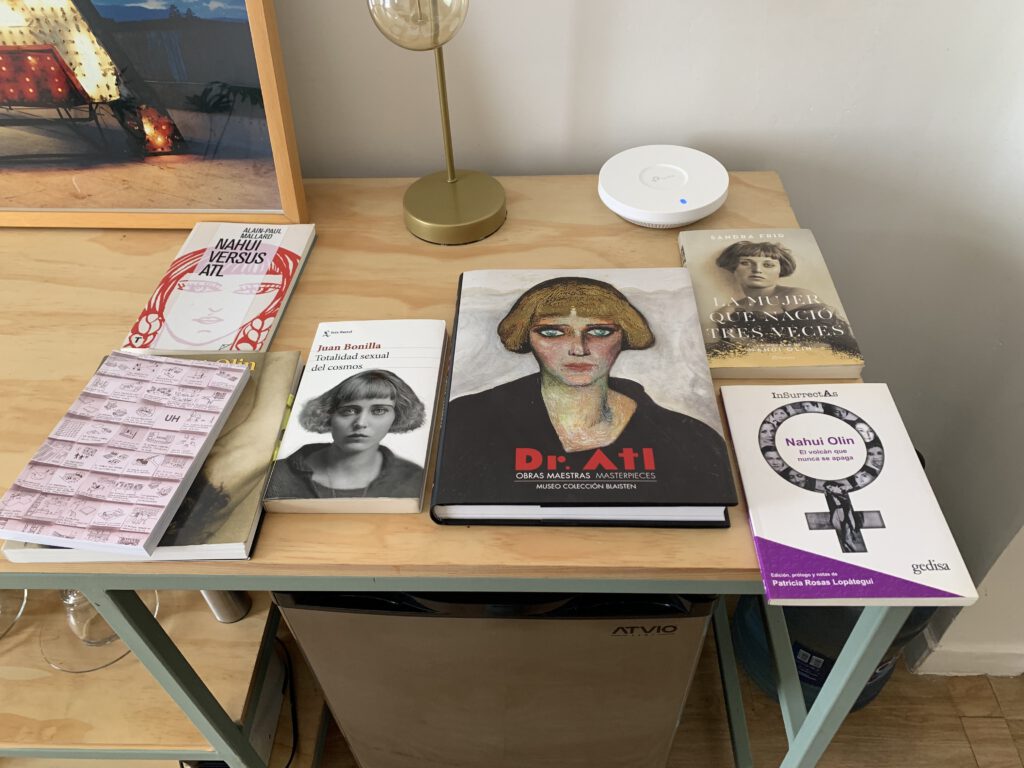
It’s impossible to overlook the theme of empowered women in Montiel’s life and work, a fact that extends even to her workspace. Her new studio in Mexico City is situated on the first floor of the former residence of Mexican poet and painter Carmen Mondragón (1893-1978), mainly known as Nahui Olin. Initially unaware that Olin once occupied the building, Montiel recognized an opportunity when the previous tenant vacated the upper floor. She rented it with plans to transform it into a cultural space that “sets ideas in motion. “It felt like destiny,” she says. “Olin was progressive and believed in the rights of women, so I was happy to give her space its due justice.”

Named Calli Ollin (with ‘Calli’ meaning house in the Aztec language Nahuatl and ‘Ollin’ meaning movement), the place will serve as a hub for dialogue between architecture, design, and art. Each year, it will host workshops, exhibitions, discussions, and publications to encourage critical thinking about pressing global issues. “The space is about proactivity, addressing significant issues of our work not as problems but as opportunities for finding solutions,” Montiel explains.

The new cultural space
above Rozana Montiel's office.
It used to belong to Nahui Olin.

The inaugural exhibition launching this July will honor Nahui Olin, presenting her not merely as the muse of painter Gerardo Murillo, also known as Dr. Atl, but as an artist and poet in her own right. “It will be a way of exploring the world through her eyes,” says Montiel, highlighting the parallel to her own approach of seeking diverse perspectives. The exhibition will feature Nahui Olin’s point of view and her enduring presence in her old home that she inherited from her father. The second exhibition, scheduled for later in the year, will delve into domesticity, focusing on her belongings and everyday life. The idea is to recreate the space she once inhabited and explore the themes she depicted in her paintings. The final two exhibitions will center on Olin’s writings, using her poems to illuminate her inner world, and on the body as her primary dwelling.

If it was not clear before, it certainly is now: Montiel sees architecture as more than just what meets the eye; to her, it has a philosophical, even scholarly foundation. “There’s not just one way of doing architecture, it’s not just laying bricks. I do architecture by constructing a whole new language,” she explains. I ask her if there is a project in her repertoire that perfectly encapsulates her values. It doesn’t take her long to come up with an answer. “Pilares,” she says with certainty.

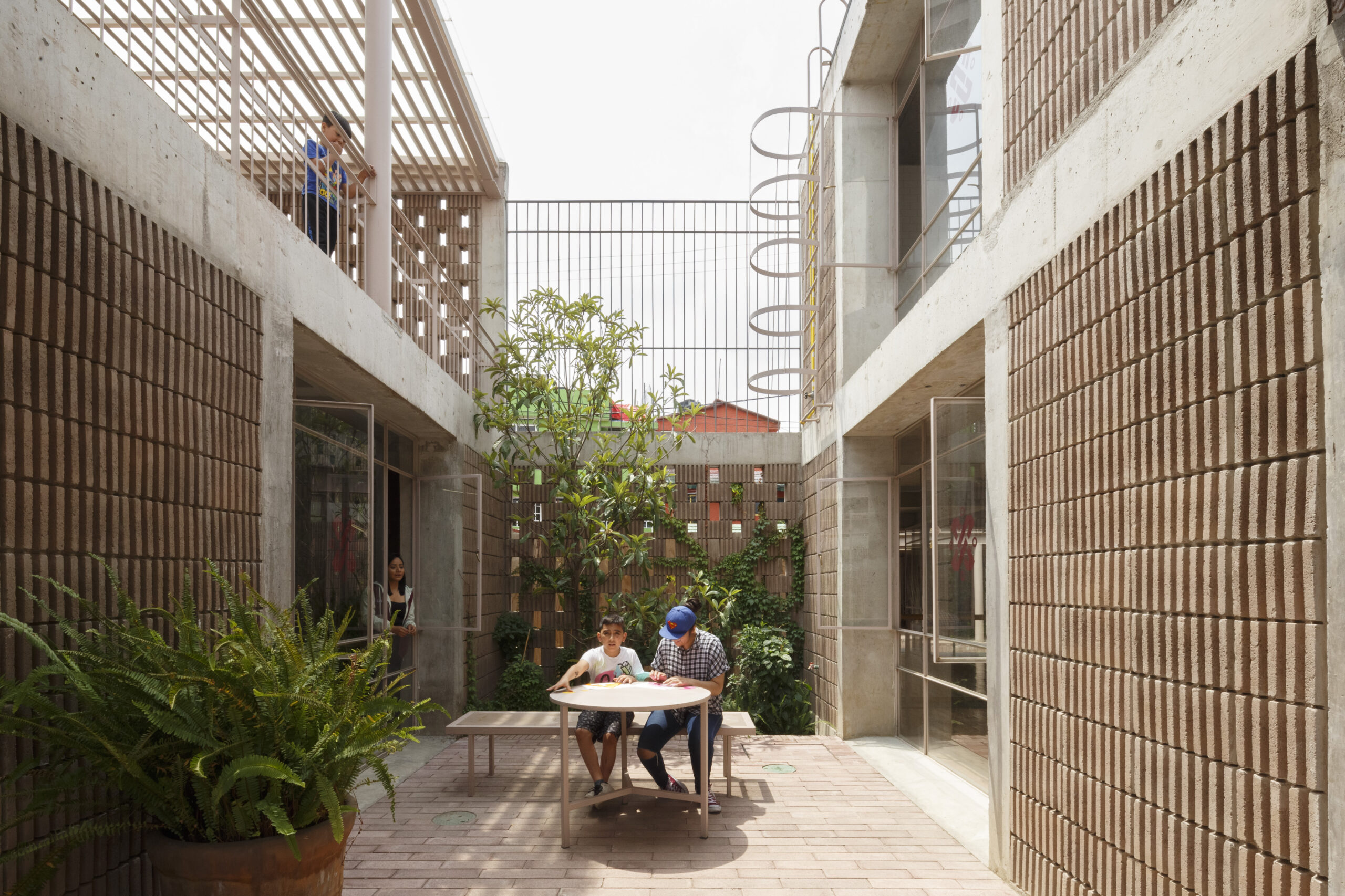
“In this project, I aimed for simplicity in materials, a strong identity with minimal elements and colors. I also wanted to create small patios to connect nature with architecture and blur the barriers between the interior and the exterior,” she explains.

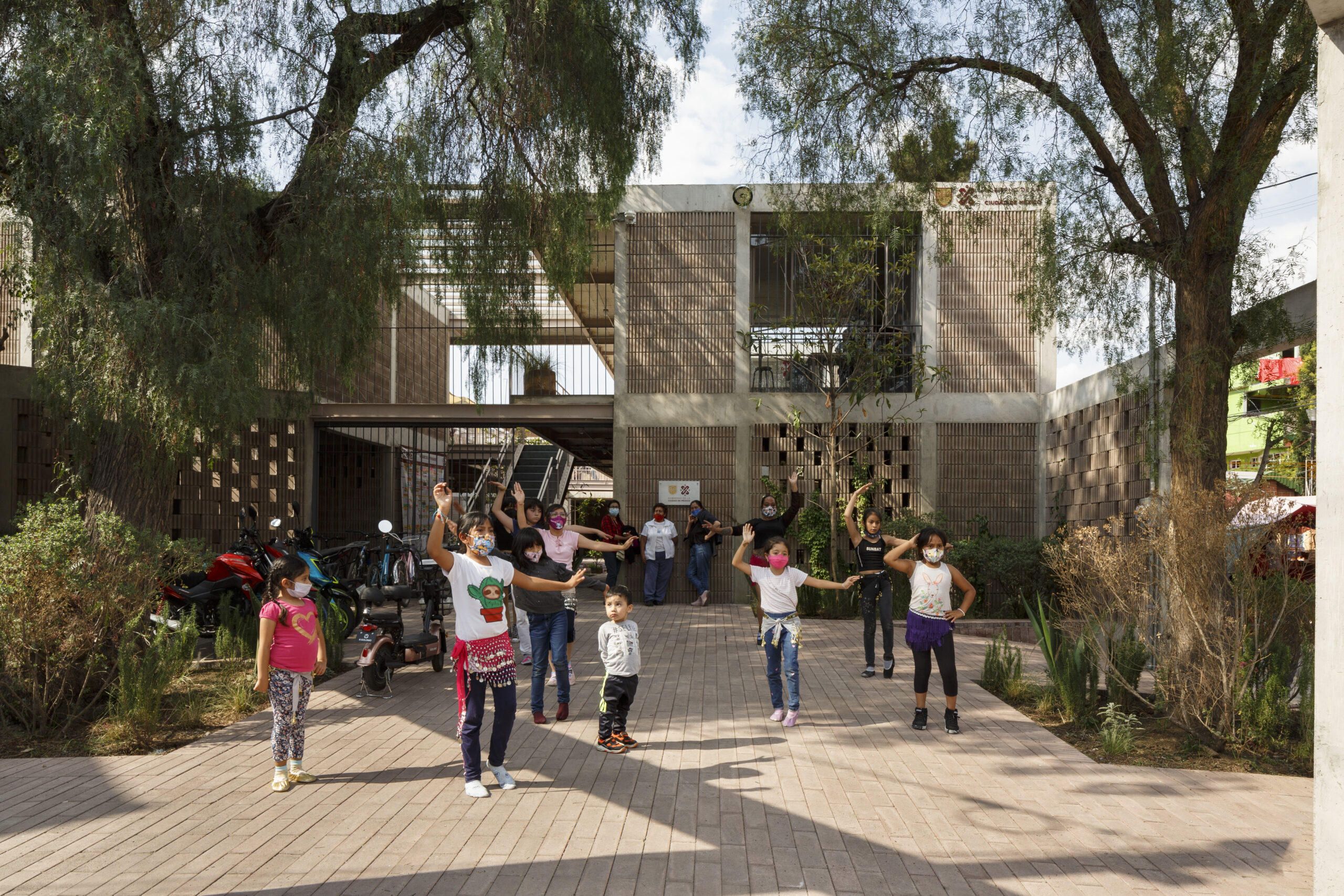
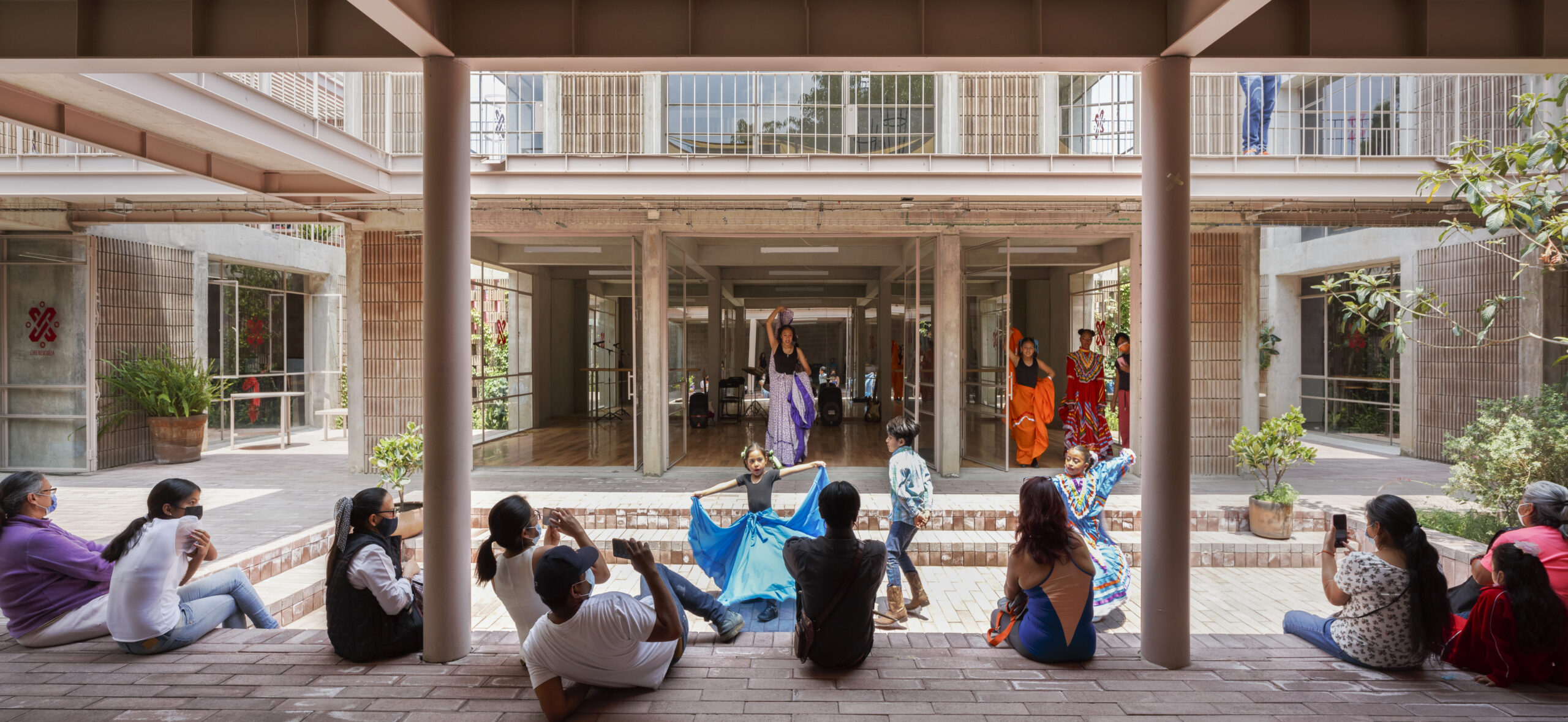
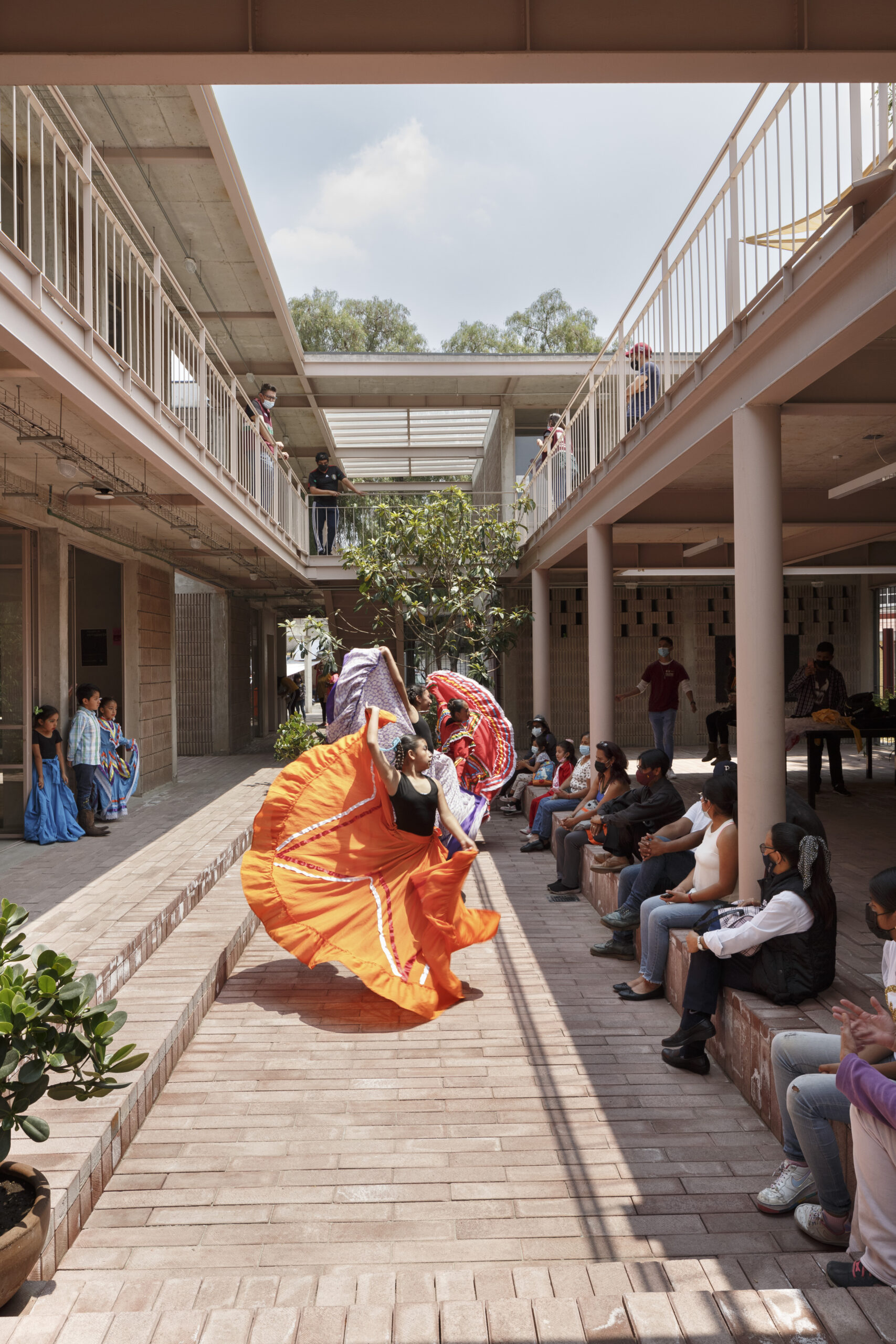
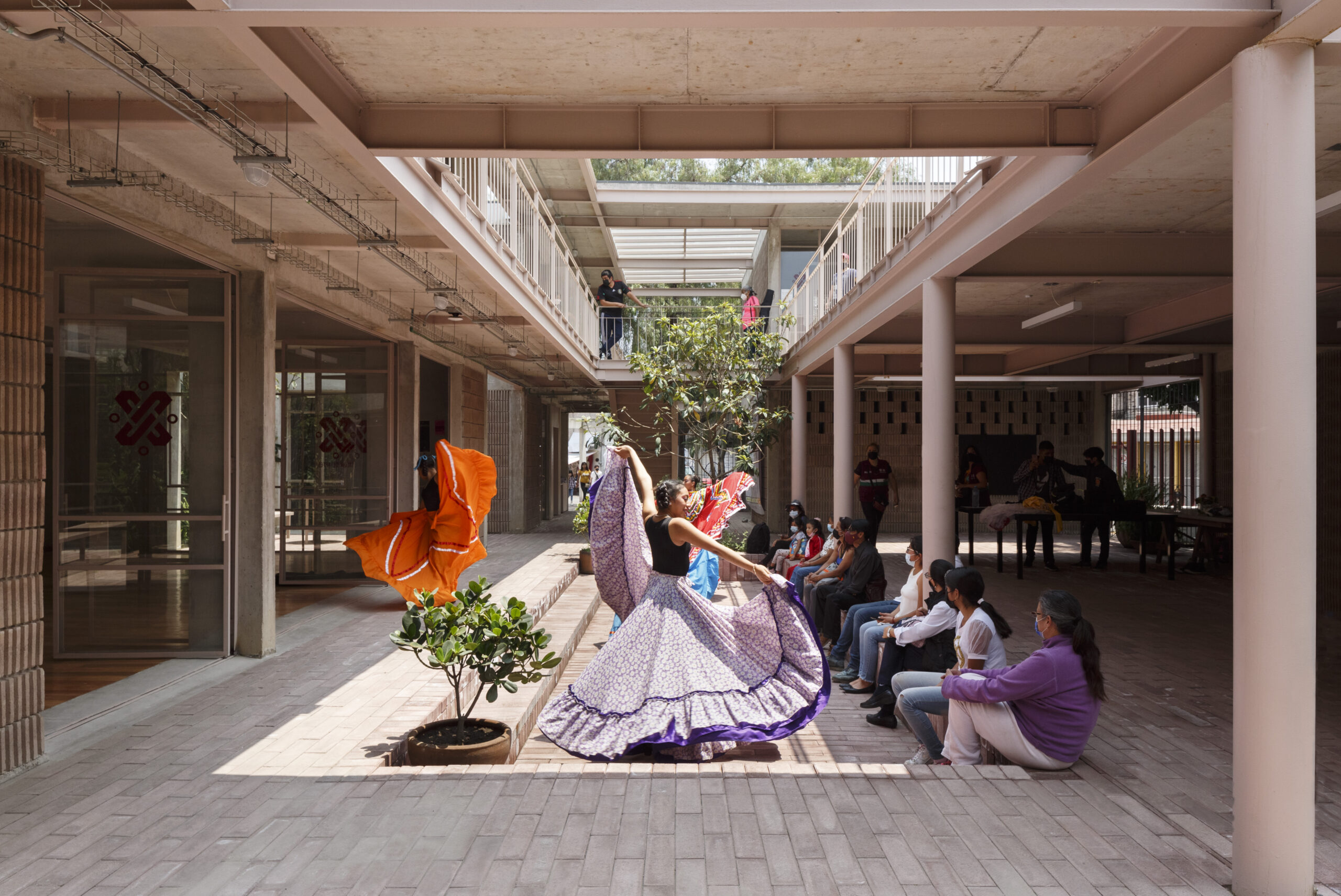
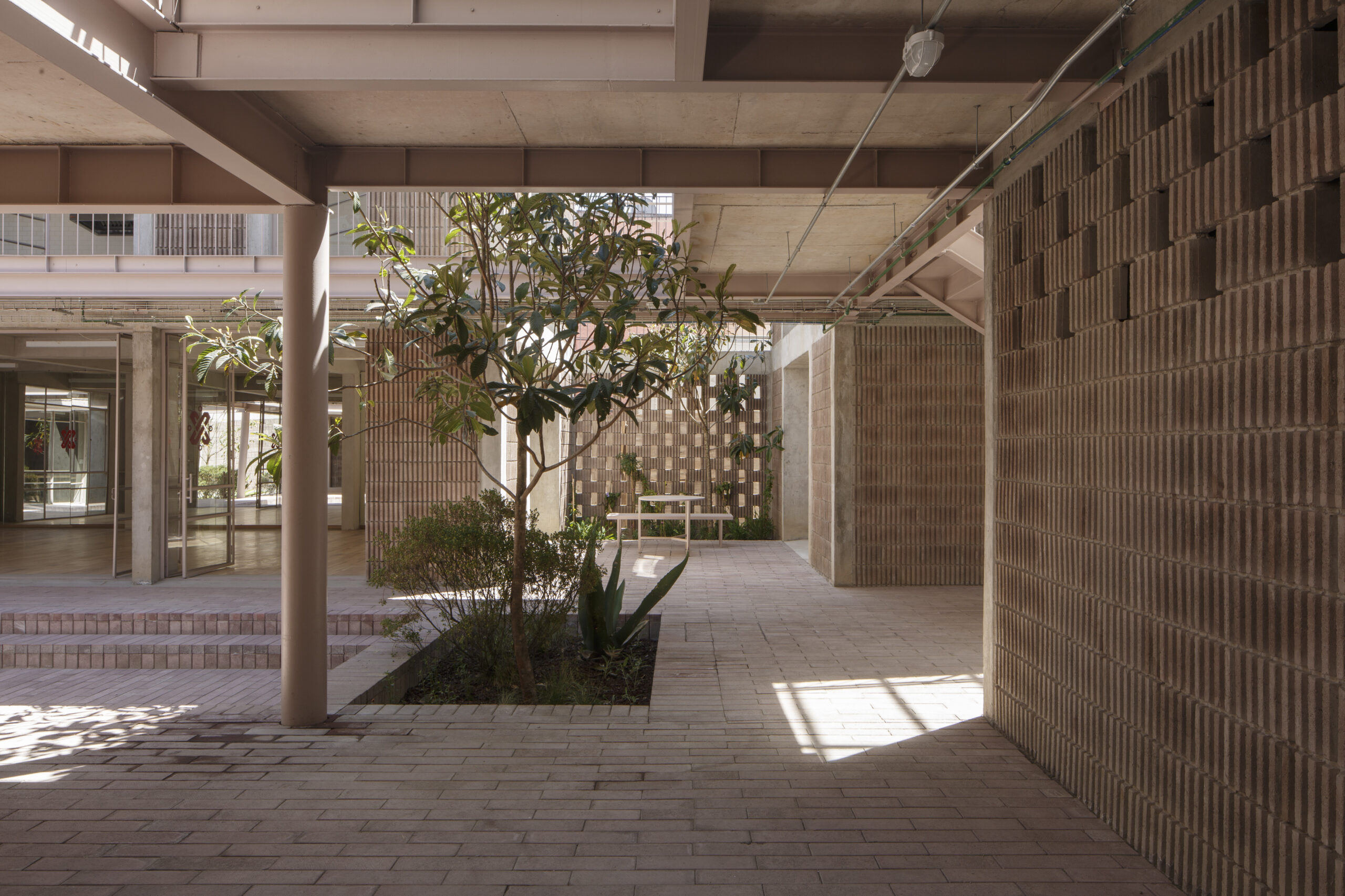
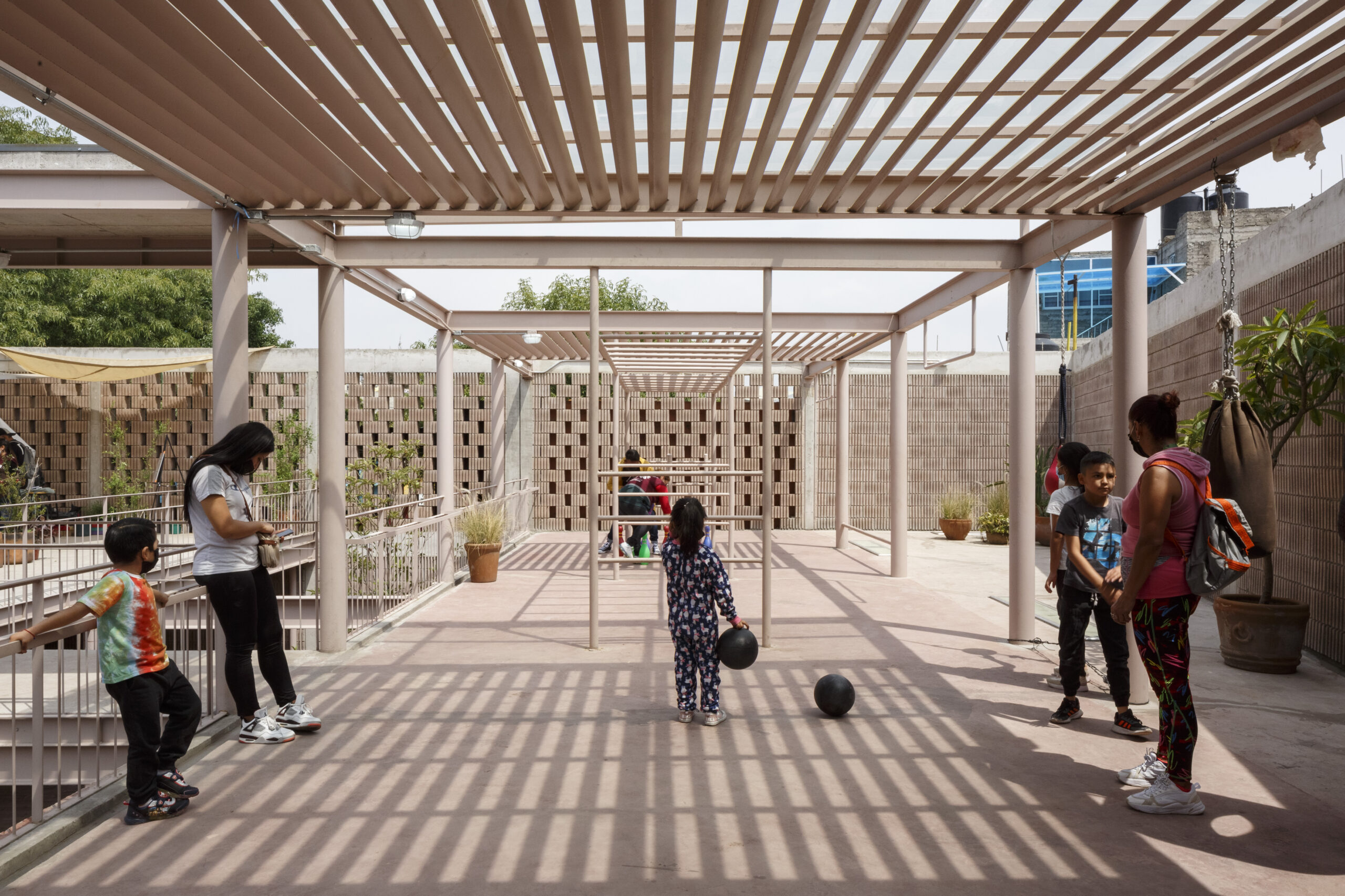
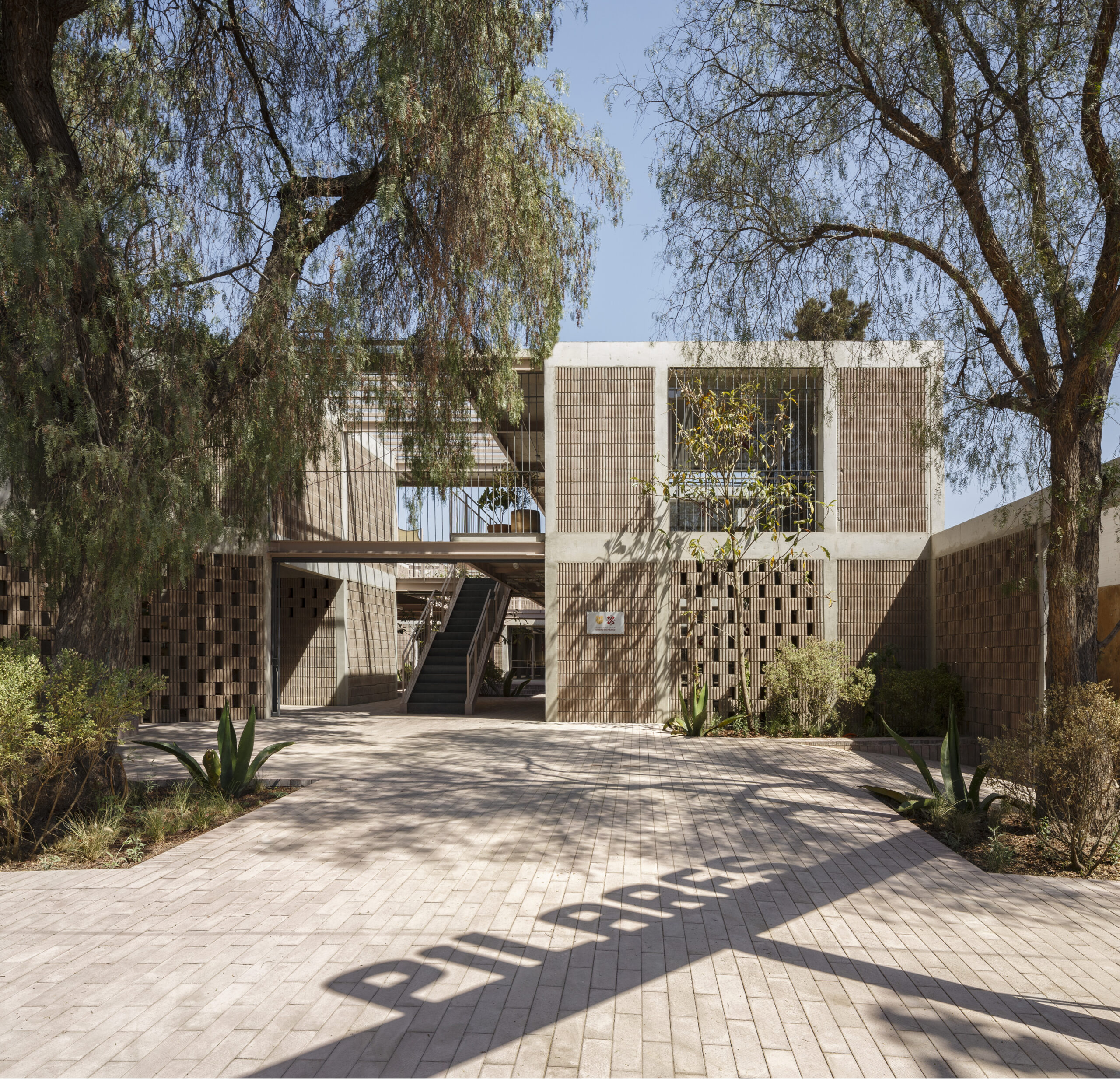
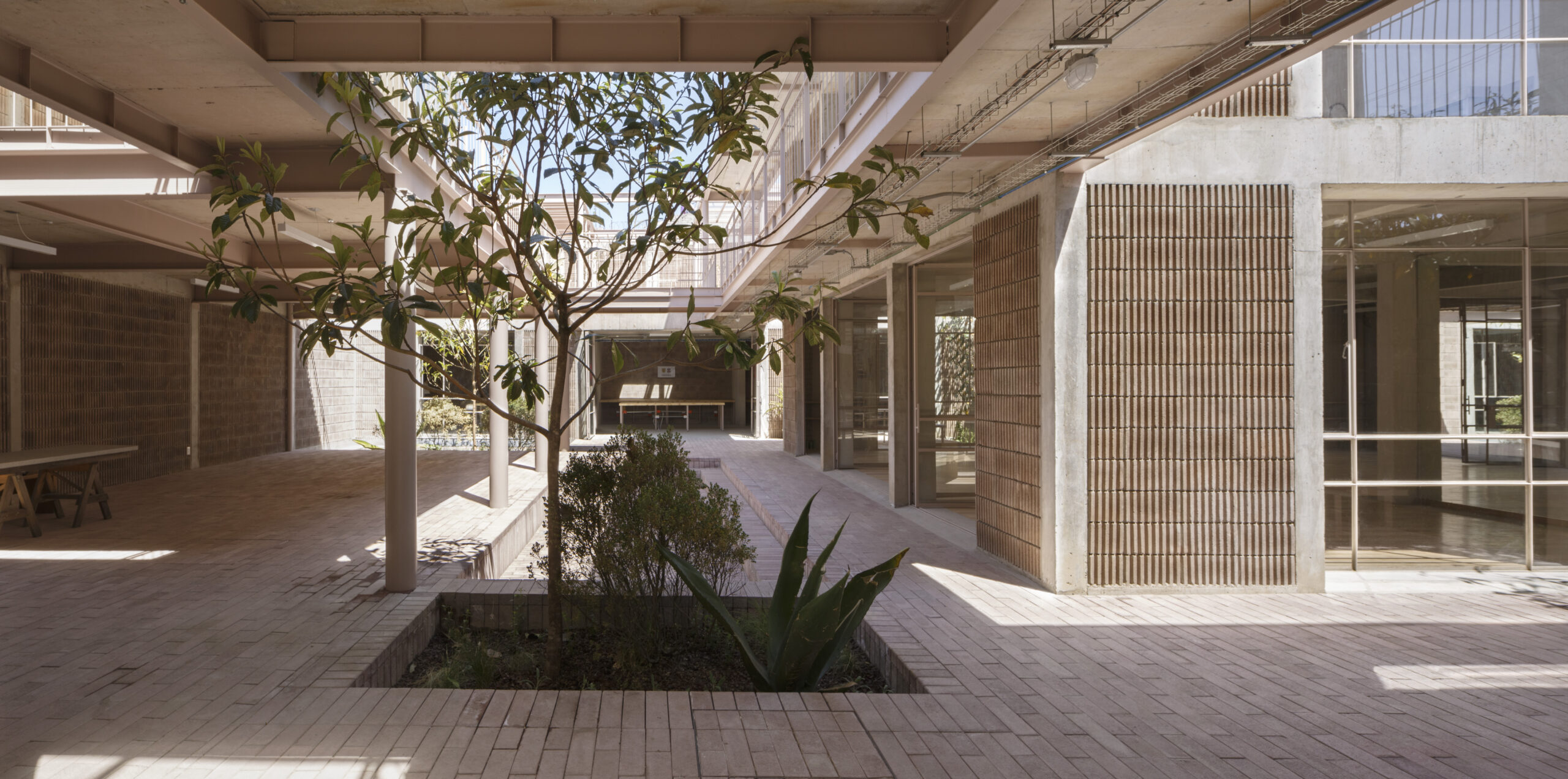
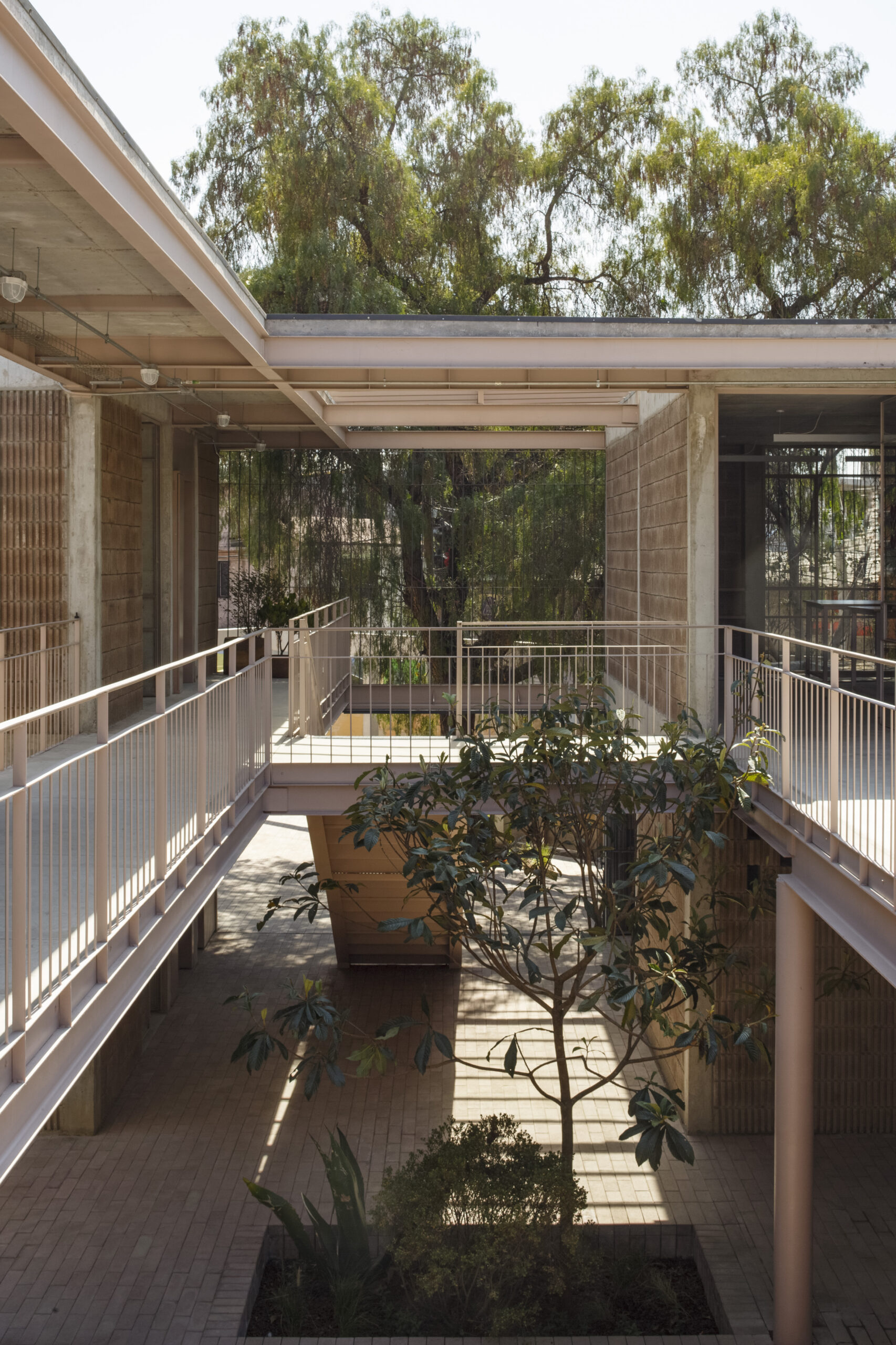
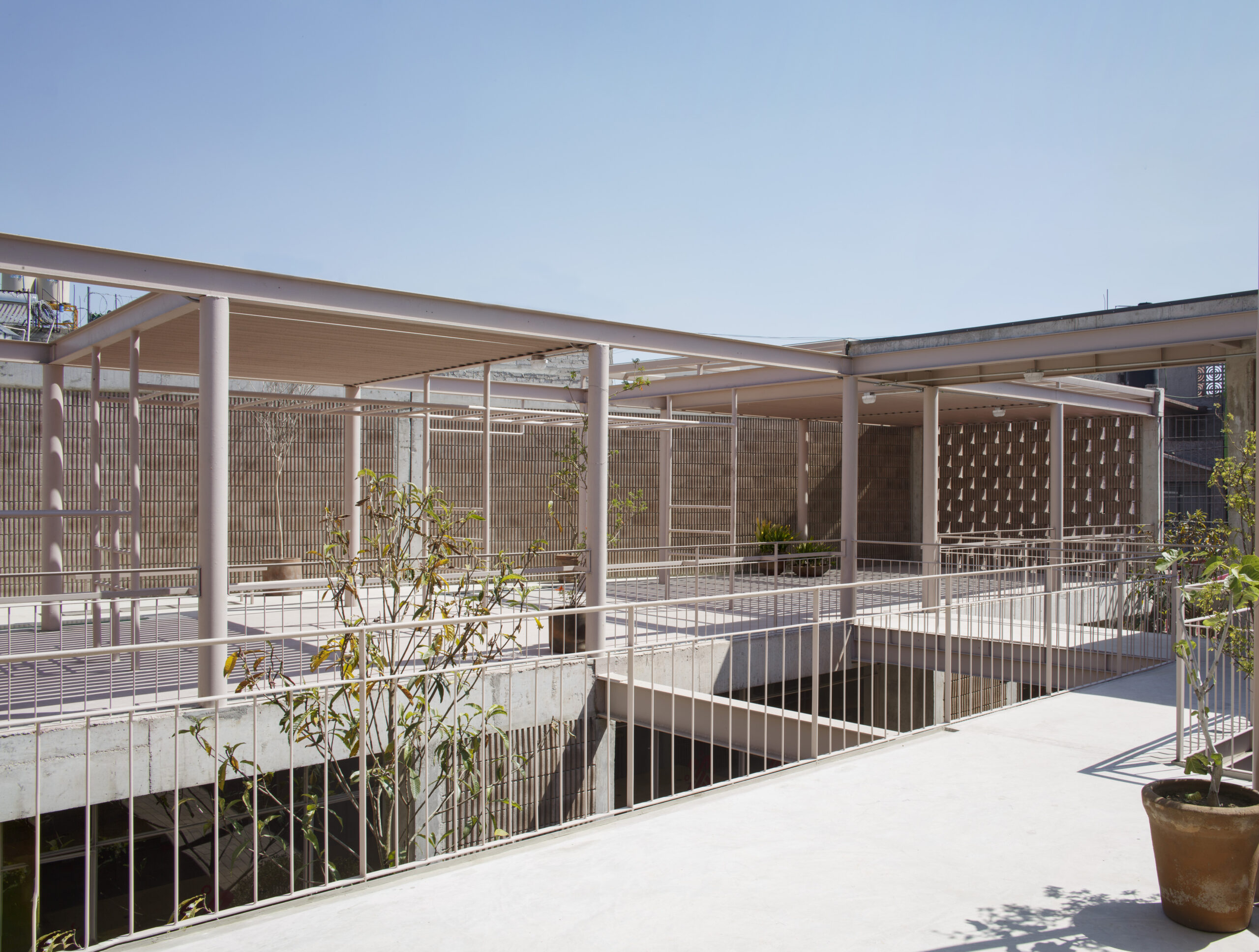
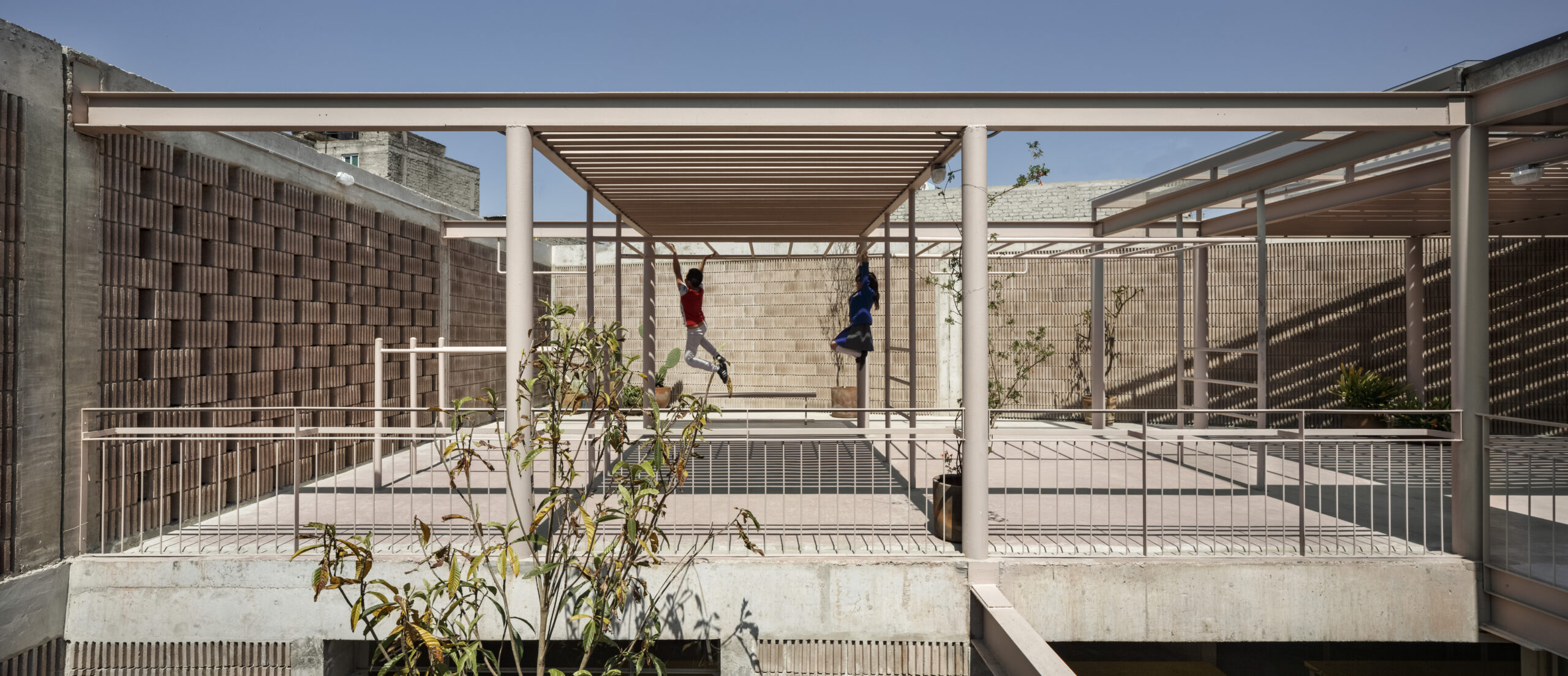
That she did master. Montiel was commissioned by the government to transform an unused, gated basketball court in Iztapalapa, one of Mexico City’s most densely populated neighborhoods, into a peaceful, public space. By removing the barriers and preserving two large trees, she created a space where people can gather, participate in activities, and relax. The project site is strategically located on a corner where a weekly street market takes place, fostering a natural flow of movement.

The layout integrates forums, sports facilities, and classrooms across two stories connected by landscaped patios and adaptable spaces. Striated walls are designed to interact with light and shadow, and concrete is creatively used throughout the architecture, appearing in lattices, ventilated interiors, and sustainable features such as rainwater collection systems, as well as energy-efficient lighting and faucets.

“It’s beautiful to see the energy that’s happening there. You feel safe, you feel comfortable, you feel at home,” says Montiel proud. “When you’re there, you forget about all the noise, and you feel like you’re in a cultural oasis.” One of the strategies to create this homely feeling was to paint the space in the color mauve, an unusual decision for a steel structure and one that Montiel had to fight for. “Even the government had to approve it first,” she laughs.

Apart from her studio work, Montiel also dedicates a significant amount of her time to academia. Over the years, she has taught at some of the most prestigious universities in the world, including Universidad Iberoamericana in Mexico, as well as Cornell, Columbia, and Berkeley in the United States. “It’s been an important part of my career and given me chance to co-learn with my students. It also keeps me updated with research topics.” She particularly enjoyed teaching at Berkeley last spring, where she and the class explored the mergence of migration and imagination by creating an installation of carry-ons, each displaying a variety of contents associated with these themes. “The students were energetic, proactive, and sensible. It was an amazing time.”

In September, she will begin teaching a master’s course in adaptive re-use at École Spéciale d’Architecture in Paris. “I really want to use this time to think about what I have done in my career and to develop projects that change perceptions and realities,” she says.

She also hopes to find time this year to reflect, devote herself to drawing and reading, and focus on aspects of her work that usually end up on the backburner. “I am ready to focus on things I want to do, which is to continue experimenting and creating ideas. It’s a very exciting time.”

Given her track record, the outcomes are sure to be remarkable.

Gabriela Carrillo

on meaningful architecture and not willing to choose

Photographer: Olga Laris

For DIVIA’s first visit to Mexico City, Veronika Lukashevich met up with Gabriela Carrillo at her alma mater, UNAM University, where she has also been teaching. They spoke about Carrillo’s graduate research program, an architect’s job during a crisis, and encouraging students to follow their own paths.

On an early February morning, Gabriela Carrillo leads me into a small, empty room just outside the dean’s office at the Architecture Faculty of the renowned National Autonomous University (UNAM) of Mexico City. It’s the first day of a new semester, and we are meeting at 8 a.m., about an hour before her first class. The school is still deserted but it won’t be for long. With its open spaces and corridors, natural ventilation flows freely here, creating a breezy and comfortable atmosphere for effortless interaction among faculty and students. Settling into a cozy corner of the room, Carrillo quickly sends a text message to the group chat with her students, informing them that she might be running a bit late. “I looked at your questions and thought we need an additional 30 minutes,” she laughs.

Having studied at UNAM herself and taught here since 2003, Carrillo feels deeply connected to the institution, but like any long-lasting relationship, there have been some ups and downs. In 2017, she felt stuck and almost considered quitting. Balancing this role alongside leading her own studio, Taller Gabriela Carrillo, and being a new mother, she doubted whether she was truly adding value as a teacher. “I thought: ‘I don’t have enough time to review my own projects. I’m not sure I’m producing anything that makes sense for the students?”’, she reflects.

“There is no space for architecture in the middle of an emergency, but there’s space for planning and for understanding the problems in the city and country that we live in.”

That same year, on September 7th and 19th, two big earthquakes leveled Mexico City, claiming hundreds of lives. (The second one coincided with the anniversary of the devastating earthquake that shattered the capital back in 1985, adding another emotional element to an already catastrophic event.) In a collective effort to help rebuild the city, Carrillo joined forces with over 100 architects, including her current colleague at UNAM, architect Loreta Castro. Carrillo also involved her students in the process, teaching them first-hand how to handle a crisis. Together, they worked closely with a community in Tlayacapan, held seminars on vernacular construction at schools, and collaborated with a theater company to design a stage on the main plaza for cinema nights and performances.

“There is no space for architecture in the middle of an emergency, but there’s space for planning and for understanding the problems in the city and country that we live in,” she says. But trying to assist around 80 affected families took a toll on her and she soon recognized the constraints she was facing. “I failed as an architect,” she says devastated, thinking back to that time. “I quickly realized that we are not prepared enough for a city that has earthquakes.”

After a period of frustration, she rolled up her sleeves and adopted a solution-based approach. About a year after the second earthquake, she and Castro introduced a new Research and Degree Seminar at her University, Estudio RX. It focuses on Mexico’s social, economic, geological, ecological, and political vulnerabilities with the goal of raising awareness of the city’s shortcomings and inspiring long-lasting improvements in architecture and urban planning.

The initial three-year research program focused on fissures along the Santa Catarina volcanic line, affecting the Tlahuac and Iztapalapa municipalities, both heavily impacted by earth cracks. These issues stem from the city’s soft, compressible clay foundation, extensive groundwater extraction, seismic activity, and rapid urban development. The consequences are severe, leading to cracks in buildings, infrastructural and pipeline damage, and increased vulnerability to seismic events.

Under Carrillo’s supervision, graduates collaborated with the municipality to repurpose the site of a school demolished in the 2017 earthquakes, establishing a research lab and communal space. Dubbed “Tecoloxtitlan Utopia / Interactive Observatory of Subsidence and Fracture in Iztapalapa,” the project received invaluable input from a volcanologist, a geologist, and a geotechnologist, which, according to Carrillo, significantly enhanced its outcome. The Observatory encompasses both outdoor and indoor areas, featuring a kiosk, playground, and garden that double as a gathering place for the community, which lacks public spaces. Educational elements include a local museum and training studios where residents learn earthquake-resistant construction techniques for their homes and extensions.

Visitors of the observatory learn what makes San Sebastián Tecoloxtiltan into one area most affected by cracks. Photo: Aldo Díaz
The Observatory is particularly important for the study of subsidence and for fostering a sustainable water management plan. Photo: Aldo Díaz

“For [Loreta Castro and I], doing architecture has to do with being meaningful somehow,” says Carrillo. “It’s almost ridiculous to believe that we should just pay attention to creating art. And we love art! But we believe that we have inherited the idea of modernism and starchitects, and [this idea] kills the planet. I believe we have to break those paradigms and work collaboratively.”
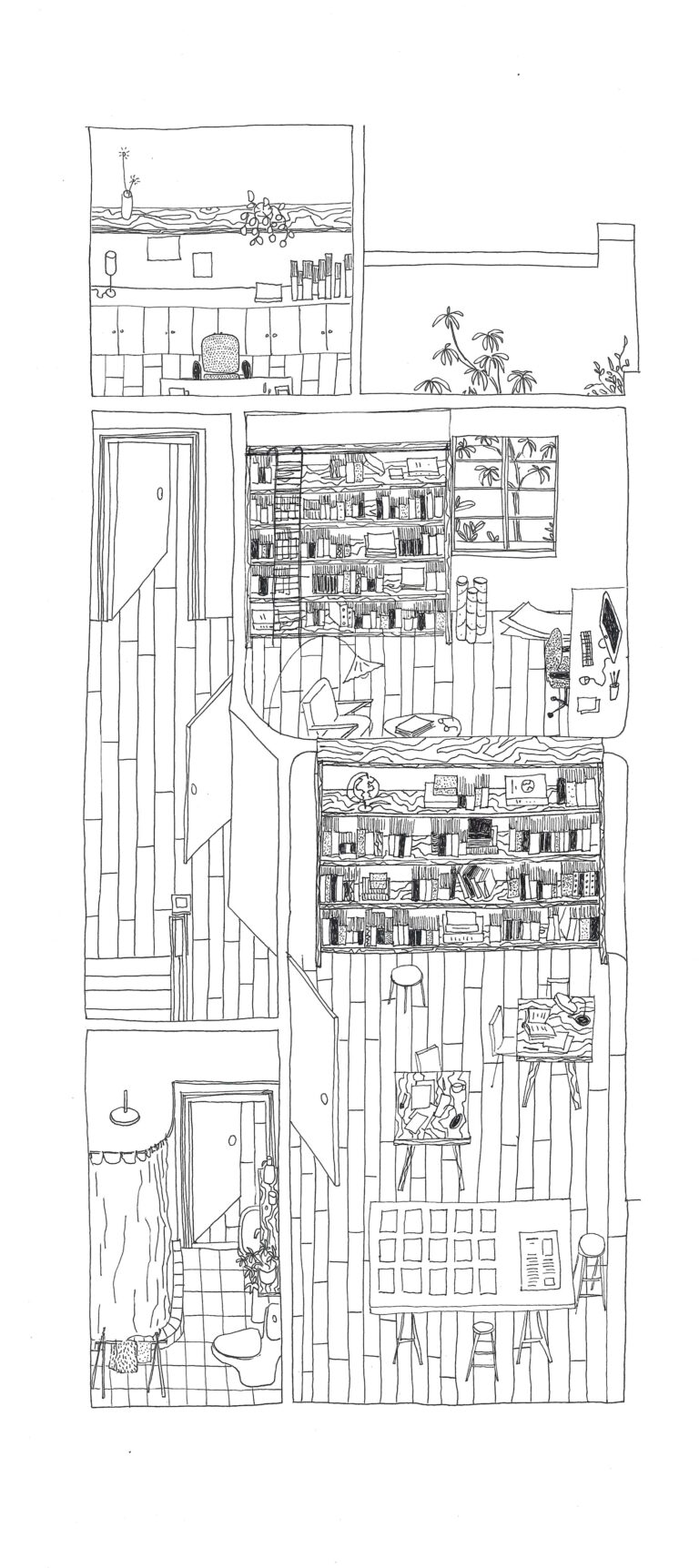
As of 2024, Carrillo is concluding the third year of the second seminar cycle that focuses on migration in Tijuana, a Mexican border city south of California. The students enjoy complete freedom but are expected to deeply engage with every aspect of the process and the context they operate within. They are also required to stay updated with the news daily, which helps them develop a program centered on a problem they identified on-site. Among their initiatives is the establishment of secure areas with fire pits to provide warmth for migrants during cold and humid nights. “Migration is one of the most significant topics we face in the world today,” Carrillo says. “At the end you understand that you don’t need to build big buildings. [The result] needs to be impactful, so you have to understand the real requirements of the people you’re dealing with.”

Carrillo wants to empower her students to recognize the diverse avenues within architecture, encouraging them to forge their own paths without having to rely on traditional employment structures: “The university has 7,000 students, and only about 3% will be hired in a traditional way. That’s our Mexico,” she says with a shrug. “I believe it’s very important to make our students understand that they can produce their own projects as independent practitioners.” She makes an example: “Let’s say you know the weakest points of your neighborhood. You can develop a project addressing those problems and propose it to the municipality, for example. And if they decline, it doesn’t matter. You can produce your own work.”

“I believe we need to break the paradigm of starchitects and start to work collaboratively.”

Independency, tenacity, and curiosity have been ingrained in Gabriela Carrillo since her early years. Born in Mexico City to a mother who traveled the world as a flight attendant and a father who is a geologist, she developed an appreciation for the world’s diverse landscapes, vegetation, and topography from a young age. Carrillo views space as a complex, nuanced, and interconnected entity that is not confined to a physical structure. “Space starts here, in a dialogue, in the way we relate to each other, so it’s ridiculous to believe in building walls,” she says, drawing connection to Donald Trump’s infamous statements.

During her time at UNAM, Gabriela Carrillo was keen to dive into professional endeavors at the earliest opportunity. In her third semester, she won a university contest, earning her the chance to contribute to an actual government initiative. It was in 2001 that she commenced her collaboration with Mauricio Rocha, a partnership that culminated in the establishment of their architectural studio, TallerRochaCarrillo, in 2011. Fast forward to 2019, she took the bold step of launching her own studio, marking a significant milestone in her career journey.

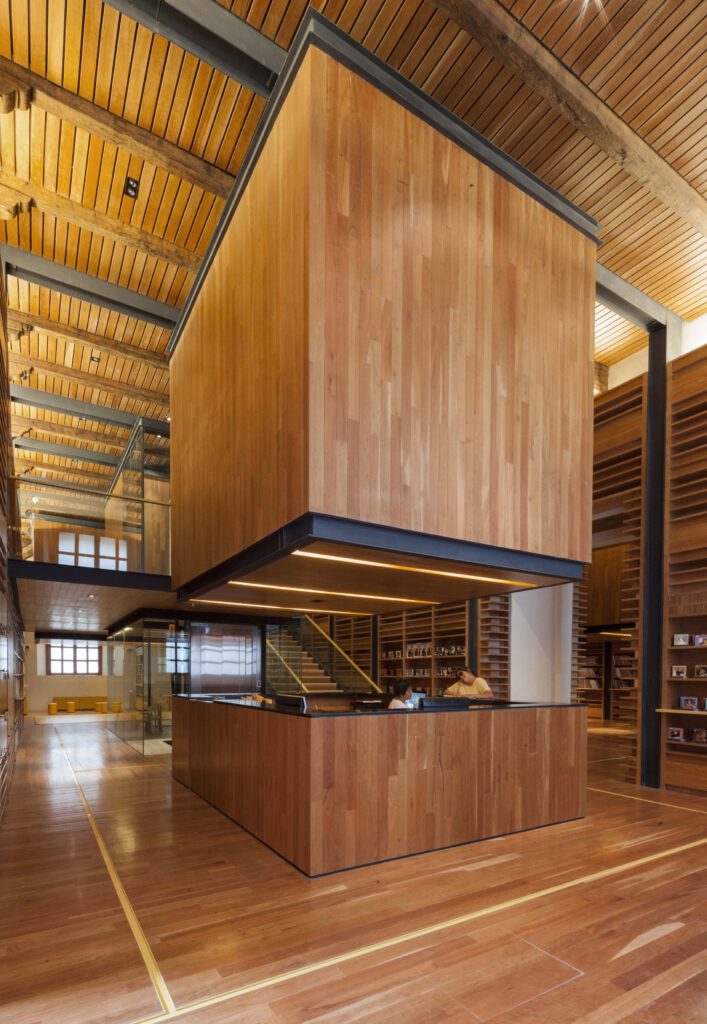
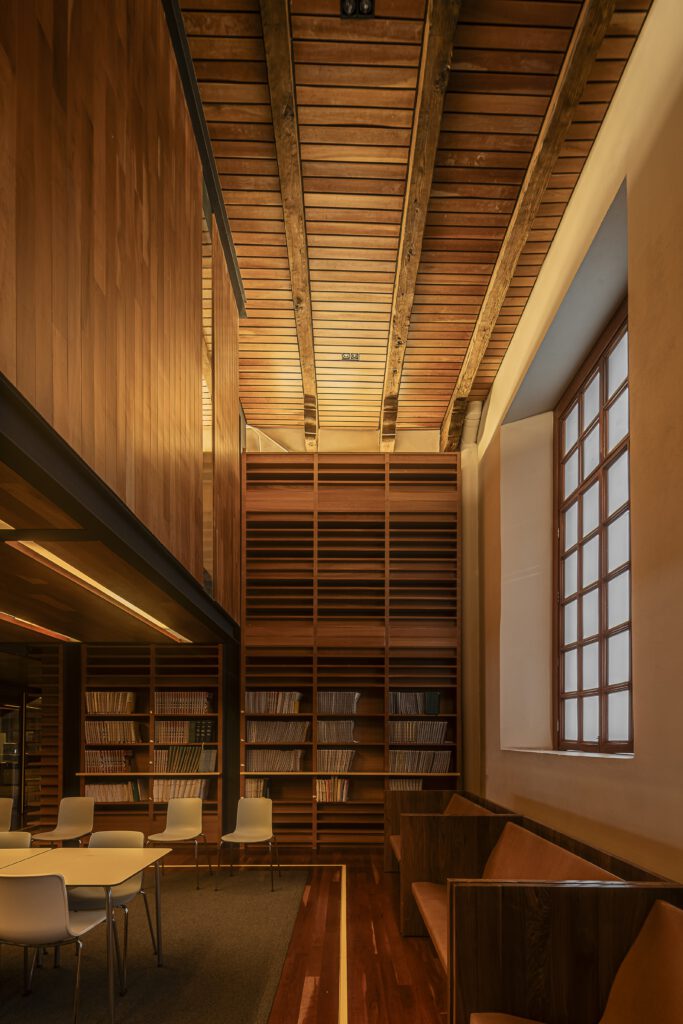
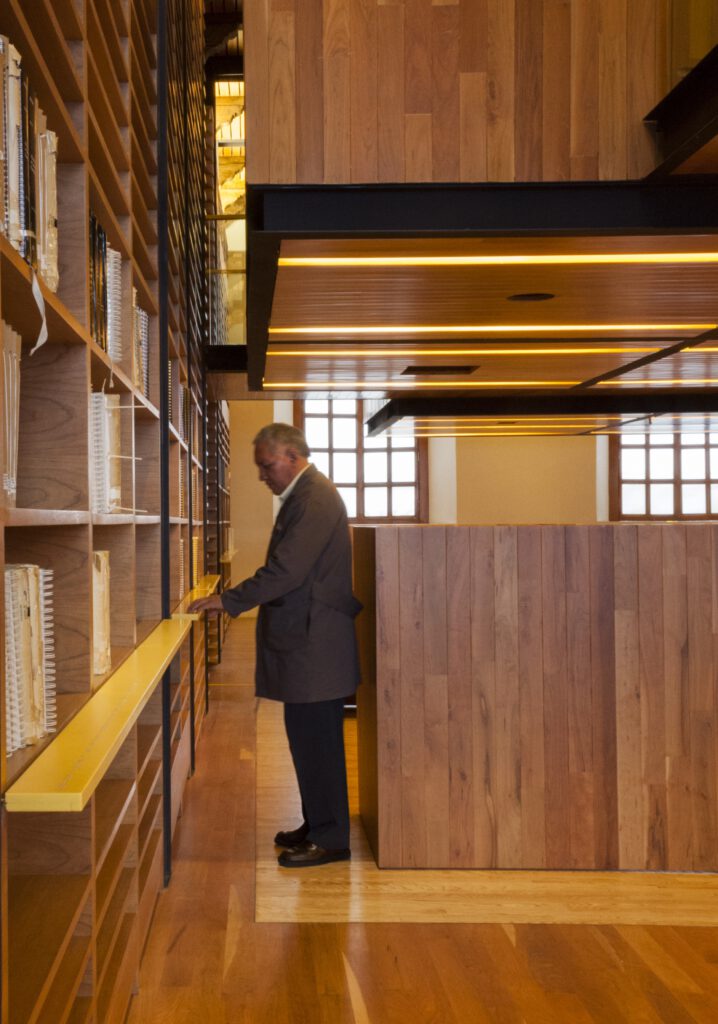
During this formative time, Carrillo says she developed a “thinking process” that helped her connect with a space on a more profound level: paying close attention to the senses. She first explored this method in 2012 while designing the Library for Blind and Visually Impaired People in an existing building in Mexico City. She aimed to create a space that could be navigated through touch, sound, and spatial awareness, including features like tactile flooring, braille signage, audio guides, and flexible furniture. This project not only serves as a valuable resource for the visually impaired community but also stands as a testament to the power of thoughtful, human-centered design in enhancing the quality of life for all users.

Photographer: Andrés Cedillo
The color yellow is the most visible to the visually impaired.
It's used in floor lines, handrails, furniture, and even lighting.

Carrillo is particularly fascinated by sound in a room and how it can influence our perception of a place. She believes that silence fosters a deeply introspective existence, allowing us to tap into a more abstract aspect of ourselves. It’s intriguing to hear this, considering how outspoken she is in other aspects of her life and work, where silence has a negative connotation. For example, her advocacy for women’s rights, which stems from a personal tragedy—losing her cousin to domestic abuse, an experience that has profoundly fueled her dedication to standing up against violence against women.

“I pursue silence in my work because I believe that the quality of a space has to do with it. A place where you can feel comfortable to absorb yourself and free your mind in a way. But I also think it’s my responsibility to take advantage of my voice and to encourage young girls—or not only girls; in this diverse world, gender shouldn’t matter— to believe that they should have a voice. In that sense, yes, there are these two different ways in how I consider silence in my work.” Carrillo goes on to express that she’s grateful for organizations like DIVIA that encourage new voices. “I believe it is important to strengthen the voice of diversity that was kept silent. It used to be a monolog, not just from men, but from powerful men.”

This year marks a significant transition in Gabriela Carrillo’s career as she closes a major chapter. The Mexican architectural collective Colectivo C733, a collaboration with her husband Carlos Facio, Jose Amozurrutia, Erik Valdez, and Israel Espin, is coming to an end. Since its inception in 2019, C733 completed over 35 small public projects, including sports and education facilities, community centers, markets, and cultural buildings, many of these in vulnerable areas of Mexico. Some of the works among these include the Matamoros and Guadalupe markets, the Nacajuca Music House and Tapachula station, and the San Blas pier. Carrillo explains that the decision to close this chapter is partly due to the increasing amount of individual work for each practice. Additionally, political transitions might alter the policies that established the Program for Urban Improvements, within which C733 operated.

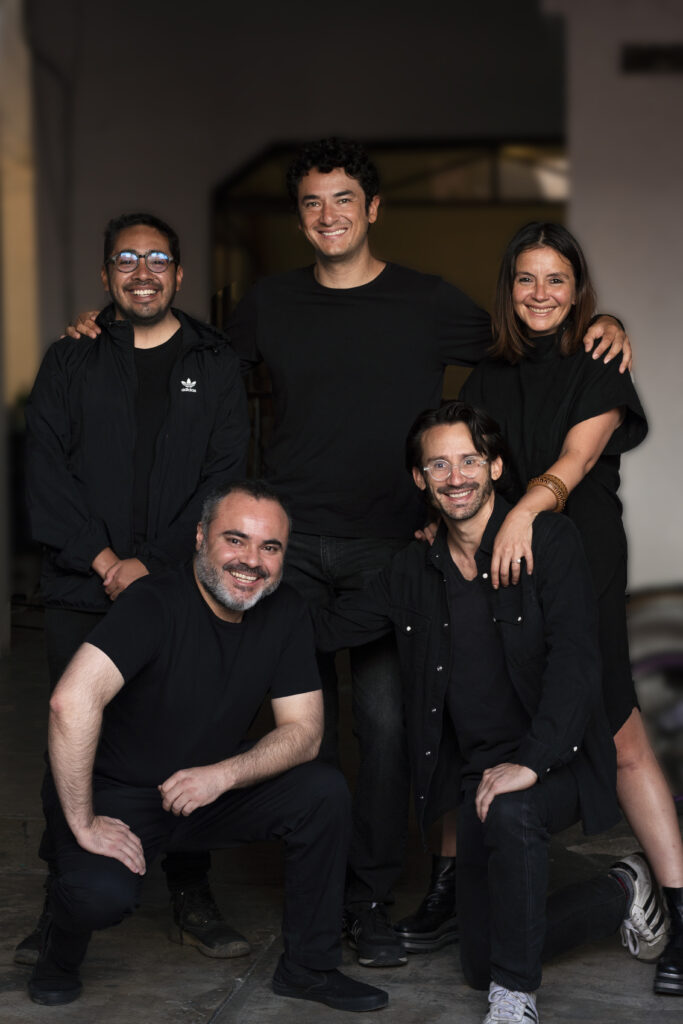
C733: Top: Israel Espin, Carlos Facio, Gabriela Carrillo. Bottom: Eric Valdez, José Amozurrutia.

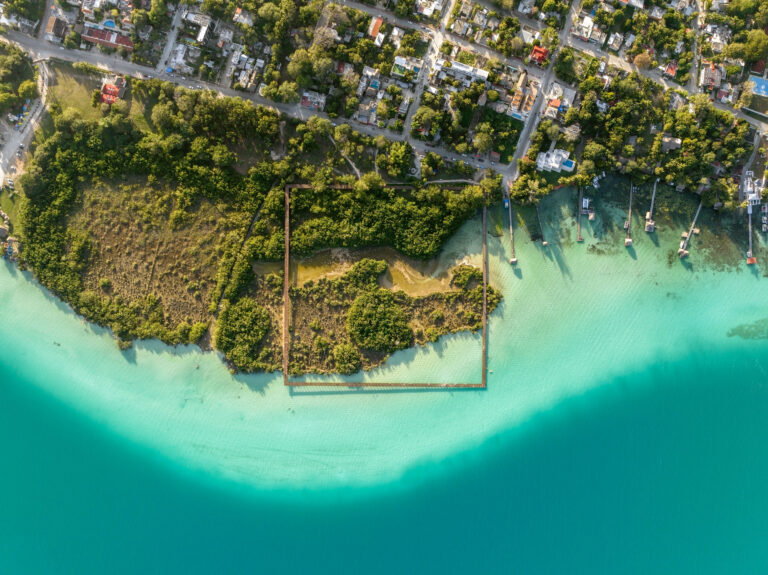
C733’s latest project is an eco-park in Bacalar in Quintana Room which is “the perfect example of what architecture means, at least for me, in the 21st century,” says Carrillo.

Sprawling over 7,000-square-meters, the park is framed by a dock of 200 meters per side. It provides access to Laguna de los 7 colores (lagoon of seven colors), one of the only spots in Mexico, which is home to the stromatolites, a living colony similar to coral. (The photos below were taken by Rafael Gamo.) The architects thoughtfully integrated the park into its surroundings, while providing visitors with solid spaces to learn about environmental preservation, including a museum showcasing a timeline of the area’s unique, 10,000 year-old history of the lagoon. The design also incorporated measures to control water runoff pollution from the village by collaborating with landscape designers and wetland experts. This was accomplished by implementing natural filters, creating depressions, and establishing rain gardens. For this, the team worked with local materials and light structures.

Carrillo admits that working on public projects is rewarding, but the pressure can be quite challenging. “It’s exhausting and [demands more] energy than private work,” she says. “I love to do public projects, but I need to balance them out.”

At this stage in her life, Carrillo is concerned with doing what feels right: as a mother, teacher, and practitioner. One way to maintain this balance is by focusing more on private commissions. While she remains skeptical about taking on projects that primarily benefit a select few, she’s reached a stage in her career where she prefers to work with people who have a similar understanding of the bigger picture. “I have excellent clients and I believe that you can achieve your best work when you are pursuing the same path,” she says. “These decisions are not easy because I live from what I do, but I believe it is important to be really honest when you are starting a professional relationship, even though you might lose a client because of that.”

Carrillo is also at a point in her life where she is trying not to make too many sacrifices, a reality that many working women face. “I don’t want to stop teaching, I don’t want to stop being a mother, I don’t want to stop going to the karate class of my kid, I want to take care of my plants, I want to read books that are not about architecture and not only start to read them and then fall asleep. I don’t want to choose! But to balance that is a big issue.”
While she might strive to take on as much as possible, Carrillo also recognizes that it takes a village to do it all. When overwhelmed with everything on her plate, she relies heavily on her circle of friends and family. “If you create a community, you can achieve a lot of stuff. As Latin Americans we have this sense of family which goes beyond—it’s the granddad, [but also] the nanny of my kid, it’s the community, the power of the house hold in a communal sense,” she says proudly. “We have that strength, so I want to keep taking advantage of that.”

TOSIN OSHINOWO
on what we can learn from African architecture

tosin oshinowo in her home office
Tosin Oshinowo in her home office in Lagos © Spark Creative

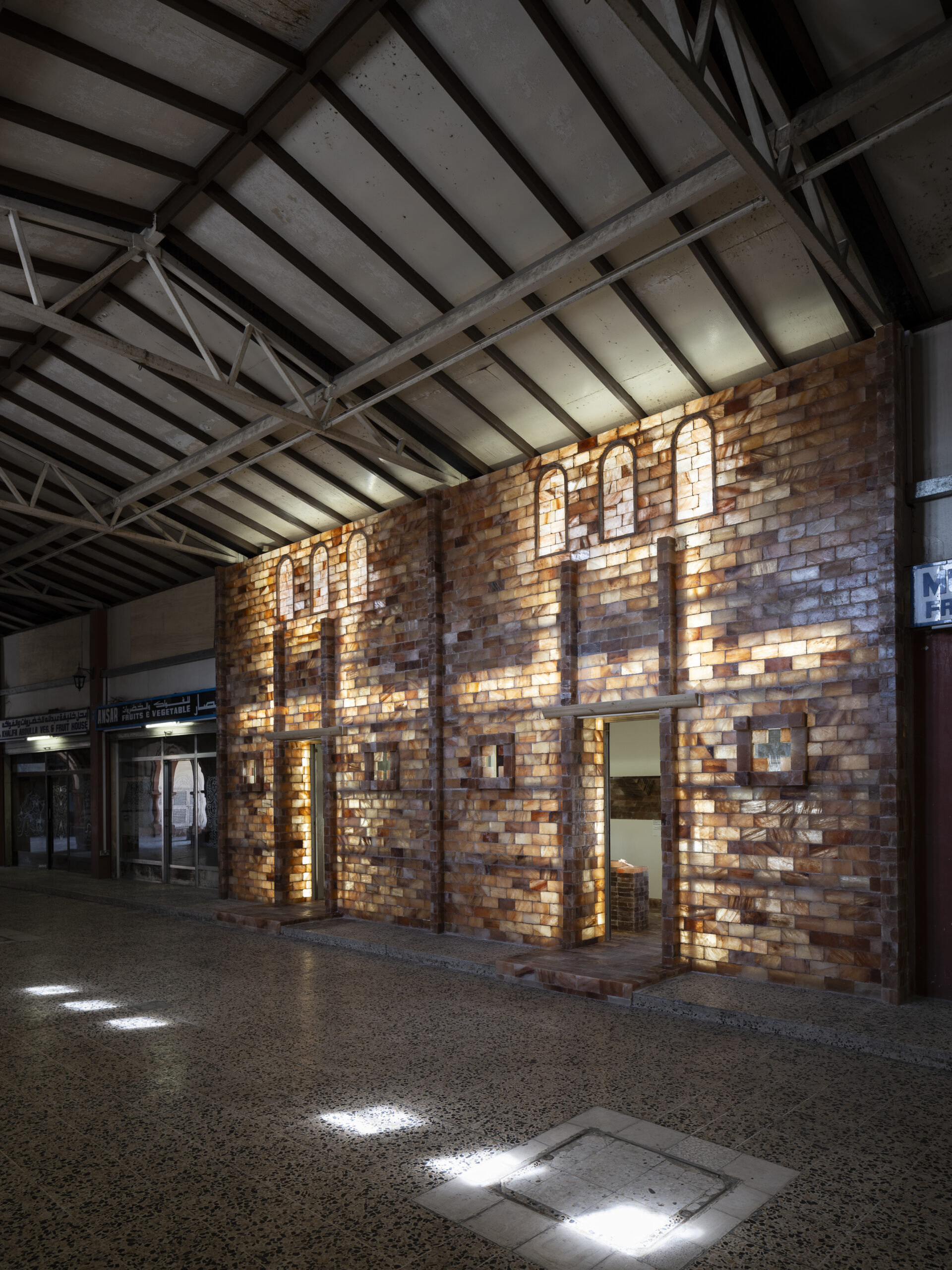
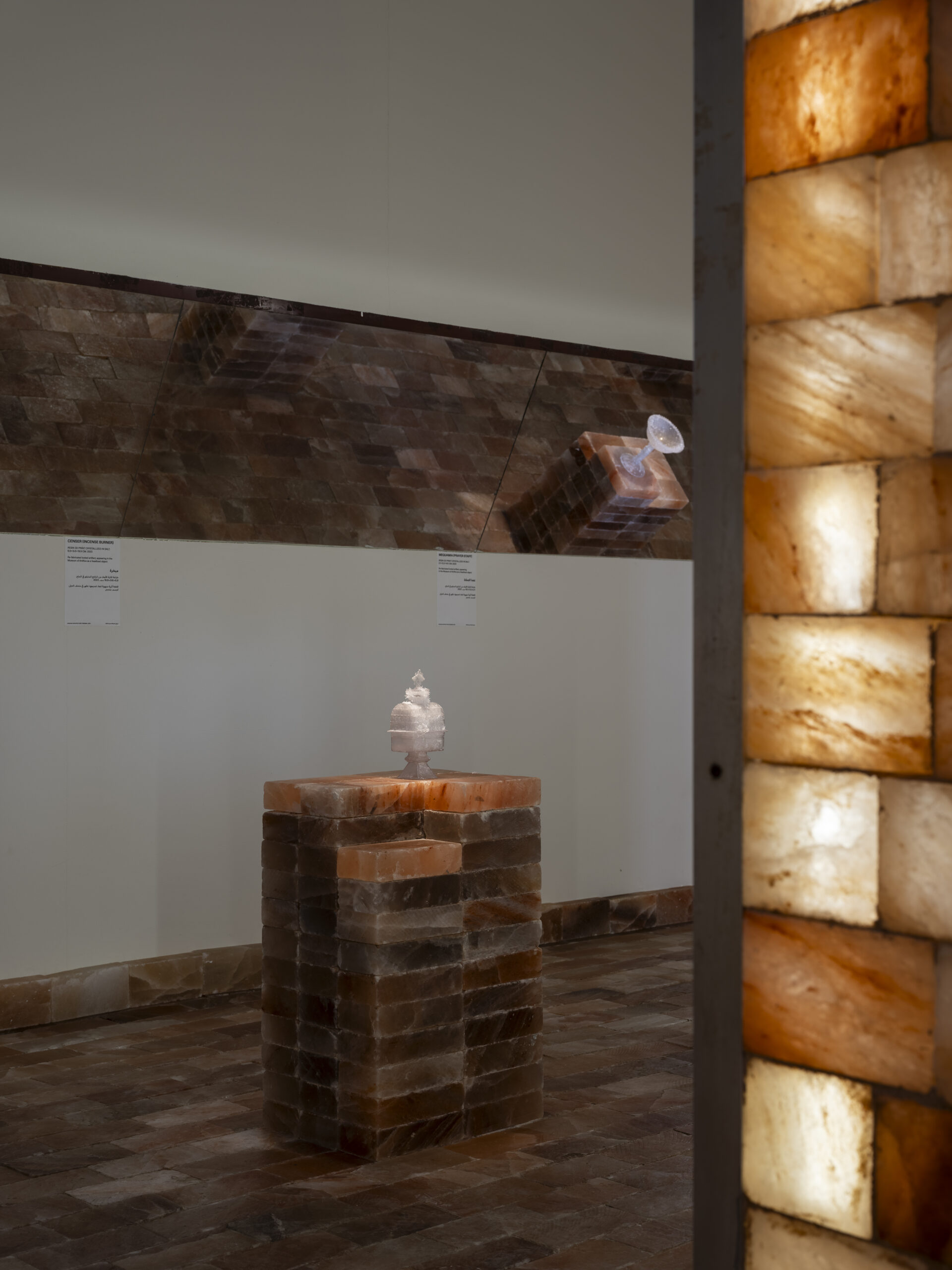
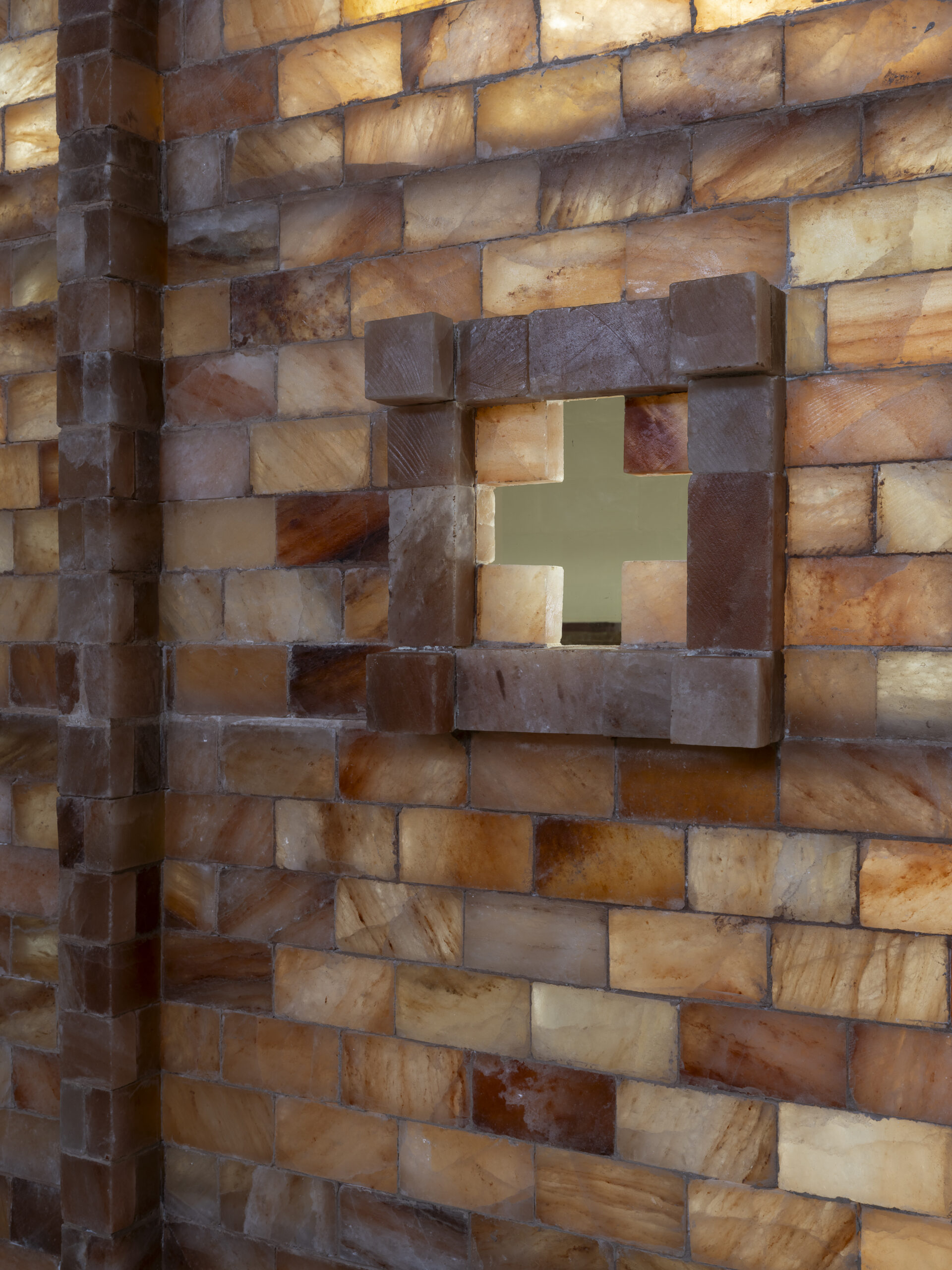
After concluding the second edition of the Sharjah Architecture Triennial just over a month ago, architect and DIVIA Award 2023 finalist Tosin Oshinowo has stepped away from her practice for the first time in her career to join a fellowship in Italy. In this interview, she shares with Veronika Lukashevich her thoughts on what her future plans might entail.

Tosin Oshinowo is seated in her room with about an hour to spare. She’s been so busy lately that it’s been hard to keep track of her whereabouts. For our interview, I expected her to be in Lagos, Nigeria, where she is usually based. However, just a few days before our online appointment, she announced on her Instagram that she was actually in Italy.

In Bellagio, to be exact, on the shores of Lake Como. The scenery is idyllic, with deep blue waters set against the rocky alpine mountains—a perfect place to unwind and reset. But that’s not why she’s there. Tosin Oshinowo is currently residing at The Bellagio Center, an establishment under the auspices of the globally acclaimed Rockefeller Foundation, renowned for its philanthropic endeavors. She has recently become a fellow at this prestigious institution, describing her experience as akin to “an intellectual wellbeing retreat.” The program—which previously hosted trailblazers like Ruth Bader Ginsburg, a staunch advocate for gender equality and the second woman to serve on the US. Supreme Court, and author and civil rights activist Maya Angelou—unites individuals across disciplines whose work aims to solve global issues. A friend who had completed the four-week residency thought Oshinowo would be the perfect candidate and encouraged her to apply. “I looked at it and I thought, ‘oh, I’ve never done anything like this’, which is to step away from my practice and say, ‘okay, I want to just focus on this’,” says Oshinowo. “So, it’s been very interesting taking this time out.”

The fellowship group consists of 15 mid-to-late-career participants who prioritize environmentalism in their work. Among them are a poet, several other writers, a former judge, and even a past employee of the Obama administration, as Oshinowo enthusiastically notes. The fellows reside in a beautiful neoclassical house, once owned by Ella Holbrook Walker, Princess of Torree e Tasso (related to the wealthy Walker family known for their whiskey distillery). In 1959, she donated her villa to the Rockefeller Foundation, wishing to support institutions that contribute to the wellbeing of humanity. “She wanted her legacy to live on after she was gone,” says Oshinowo.

“I have given so much, it’s such a massive buildup, and it’s almost like you put all this water into this big container, and then you open it up and it just goes ‘whoosh’.”

The fellows are well taken care of, enjoying access to private studios, a 50-acre-park, and even two sessions with an osteopath (talk about a high-quality retreat!). While there is a strong emphasis on individual work, which must be presented at the end of their stay, lively conversations naturally occur during dinners and lunches. “I have been very inspired by the stories that I’ve heard so far and the experiences of my fellow cohorts,” says Oshinowo. “But it might be one of those things that matures much later, when you start to reflect on the experiences of being in a place like this.”

It seems that the fellowship couldn’t have come at a better time, allowing Oshinowo to step back and reflect on the whirlwind of the past few months. In March, she completed the second edition of the Sharjah Architecture Triennial in the United Arab Emirates, a project she curated and worked on for 33 months. Running from November 11, 2023, through March 10, 2024, under the theme The Beauty of Impermanence: An Architecture of Adaptability, the Triennial focused on amplifying voices often overlooked in international dialogues, particularly from the Global South. (The first edition took place in 2019 and was curated by Adrian Lahoud under the theme Rights of Future Generations). The exhibition showcased contributions from 29 architects and studios representing 26 countries, largely centered on strategies of reuse and architecture created with scarce resources. All participants were shaped by some form of “duality,” as Oshinowo explains, meaning they’ve lived and/or worked in multicultural settings. “They have a visibility that is very powerful because they have a hybridized reality and perspective,” she says. “By being in this elevated position, they can pull these very valuable narratives that I believe are very important to our current climate crisis.”

Some of the selected projects include a building made of pink Himalayan salt by Ethiopian designer Miriam Hillawi Abraham, which directly relates to the Triennial’s themes of scarcity and impermanence. Named The Museum of Artifice (the photos below were taken by Danko Stjepanovic), it pays tribute to Ethiopia’s rock-hewn Lalibela churches and the abandoned village of Dallol, situated in one of the hottest places on the planet: the Danakil Depression. Dallol still features single-storey buildings made of mortar bonded salt blocks sourced from the adjacent salt lakes.

Another standout project is We Rest at the Bird’s Nest, a three-story building made of scaffolding and organic waste by the Nigerian architects Papa Omotayo and Eve Nnaji. Inspired by the potted plants and bird cages tended to by mechanics in an industrial area in Sharjah, the architects were the only participants who chose to focus on ecology. Their building served as a refuge for both birds and workers in an area that typically wouldn’t attract wildlife. “It was very interesting to see how these two took a subject matter that nobody considered,” says Oshinowo. “Very rarely will you have an architect design for animals.”

The project by the Nigerian architects creates an array of nesting rooms for humans and birds. Photo: Danko Stjepanovic
We Rest at the Bird's Nestby Papa Omotayo and Eve Nnaji at the Sharjah Architecture Triennial. Photo: Danko Stjepanovic

During her time curating the Triennial, Oshinowo gained profound insights into her culture and underwent significant personal growth. With the Triennial consuming so much of her energy, requiring immense physical and mental presence, I wonder how she felt the moment it ended.

“I felt quite deflated,” she admits. “I have given so much, it’s such a massive buildup, and it’s almost like you put all this water into this big container, and then you open it up and it just goes ‘whoosh’—here she gestures with her hands to illustrate an explosion—, and you just see how far the water is going to percolate onto the surface below. And that’s how it feels.”

Some of the ideas that blossomed from this experience have already taken root. This past year was marked by changes and introspective reflections that challenged Oshinowo more than ever before, particularly concerning her values in relation to consumption.

“A lot of the things that we consume, we actually do not need,” she begins. “Yes, so much of capitalism has informed our urban environments and will continue to do so. But I think once you realize that it is both the benefactor and the problem—the amount of waste it produces and the realization that it’s an ideology that is brainwashing—the magic of it is removed. And I feel very much in that position right now.”

She goes on to explain how the convenience of hyper-consumerism often disregards its long-term impact on the planet, promoting an unsustainable, impractical, and often misguided notion of progress. She makes an example.

“The simple fact as air conditioning—we don’t need it in Nigeria. You have people wearing clothes that are completely inappropriate for the environment because it’s seen as aspirational and now comfortable because of air-conditioning. It is so lifestyle driven that anything about practicality is completely negated for this attainment. Architecture plays a role in it, but it is only one part of a multi-player process.”

Oshinowo is pragmatic enough to recognize that she must operate within this reality to enact lasting change. “I’m not saying I’m going to go live completely separate from modernity,” she grins, “but I have to find, very consciously and very responsibly, ways to balance ecology with my capitalist reality. It’s systemic change that we need, and, you know, there are a lot of things to consider, but first and foremost, it starts with an awareness.”

Born in Lagos, Oshinowo tells me she grew up amidst scarcity but only realized this during her training in the UK (she received her Diploma at the Architectural Association in London), an education she describes as rooted in the concept of surplus. “We never thought about where the materials were coming from, we just specified and designed things, but never within the understanding that it was part of a process,” she explains. Upon returning to Nigeria and establishing her practice in 2013, Oshinowo found herself unable to directly apply these learned principles in her local context. This initial frustration evolved into a recognition that limitations offered opportunities for innovation. This mindset guided her exploration of the topic within the framework of the modern city for the Triennial.

“I’m interested in how some of our African traditions, materials, and our former ways of building could combat climate change,” she says. “There is a very interesting phenomenon that is happening across a lot of African cities, where, because they were master planned using orthodox planning methodologies, they should no longer function, [but they do]. [This is thanks to the] self-organizing, indigenous systems like informal markets that are almost organic forms of being. What can we learn from these adaptations to scarcity that exist here that could potentially benefit a global conversation and hopefully reduce our run on our natural resources?” She pauses as if awaiting my response.

“Do you have an answer for that?” I ask her.

“That’s why I’m here,” she laughs, looking around her room at the Bellagio Center.

Oshinowo is contemplating turning her fellowship research into a book, although she concedes that the project could manifest in various ways. “Whatever this materializes into, I hope to take that conversation further and say: Can we create an urban reality that is appropriate for our context? [I’m aware of] the big inequities that exist between the regions, this idea of extraction from one region to benefit another, and how the regions that benefited have formed a reference and canon to which we all abide. We’ve always tried to invite an infrastructure or a system that doesn’t work in our [African] context, so, in a way, we need to unlearn to relearn.”

“A lot of the things that we consume, we actually do not need. Once you realize that [capitalism] is both the benefactor and the problem—the amount of waste it produces and the realization that it’s an ideology that is brainwashing—the magic of it is removed.”

While her current focus lies on her research, Tosin Oshinowo has other exciting commitments awaiting her this year. Upon her return to Lagos, she will continue her projects for Goethe Institut and other private commissions. In May, she will travel to Australia to participate in a panel and deliver a keynote speech at the Melbourne Design Week. There have also been some changes in her practice. After a decade, she recently rebranded it as Ọshinówò Studio, explaining that the original name, cmDesign Atelier, was selected at the time to project a more established image. “As a woman and a young practitioner, you’re faced not just with ageism, but with sexism. I’d wanted to ensure that I created the notion of establishment that people would be confident to give us work. Maybe if I had started with [my] name from the beginning, it would not be where it is now.”

Mindful of her role as a role model and a woman in the public eye, Oshinowo feels honored to be a member of DIVIA. “Representation is important. When people see people who look like them, then they know that [success in this industry] is possible. This idea of excellence can be obtained. This idea of progress is within your reach. When we have more figures who are celebrated and able to continue to pivot from that celebration, I think then we’re getting closer to a really equitable world,” she says, then adds quickly: “We are not there at all. But by having more platforms like DIVIA, we are at least moving in a positive direction, which is why I am very happy to be associated with it.”

Tosin Oshinowo was nominated for the inaugural DIVIA Award 2023 by Otobong Nkanga, a critically acclaimed artist, fellow Nigerian, and DIVIA’s Advisory Board member for Africa. Among 27 international nominees, Oshinowo was selected as one of the five finalists by a high-profile jury that included Martha Thorne, former executive director of the Pritzker Architecture Prize. The jury praised Oshinowo’s “diversity of modes of engagement” and the “wide range of activities that she has embraced under the umbrella of architecture as a way of serving a broad array of constituencies in society.” In February, Oshinowo gave a final presentation at Tübingen University as part of their collaboration with DIVIA, featuring a lecture series delivered by the DIVIA Award finalists. During the lecture, she discussed her latest work and her long-term motivations as an architect. Like Ella Holbrook Walker, Oshinowo is motivated by legacy. She seeks to leave a positive imprint on the world, not only for herself and her 13-year-old daughter but also for her community. “This weighs very heavily on my chest,” she says then grows thoughtful. “Can you imagine passing through the world and there was no acknowledgement that you were here? I think that’s a really sad notion.”

DIVIA Award 2023 Catalogue (please click on the photo to purchase)
DIVIA Award 2023 Catalogue feat. Tosin Oshinowo

WORLD WATER DAY
“Water is not a commodity”:
architect und urban designer Loreta Castro on changing how we think about our most important resource

Photo © Pedro Langre

Chances are you’ve seen it dominating the international headlines lately. Mexico is facing a water crisis, with warnings of an impending “day zero” when taps could run dry in its bustling capital, Mexico City. But just how likely is this scenario?

“It could happen if we are not able to stop it from happening,” says Loreta Castro, the Mexican architect and urban designer, plainly.

It’s 7:45 a.m. (Mexico time) on a Tuesday in early March, when Castro and I meet via Zoom to discuss Mexico’s ongoing water crisis. The co-founder of the architectural and urban studio Taller Capital is the perfect person to speak on this, given her focus on water management strategies in the country. Clearly, I am not the first journalist to think so, as Castro currently finds herself in high demand, with numerous international news outlets seeking her insights on the matter (hence the early appointment). Despite the current surge in international interest, the issue is longstanding, and Castro’s expertise is extensive. It stems from decades of research and hands-on experience navigating Mexico’s complex water culture, characterized by flooding and water scarcity.

With a population of nearly 22 million people, Mexico City ranks among the world’s most populous cities. As such, it faces increasing water needs, with at least 250,000 residents living without connection to the water network. These numbers are particularly alarming given that historically, Mexico City was known as the “city of water”—originally built by the Aztecs atop a high-altitude lakebed—but then the Spanish drained it following their conquest in the 16th century. Still, the city of water will remain loyal to its name, Castro says, given that the lakebed, even if emptied, will always refill naturally. “We just have to learn how to manage it.”

“We need to understand the cycle of water during the different seasons, rather than see it as a beautification gadget.”

About 70% of Mexico City’s water supply currently relies on underground sources known as aquifers that have been excessively drained over the years, causing the ground to sink. The remaining 30% is sourced from the Cutzamala System, a network of canals, tunnels, dams, and reservoirs. The city’s infrastructure is outdated, with leaking pipes leading up to 40% water loss. But one should not be so quick to dismiss it, Castro argues, given that, flawed as it may be, the system has been essential in sustaining the lives of 22 million people. Instead, the new approach should focus on integrating additional practices (not replacing the old) to ensure the long-term functionality of the city. A challenging task, Castro confirms, “but perspectives can be changed.”

As they should, given that the issue extends beyond the capital city, affecting the entire country. Some experts predict that by 2050, the number of Mexican states facing high water stress could double, potentially reaching 20 states. In times of crisis, people tend to rely less on the government and take matters into their own hands. One of such standout initiatives is Isla Urbana, a team of engineers, designers, and sociologists dedicated to rainwater harvesting. Since their inception back in 2009, they have been targeting impoverished communities to install rainwater harvesting systems in people’s homes and currently report an annual harvest of 191 million liters. “The idea is to have a city where, during the rainy season, everyone is collecting rainwater through their rooftops – capturing it, channeling it and using it in their homes and allowing that recharge to happen in the city,” said Isla Urbana’s co-founder Renata Fenton in an interview with One Earth back in 2019. But while such efforts are commendable, Castro (who has worked with Isla Urbana in the past) says that the issue lies deeper and must be addressed at its core. “It’s about changing the water culture,” she says. “On the domestic scale, we need to learn to love water, on the city scale, we need to understand the image of water not as an aesthetic element, but as part of the city and our lives.” She adds: “Water is not a commodity. We need to understand the cycle of water during the different seasons, rather than see it as a beautification gadget.”

Together with her co-founder Jose Pablo Ambrosi, Loreta Castro centers her research and work precisely on this issue, introducing new water management strategies that are implemented through infrastructural public spaces. An example for this approach is demonstrated in the Bicentenario Park, located on a hillside in Ecatepec within the greater Mexico City urban area—a region known for its high levels of poverty and crime. In revitalizing the park, Castro reintroduced the concept of terraces, originally utilized for agriculture in the 1940s and 1950s. These terraces, spanning 600 meters and bordered by concrete walls, are filled with tezontle—a porous volcanic rock native to the area and known for its ability to absorb and retain rainwater—that gradually percolates and eventually replenishes the aquifers. Serving a dual purpose, the terraces also function as a public space while connecting the residential areas at the top and bottom of the slope.

In the Bicentenario Park, Ecatepec, Taller Capital reintroduced the concept of terraces to help replenish the aquifers. © Rafael Gamo
Bicentenario Park, Ecatepec from above © Rafael Gamo

“That way of making the landscape work as an infrastructure has been really important because there is no need to spend energy, there is no need for big maintenance. It’s just letting the landscape perform as it is,” Castro says.

Taller Capital was originally commissioned by the government to refurbish an existing park and provide football courts, but they quickly realized that there was potential for more. “The hillside is the best place to infiltrate water, that’s how the cycles work,” Castro tells me. The park was developed in two phases. The first section, covering eight hectares, was inaugurated in 2021, and residents have been using the terraces for cultivating flowers and vegetables ever since. “For us, this is the best image ever,” Castro says with enthusiasm, as she shows me photos of neighbors gardening. The second section, which includes a regulation basin, a skate park, and a baseball playground, was inaugurated only three weeks ago at the time of writing. “We’ll see how it performs.”

Bicentenario park with terraces in 1959 © Fundación ICA, Acervo Histórico. Fondo Aerofotográfico.
Section 1 of the park, elaborated by Taller Capital with a Google maps image
Sections 1+2 of the park, elaborated by Taller Capital with a Google maps image
A resident of the neighborhood using the terraces to grow flowers and vegetables © Alejandra Romo

The region is a familiar sight to Loreta Castro, as she is no stranger to rugged environments, having grown up in the Pedregal, an area characterized by large, rocky landscapes in the southwest of Mexico City. “My school and the university were also in the same neighborhood, so I spent my entire youth in this type of vegetation, in between these rocky gardens,” she says. “Landscape is very important there, it shapes your mind.”

Loreta Castro was born into a family of engineers; her uncle, who was an architect, designed her childhood home. But it wasn’t until she had the opportunity to travel to Florence, Italy as part of an art history excursion during high school that she truly fell in love with architecture, specifically with the dome of Filippo Brunelleschi. “The very fantastic thing about visiting that church is that you are able to go up the cupola in between two shelves of brick,” she says. “But also understanding the constructive system of the dome, how it holds by itself. It really opened my eyes to see the world differently.”

Inspired by this trip, Castro then started her architecture studies at the Universidad Nacional Autónoma de México (UNAM) in Mexico City, which soon led her to a three-year tenure at the USI Academy of Architecture in Mendrisio. During her time in Switzerland, she was mentored by none other than Peter Zumthor (who also supervised her diploma project), along with Mario Botta, Aurelio Galfetti (the dean of the school at the time), Luigi Snozzi, and Livio Vacchini. She fondly recalls her time at the school as “the best experience of all”, highlighting how its intimate size fostered a close-knit community among students and engaged teachers. The hands-on approach to learning had a profound impact on her architectural aspirations. Castro says studying with Zumthor may seem “cliché” today, but he was instrumental in her understanding of architecture as “a way of living freely with all your feelings.” After returning to UNAM to complete her graduation, she found support in Humberto Ricalde, who not only guided her but invited her to teach alongside him. “It’s fantastic how you start finding these people that help you on the way,” she says.

“[Women’s] untold history needs to be registered: what happened, what is taking place today, and what will be. Diversity in Architecture is one such very relevant voice—an organization by women, registering and telling the history and the stories of women in architecture.”

It’s impossible to overlook, as Castro herself acknowledges, that all her important mentors were men. “That’s the thing with architecture,” she says. “When I was a student, there weren’t that many female professors.” She pauses, then continues. “Maybe that’s the goal for our generation—having to change these things. But in my case, men have always been supporters and not detractors.” This nurturing environment traces back to her father, who was always deeply concerned with his daughter’s well-being. “My dad was the one that really encouraged me to go to Mendrisio. He was always thinking about me and my sister, about making us as autonomous as possible,” she explains, noting that his protective efforts led both her and her sister to attain black belts in karate. “My dad used to say: you need to be able to protect yourself.”

This sentiment is grounded in the grim reality of Mexico, where violence against women persists as a significant issue. According to the National Institute of Statistics and Geography, 66.1 percent of all women aged 15 and older have experienced some form of violence. During a visit to Mexico City in February, I noticed the existence of designated wagons for women and children in the subway. In multigendered cabins, there are multiple indications warning against sexual assault. The introduction of women-only wagons has led to a 26% reduction in cases of sexual harassment, however, insufficient checks at various stations continue to be a problem. As I share this, Castro is not surprised. “I’ve been very blessed, but it doesn’t mean [violence against women] is not happening.” She therefore advocates for women’s rights and supports initiatives promoting their work in architecture and design.

“I am convinced about women, as space designers, being involved in the making of cities ever since human groups became sedentary. We have also been able to give cohesion and identity to our communities, when nomadic, through other ephemeral design elements. That untold history needs to be spoken and registered: what happened, what is taking place today, and what will be. Diversity in Architecture is one such very relevant voice—an organization by women, registering an telling the history and the stories of women in architecture,” she says.

Loreta Castro speaking at her alma mater Harvard Graduate School of Design

When Loreta Castro pursued her Master’s degree in Urban Design at Harvard University, she encountered a program that, much like her previous experiences at UNAM and at USI in Switzerland, was predominantly male-oriented. Out of a group of 30 students, there were only five women, and most of the professors were men in their 60s and 70s. “It was very hard for us women, to stand there and make a point and not be wiped out,” Castro reflects. “My first year was a disaster and then in the second year, something happened. Maybe I got used to it,” she says with a smirk. “The school is hard. You need to be able to swim in the shark tank.”

But something significant did happen. It was during her time at Harvard that Castro made the decision to focus her work on water—a choice that would profoundly shape the trajectory of her career. “I was thinking, ‘What [impact] can I do in my city?’” The water issue immediately came to mind and she secured a prestigious grant aimed at researching water management in cities around the world. She embarked on this ambitious project alongside her current professional partner Jose Pablo Ambrosi, and over the course of two years, they both traveled to China, India, Bangladesh, Peru, Brazil, Italy, and the Netherlands, studying people’s water cultures—a fruitful time, filled with numerous realizations and “aha”-moments. “Access to water is a human right, but it doesn’t mean that access to water in Switzerland, in the middle of the Alps, where there’s a lot of clean water flowing all the time, has to be the same as access to water in the desert of Chihuahua in Mexico,” she says. Our minds however, as Castro explains, tend to think that way, when in reality, the focus should shift elsewhere. “We need to learn from the territory to understand how that access to water needs to be given.”

Colosio Embankment Dam in the border town Nogales, Sonora © Rafael Gamo

Her project Colosio Embankment Dam, built in the 1960s in Nogales, right at the US border, stands out as a prime example of meticulous site examination. Commissioned by the government, Taller Capital was initially tasked with designing a park adjacent to the Represo Colosio but proposed transforming the existing basin into a recreational and public space instead, ultimately winning the 2022 MCHAP.emerge Award for this project.

“If you look at Roman or prehispanic Mexican architecture, there is a very important component of it working as infrastructure. And that’s where we should move the profession towards.”

“The water body used to be seen as a dump and it carried all the wastewater from the [surrounding] houses”, causing frequent flooding and erosion of the dam. To address this problem, the team collaborated with UNAM to redesign the space into a terraced landscape. Depending on the season, different levels are either submerged or available to the community as sports grounds, playgrounds, and gardens. A proper spillway ensures the controlled discharge of excess water from the settlement. The installation of illuminated gabion pathways and seating areas around the water enhances the community’s perception of the area, creating a safer environment. The focal point of the Colosio dam is now a sports facility with a distinctive triangular roof. Along with basketball courts, the building has fostered the creation of local teams and raised new activities for the inhabitants, promoting social life in the area. “Now people see the lake as an asset,” Castro says, reflecting on how the residents have started to engage in the tradition of tequio (cleaning days) by taking daily turns to collect trash and coming together on Saturdays for a collective cleanup—a true shift in water culture.

Colosio Dam: before © Taller Capital
Colosio Dam: after © Rafael Gamo

Loreta Castro attributes a big portion of this success to her collaboration with her alma mater UNAM. “Our research was the main part of how we were able to make it happen,” she tells me. From 2011 until 2018, she held a thesis seminar on issues regarding water management at the university, where she continues to teach today, leading a project on migration alongside her colleague, friend, and fellow architect, Gabriela Carrillo. Castro believes in providing the students with the right and reflected information to help sustain the environment. “It’s very important that we [separate] architecture from luxury,” she tells me. “In schools we were taught how to design museums and hotels and libraries but not how to understand the entire urban fabric as our space of action.” For her, architecture is a service. “If you look at Roman or prehispanic architecture, there was a very important component of it working as infrastructure. And that’s where we should move the profession towards.”

Next semester, Castro will teach at her second alma mater Harvard Graduate School of Design and at Chicago IIT School of Architecture, focusing again on migration by “intertwining landscape and the city”. She is also currently engaged in a project commissioned by the Swedish eco-focused foundation re:arc institute, funded by IKEA Foundation, which operates at the intersection between climate change, social conditions, and architecture. “It’s supposed to start construction within a month and a half, which is fantastic,” Castro says.

Xolox Historical Center. The stone surface steps down to slow the flow of water runoff. © Rafael Gamo

The project is an extension of their work from two years ago when Taller Capital transformed the historic downtown of San Lucas Xolox in the north of Mexico City. The construction of the new nearby airport had disrupted the natural flow of rainwater, leading to frequent flooding and therefore prompting Taller Capital to intervene, slowing down and channeling rainwater within the city center. This was achieved through the use of local volcanic stone to create small steps, slopes, and paved areas. Throughout the process, the team engaged with the community, conducting no less than 15 town meetings to work out a solution that satisfied all groups. The third phase, which Taller Capital is embarking on this year, once again places the local community at the forefront. Together with the ejidatarios—the local landowners—and the local Potable Water System, the studio has developed strategies for runoff management and flood control, integrating water into public space rather than simply diverting it away. Known as “Pooling Xolox”, this initiative will be built on a communal site, creating a water management infrastructure that redistributes runoff across agricultural land. The water is used locally and is incorporated into the public realm, presenting a more sustainable and cost-effective measure to piping methods. By repurposing water for agricultural irrigation and creating communal spaces for recreational and cultural activities, Pooling Xolox effectively mitigates floods while enhancing community resilience and wellbeing. “Xolox could become an example for landscape and urban design, integrating public life and water management in the Valley of Mexico,” Castro says.

Pooling Xolox, bird eye view. This new basin holds runoff from the mountains and gathers it for flood prevention. Xolox, México © Taller Capital
Water creates a space for the community to gather. The excess will be used for agricultural purposes © Taller Capital

Public projects like these are not always easy to implement, as they typically rely on government funding, which often entails high levels of uncertainty and bureaucracy. Having faced her share of challenges in securing government funding in the past, being financed by re:arc offers an alternative approach “to solving water issues”, Castro says. (Her project La Quebradora, the accessible water retention and treatment complex in Mexico City, took eight years to complete, having been halted multiple times due to changes in government). “It shows us that there are other ways of doing things,” she says. With the new presidential elections coming up in June, new changes on the governmental front are to be expected but Loreta Castro remains positive. “I feel hopeful because every time I dealt with the government, it’s only been getting better,” she says with a laugh. Does this unwavering optimism also extend to Mexico’s water crisis? Absolutely. Her work has shown that people are gradually recognizing their responsibility in the issue and are generally open to changing their ways if they feel connected to the environment. “We want to show people that landscape has the power to manage water and that these places need to be taken care of,” she says. “I think it’s been working.”

Author: Veronika Lukashevich

 “We need complex problem solvers who see the bigger picture”:
Marina-Elena Wachs on her insatiable curiosity, interdisciplinarity, and “the multisensory experience”

Marina-Elena Wachs
Photo: Linda Deutsch

Dr. Marina-Elena Wachs is a true jack-of-all-trades. She embodies a diverse array of roles: master tailor, industrial designer, studio owner, professor, and consultant, to name just a few. Wachs speaks to Veronika Lukashevich about creativity, the compromises one makes in motherhood and career, and developing a humanistic perspective in our rapidly digitizing world

It’s an early morning on the last day of August, and the heat in Berlin is slowly subsiding as Marina-Elena Wachs and I meet for our interview. She greets me warmly, dressed in an elegant black vest paired with long white trousers that beautifully complement her slim figure. It is undeniable that she has a keen eye for impeccable fit; but what may not be immediately apparent is that her outfit is not a matter of chance but rather the result of a finely honed skill: Marina-Elena Wachs is a trained tailor. In fact, the vest she wears on the day we meet was designed during her apprenticeship at Atelier Behrens in Hanover. Wachs is quick to praise the studio: “We were taught to shoulder responsibility from the very beginning, including mastering all pattern-cutting techniques, whereas in many other places tasks like making coffee and sorting needles were the norm [for trainees].”

Wachs, already a high school graduate at the time, was eager “to learn the fundamentals first” which led her to take on the apprenticeship. She then spent two years working at the costume department of the Staatstheater Hannover, where she was exposed to both conventional and experimental techniques. “We had to reconstruct patterns from historical illustrations because those templates and cutting techniques were unavailable,” she recalls. Marina-Elena—who also used to sing in a child’s choir at the same theater—quickly became captivated by the process, specifically how music was being translated into visual imagery, costumes, and stage presence. “I was fascinated by the entire production of it and the dramaturgy behind it. Whether it was assisting in the cloakroom or observing what was happening behind the scenes—I was interested in the wholeness of it all.”

Marina-Elena Wachs wearing the blazer coat she designed and crafted during her apprenticeship at Atelier Behrens in the 1990s. Photo: Valentin G. Wachs, 2022
The perfect fit
The perfect fit. Photo: Valentin G. Wachs, 2022

Following the apprenticeship, Wachs further immersed herself in a flurry of activity, driven by her unstoppable pursuit of knowledge. She spent her third and final year of the “Gesellenzeit” (journeyman years) at Bogner in Munich before successfully passing the exam for the highest level of craftsman training in Germany, earning the prestigious title of master tailor. She then underwent pattern maker’s training in Hamburg, equipping her with the required skills to establish her own studio, which she did in 1994, specializing on made-to-measure fashion and costume design. (Here, she draws an interesting connection between design and architecture, pointing out that bespoke clothing is akin to crafting long-lasting and comfortable structures, a.k.a. “architecture” for the body.) In 1995, Wachs was among the 17 students selected from a pool of 600 applicants to pursue studies in Industrial Design at the Braunschweig University of Art—this decision stemmed from her desire to broaden her qualifications to other fields. Two years later, the impending arrival of her first son (her second son was born in 2002) served as inspiration for her pre-diploma project: a design for a delivery room. With a keen interest in space, Wachs had originally wanted to become an interior architect but was unable to secure a university placement at the time. She reflects on her journey: “I was always very curious. Thinking back on the last 35 years and all the things I’ve done in this time—that’s quite dizzying.”

It’s true, one might find it challenging at first to grasp the full extent of it all since her work is far from monotonous. Since 2010, Marina-Elena Wachs has been teaching Design Theory with a focus on fashion and textiles at Niederrhein University, while also striving to provide a practical approach for her students. As part of her studio work—which over time has developed into a space for research, feasibility reports, design projects (centering on material-development) and consulting—, she collaborates with Ulrike Brandi, lighting designer and founder of Ulrike Brandi Licht, and architect Ernst Ulrich Tillmanns on a project titled “Light goes”. For Wachs, working with people from different fields is highly enriching and a necessity. Together they research material solutions in design and light development. Wachs’ partnership with Brandi spans over two decades, originating from meeting at university, which we shall delve into later. 

Ulrike Brandi & Marina-Elena Wachs, with their books, 2023, Hamburg. Photo: Wachs/Brandi.

Wachs also conducts workshops for both corporate entities and children, is dedicated to what she terms “knowledge transfer”, meaning she publishes books to share her expertise, and offers consultancy services to ministries. In her role as a consultant, she also offers advice on material development (from 2003 to 2007 she examined the handling of materials in design, art, and architecture in her doctoral thesis Material Mind – new materials in design, art, and architecture): she evaluates and develops sustainable materials while also educating people on sustainable material behavior. But that’s not all. In addition to managing the demands of a full-time career and motherhood to her two sons, Wachs also cares for her mother and looked after her father until his passing in 2015. Listening to her extensive list of responsibilities (while I shamefully struggle to deal with a simple case of jetlag), I can’t help but ponder the many expectations society often poses on women. I find myself wondering: where does she summon the energy to do it all?

“Of course I need my own pursuits to regain strength. For me, that means traveling to France, immersing myself in nature, and experiencing a new language. It also involves music and sports, and I still take singing lessons,” she says. But there’s one aspect that perhaps surpasses them all: “Reflection. I believe it’s a deeply feminine trait—questioning oneself, harboring doubts—but it’s also a source of growth. It’s about learning which strategies to employ, when to assert oneself, and when to step back.”

A significant time in Marina Wachs’ life when she chose the latter was prioritizing the care of her sons. It’s important to note that she doesn’t perceive this choice as a “career hole”, although it might have been perceived this way from the outside at times. “At a certain point in my life seeing my son graduate was more important to me than attending a lecture by a famous designer. My male manager at the time would criticize me for it, insisting, ‘It’s your job; you have to go.’ To which I would respond, ‘Yes, it’s my job, but my children are my priority.’” While her ability to stand up for herself and her values is commendable, Wachs is also honest enough to point out that the time spent prioritizing family over work has resulted in a financial gap in her pension provision. “Prenuptial agreements were not common at the time, and women were not typically advised on how to navigate such situations. So, you have to balance this time out [afterwards]. Now that my children are out of the house, I have a better chance of doing that.” She continues: “But I don’t have to be in the spotlight all the time. It’s important to give the stage to the younger generation.” As a teacher, as we discuss, this means offering her students a platform to experiment and make mistakes without being punished for it. “It’s a way to rediscover a certain playfulness to approach things. With a naïve gaze—like we did as children.”

From when she was very young, Marina-Elena Wachs grew up building her “own kingdom”. She stubbornly tried to push through her interests in creative endeavors despite her parents, a post-war generation, envisioning a more secure profession for their daughter. Her earliest memories of creativity include her grandfather sketching Wilhem Busch’s Max and Moritz on grid paper; her grandmother, Meta Wilkening, who also taught her how to crochet, instilled in her an appreciation for beauty. Wachs remembers: “One Sunday, my grandmother, who typically wore an apron, put on a fancy dress and went to the hairdresser. She then picked out a huge bag from the closet, and, placing a travel ticket inside, took me to Hanover Park.” There, her grandmother bought her a slice of cake—an unusual thing for her to spend money on desserts—, handed her granddaughter a piece of paper and a pen before leading her to the rose garden to draw. “I will never forget the smell of the roses; the beauty around me was so different compared to the daily life that I was used to,” Wachs reminisces.

“Multisensory training in the formative years lays the groundwork for a holistic approach later on.”

Wachs’ grandmother originally hailed from Brelingen, a countryside area where her family cultivated flax in the post-World War II era. “They would harvest it, ret it, then scutch it before spinning yarn. Textiles would be woven using a loom; then monograms would be crafted.” One day, Wachs’ grandmother purchased a sewing machine and, by bartering 60 eggs for colored yarn, started fashioning clothing pieces for her children to wear on special occasions. It’s remarkable that the entire process, from harvesting the plant to designing the final clothing piece, was carried out by one single individual.

“This textile heritage that I have and the role that my grandmother and mother played in my life, I only truly understood the significance of it later in life,” Wachs reflects. In 2018, her grandmothers’ hand-stitched pieces were exhibited at the Kunstmuseum Wolfsburg as part of a participatory exhibition titled “Museum für Werte” (engl.: Museum for Values).

Hand-stitched tablecloth, designed and crafted by Marina-Elena Wachs’ grandmother Meta Wilkening.
Hand-stitched tablecloth, designed and crafted by Marina-Elena Wachs’ grandmother Meta Wilkening. Photo: Linda Deutsch, 2022.

The key takeaway from this story is the importance of, as Wachs calls it, the multisensory experience, which derives from deep engagement with our surroundings and must be further nurtured in educational settings.

“Multisensory training in the formative years lays the groundwork for a holistic approach later on. Fewer businesses are willing to invest in hand crafts education, but it’s crucial to emphasize the need to retrain our multisensory skills (the tactile, the acoustic), as our hand-brain coordination is diminishing.” This, as Wachs later clarifies, serves a long-term purpose: “We need to generate knowledge for the so-called complex problem solvers who are able to see the bigger picture,” she asserts. “People often ask me about my background—working in textiles for more than ten years, then pursuing industrial design studies, and engaging in interdisciplinary work, I’m often told I do a little bit of everything. But I tell them, ‘no, I have a cohesive concept, I manage projects, and I delve into specifics when necessary.’ I always maintain an overarching perspective.”

Marina-Elena Wachs: “We have to keep training our ‘hand-brain coordination’”. Photo: Linda Deutsch, 2022.

Wachs further emphasizes the significate of interdisciplinarity in her professional approach. As a professor, she advocates for engaging in excursions with her students in order to seek opinions and perspectives from other disciplinaries, including architecture, that provide a distinct “didactic value”. These excursions to museums and special “places to remember” (filled with multi-sensual associations) are often followed by short sketching sessions, during which the insights gained are integrated into the students’ work. Despite teaching design theory, Wachs’ approach is highly participatory and integrates multiple forms of media, which is, in a way, her response to the world being highly dominated by “male ideals”.

“In my generation, knowledge is power, and power is not something one wants to share. I think that’s horrible.” She addressed the issue of knowledge loss in her post-doc thesis Design Engineering – sustainable and holistic, outlining methods for creating knowledge archives, both personal and societal. “We should think bigger, more united, and more European.”

Design engineering – sustainable and holistic was published in 2022 with avedition.
Design engineering – sustainable and holistic was published
in 2022 with avedition. Photo: Knut Amtenbrink, 2022. Photo: Knut Amtenbrink, 2022.

To help tackle this issue, Wachs has established a mentoring program through her studio called PEM (Program of European Mentoring). Through this initiative, she provides young professionals aspiring to pursue a career in academia and research with a platform to enter this sphere, thereby fostering their visibility. As such, she puts an emphasis on self-management and encourages risk-taking and pro-active behavior. In the past, Wachs has invited Niederrhein University alumni to join her and present together at the Conference on Engineering & Product Design Education in Barcelona. For the upcoming conference taking place in Birmingham in September, she’ll be accompanied by a graduate from Germany and two new talents from the Netherlands and Denmark. “I am trying to facilitate the path for the younger generation because I wish someone had done it for me.”

Despite having to overcome her share of obstacles, Wachs says she’s been supported by many people, including women, throughout her life. These mentors include her aforementioned long-time collaborator Ulrike Brandi, who used to be a visiting professor at Braunschweig University of Art, where Wachs was studying at the time. They later collaborated for the 2010 Expo in Hanover, the first recognized World Expo in Germany under the theme of “Man, Nature, Technology – a new world emerges”. For this event, Wachs developed architecture and spatial modeling, including temperature-reactive seating elements that changed color due to polymers when coming in contact with a body. “[Brandi], who always challenges herself, used to tell me: ‘Remain persistent and friendly when pursuing a path, keep going, even after you have children.’” The advice must have struck a chord—Wachs’ tenacity throughout her career is undeniable. She also credits her mother and grandmother for embodying feminist ideals in their traditional households even if they couldn’t overtly express them to their husbands. Christine Lagarde, President of the European Central Bank, also makes the list because of her assertiveness in the male-dominated field but also for her fashion sense. “She has been able to maintain femininity and elegance in her clothing, unlike many other women in politics who may feel restricted to wearing pantsuits in order to be taken seriously,” says Wachs.

Design draft by Marina-Elena Wachs for Expo 2000 Hanover, coached by Ulrike Brandi, 1999.
Design draft by Marina-Elena Wachs for Expo 2000 Hanover, coached by Ulrike Brandi, 1999. Photo: M.E. Wachs, 2024.

After this, as I try to dissect the broader meaning of femininity—or “the feminine”—our conversation takes a philosophical turn and inspires me to ponder the things discussed long after our interview ends. In our male-dominated society, where the ideal is often rooted in the rational, the feminine appears to be frequently overlooked. Wachs proceeds to say that the government invests increasing amounts of money in “the abstract, digital things,” neglecting the humanities. “We should not only encourage STEM subjects, the ones that are quantifiable and measurable,” she says. Because, in fact, the solution typically lies in the holistic, philosophical, and transdisciplinary approach. “Just consider design and architecture; you can learn so much from the metaphorical. Think Roland Barthes. Or Peter Zumthor and the impact his aunt’s garden had on him. How he recalled in his memory how the door handle felt in his hand when entering the garden, or the sound of the pebbles under his feet, or the gentle sheen of oak wood in the staircase. And that’s the question of embodied experiences…”

I think back to the beginning of our conversation when she shared her personal memories of drawing in a rose garden in Hanover as child, the fragrant scent of the flowers lingering in the air. How delicate this memory was and still is.

“… and the vulnerable,” I add.

“Yes, the vulnerable as well,” Marina-Elena agrees, then concludes: “Think crisis management. We cannot coexist with AI in the future if we do not have a humanistic approach to things.” This year, as one might expect, Marina will delve deeper into this topic and give lectures on “First embodied experiences before designing with(in) AI” at conferences in the UK and in Switzerland.

Marina-Elena Wachs is sketching within AI, at FTZ digital reality,
Hamburg 2021, thanks to Prof. Dr. Roland Greule. Photo: M.E. Wachs, 2021.

The multisensory experience, as I conclude for myself through our conversation, is the true origin of solution-based thinking. This is where passion and connection are born, and it’s crucial to nurture it from the very beginning by placing more value on the physical world. In our digital-dominated era, allowing children to play in puddles and mud, paint with brushes on canvas in the garden, work with wood blocks, singing aloud together while making music with stones—all the activities that Marina-Elena Wachs engaged in with her children when they were little—fosters our sense of empathy. It allows the feminine to flourish, and, hopefully, brings us back to ourselves, ultimately helping us to see the bigger picture.  

 “Paraguay needs quality infrastructure”:
Viviana Pozzoli speaks on the country’s housing problem and shares her goals for the new year

© Erwin Bukacsek

Paraguayan architect Viviana Pozzoli has big dreams for her prolific Asunción-based studio Equipo de Arquitectura. In this interview, the DIVIA Award 2023 nominee tells Veronika Lukashevich about her dream of building within the public realm, making architecture that responds to global issues, and having a network of inspiring women in the industry

Viviana Pozzoli likes to be prepared. As we meet over Skype in early January, she logs in a few minutes early with a neatly placed notebook by her side. In it, she has jotted down a few paragraphs to help organize her thoughts. She greets me warmly from her studio, Equipo de Arquitectura, in Paraguayan capital Asunción. The days start rather late at Pozzoli’s office, with others typically arriving around ten or eleven in the morning. At 9 am, we have about an hour or two to speak undisturbed. “We are very flexible with the time here,” she says with a laugh, and I am curious: what does a typical day look like for her?

Viviana Pozzoli in front of her cube-shaped studio in Asunción © Leonardo Méndez

“I’ll show you,” she says, turning her computer screen around. I immediately notice the morning light beautifully dancing on the terracotta-colored walls—a testament to her studio’s reputation for prioritizing light in their designs. The screen reveals a table with a stack of intriguing book choices arranged on top, including The Singularity is Near by Ray Kurzweil, a 2005 publication about the future of humanity and the rise of artificial intelligence.

“AI is something everybody should be interested in because it is a part of our daily life and will drastically change the future of humanity,” she says as I ask her about her literary interests. The other books—La rebelíon de las masas (The Revolt of the Masses) by José Ortega y Gasset and Urban Structures for the future by Justus Dahinden—display her interests in philosophy, literature, and unbuilt architecture. “We are fascinated by utopian/dystopian architecture and urbanism.” (Fun fact: she and her team have a second Instagram account titled Unbuilt Architecture (@arquitecturanoconstruida), where they publish projects throughout history that were never realized.)

“Caja de Tierra” studio in Asunción © Leonardo Méndez

Pozzoli co-founded Equipo de Arquitectura with her partner (now husband) and Chilean-born architect, Horacio Cherniavsky, in 2017. The cube-shaped building, also called “Caja de Tierra” (Earth Box), was constructed using rammed earth, recycled glass, and formwork wood. It is designed around two existing trees (a signature move in their approach to work around and not against nature): the sneak, positioned outside but framed within the structure, and the guavirá, located in the middle of the space. Step into the 485-square-foot studio and you are likely to be greeted by jazz tunes playing in the background, occasionally interrupted by the purrs of Pozzoli’s rescue cat, Poe—named in honor of Edgar Allan Poe—, while her dog Linda, also a rescue, happily wags its tail somewhere nearby. Equipo de Arquitectura translates from Spanish to team of architecture, which perfectly captures the collaborative and relaxed atmosphere within the office. The team currently consists of four core members, but there are plans to expand this year. “We all get involved. When I have to make a decision, I have to share it with the others. Knowing that the others don’t support my idea—I don’t feel good doing that. We like to work in a horizontal way.”

Viviana Pozzoli (second from the right), Horacio Cherniavsky (on the right) with their team and collaborators
Viviana Pozzoli’s dog Linda is a frequent guest in Equipo de Arquitectura’s office
Equipo de Arquitectura’s studio is built around nature, not against it. © Leonardo Méndez

Pozzoli and Cherniavsky met at university and started off their journey by competing in national competitions in 2017. With a plethora of options to choose from that year, they secured victories in two competitions which saw the restoration of an old construction that was used as a Synagogue for the Hebraic Union of Paraguay (2019) and the ASA Steam, a new school pavilion designed within the large campus of the American School of Asunción in Paraguay (2020). The prize money from the competitions was invested in the construction of their office. In just six-plus years, Equipo de Arquitectura have established a successful reputation in Paraguay and cultivated a decent network within the industry. They have engaged in a total of 30 projects, 13 of which, including schools, offices, and residential houses, have been successfully realized.

UHP Synagogue (2019) in Asunción © Leonardo Méndez
Skylights in the ceiling allow for light to pass through and create beautiful patterns. © Leonardo Méndez
ASA Steam school pavilion in Asunción (2020) © Federico Cairoli
The school embodies values of openness and inclusion through its constructive clarity. © Federico Cairoli
The architectural focus lies on contact with the outside world and nature. © Federico Cairoli

Their work has garnered recognition from prominent architects in the country, including Javier Corvalán, who co-designed one of the ten Vatican chapels in San Giorgio Maggiore for the 2018 Architecture Biennale. His influence on Pozzoli’s strong use of daylight and air is evident in her approach (she worked in Corvalán’s office in 2014 and 2015; he was also her thesis project tutor at university). Martin Jasper, the founder of Jasper Architects operating across Berlin, Buenos Aires, and Asunción, nominated Pozzoli for the inaugural international DIVIA Award in 2023. This recognition was initiated by Diversity in Architecture, a Berlin-based organization providing a platform for exceptional women in architecture who are committed to addressing the environmental and social challenges of our modern world.  

“Viviana Pozzoli’s architectural works embody an honest simplicity that sets them apart,” says Martin Jasper, who served as DIVIA’s Advisory Board member for South America. “The artful fusion of local traditional building techniques distinguishes her work; brick and earth are seamlessly transformed into contemporary masterpieces. Her creations [showcase] a complete architecture that encompasses ecology, materiality, and groundbreaking research—a testament to her commitment to both heritage and innovation.”

Pozzoli’s ambition and prolific output in such a short period of time are so impressive that it’s hard to believe her family weren’t initially too keen on her becoming an architect. “My father said to me: you will die poor,” she recalls. A civil engineer, he encountered many challenges during the economic crisis in Paraguay in the mid-nineties. But the times have changed. While Paraguay remains one of the poorest countries in South America, the past decade has witnessed an economic upswing, providing Pozzoli and her university peers with plenty of work opportunities. “Paraguay used to be incognito but then many architecture students came here to do internships with Javier Corvalán and other studios and stayed,” she says. Besides, the inspiration to become an architect had been instilled in her long before she was old enough to consciously choose a career path. Her mother, who took a break from education to marry and have children, had plans to resume her studies later but an unforeseen illness prevented her from pursuing this goal. “My grandmother always wanted her daughter to be a professional because in her time it had been impossible. So, I grew [up] with that idea that being an architect was something that my mother wanted—but at the time I didn’t know what it meant.”

“We need a lot of infrastructure here, but a quality one, because in my country the government is never interested in developing projects with architectural quality.”

Although strongly influenced by this personal experience, the career choice wasn’t that far-fetched considering that already as a child, Pozzoli showed an interest in spaces. “I have many memories in my youth about atmosphere, colors, temperature, textures. I think I’ve always been attracted to the feeling that places, materials, smells, and light transmit,” she reflects. “As soon as I realized that everything that had attracted me subconsciously was a world of meaning and a logical explanation, my passion grew. I feel very grateful for architecture. It opens your mind to a world of abstraction and ideas and at the same time of emotions and feelings.”

Childcare center in Villeta, Paraguay (2021) © Federico Cairoli

A lot of that passion is poured into her projects, one of them being a childcare center in the suburb of the important port town Villeta, situated on the banks of the Paraguay River on the border to Argentina. It was completed in 2021 and gained international attention early last year when Viviana Pozzoli was awarded with the Moira Gemmill Prize for Emerging Architecture, run in association with the Architectural Review. The design considers input from teachers specializing in Reggio Emilia and Montessori methodologies and focuses on aspects such as “textures, the sensory experience of the spaces, and their effect on children.”

Site plan of the childcare center in Villeta, Paraguay © Federico Cairoli

The center strays away from the enclosed concept of an educational space and opens up the walls to enable a dialogue with nature. The square-shaped building is divided into four large sections, all connected through outdoor spaces and with their own separate patios. The central courtyard functions as a playground. The four sections make up two large classrooms that can be further divided into two smaller spaces, a dining, and an administrative area. Green roofs, cross ventilation, and the use of rammed earth were intentional choices to minimize environmental impact and ensure comfort for users. The experience working on the childcare center held numerous lessons for Pozzoli, and one of them even altered her perception of sustainability—but not in the way one might expect.

The central courtyard functions as a playground. © Federico Cairoli

Sheila O’Donnell [architect and judge of the Moira Gemmill Prize for Emerging Architecture] gave me a revelation,” says Pozzoli and shares the story behind it.

Paraguay’s Minister of Education requested Equipo de Arquitectura’s design from the client in order to replicate it throughout the country. Pozzoli recalls the initial skepticism within her team: “The circumstance was totally atypical. We were like, this is not good, nobody called us; they don’t recognize the value of the architect in this.” Eventually, her team agreed to donate the design hoping to prevent the use of a subpar alternative and offered the government their architectural guidance on the design’s adaptation to various sites. Disappointingly, the call never came.

The childcare center was built as an introspective, sensitive space for early childhood learning. © Federico Cairoli

“Two years and a pandemic later I found out that the government built 19 childcare centers across the country using our design—rammed earth walls, green roofs, cross ventilation…We couldn’t believe it. But then Sheila said to me, ‘That too is sustainability because the project could be built without the architect.’ And I didn’t see it that way [at first], but now I understand.”

The four large sections are connected through outdoor spaces and have with their own separate patios. © Federico Cairoli

While the situation could have been handled differently, and, let’s face it, more tactfully, it is not entirely surprising that their design was selected, considering Equipo de Arquitectura’s strong responsiveness to the local climate and context. Pozzoli’s practice embraces different realities, materials, programs, and scales, which, she says, ultimately reflects her personal understanding of diversity. “Diversity is also richness because it allows me to expand my vision of the world, of the different realities, where by knowing and learning and seeing how to collaborate together, we can expand the spectrum of possibilities and opportunities.”

“Social housing needs to be mixed use. We have to co-exist in a diverse way—economically and socially.”

In the future, she plans on shifting her impact onto the public realm: “Public projects are my goal. That would be a dream.” The first issue she would tackle if given a chance? “The social housing problem. We need a lot of infrastructure here, but [a] quality one, because in my country the government is never interested in developing projects with architectural quality. Many times, the government wastes opportunities and resources on mediocre projects that do not help to resolve the social and environmental problems.”

Here she refers to the remote, single-use buildings far away from the city center and the lack of infrastructure to reach them. According to Habitat for Humanity, 20% of the families in Asunción live in informal settlements without access to basic services. In recent years, Paraguay’s government has tripled investment in social housing, but according to Pozzoli, the quality of the buildings leaves much to be desired. “Social housing needs to be mixed use. We have to co-exist in a diverse way—economically and socially.”

Equipo de Arquitectura designed The Intermediate House (2021) in Asunción with an open dining area between the entrance and the central court. © Federico Cairoli
Flexible partitions at The Intermediate House allow for a smooth transition between private and public space. © Federico Cairoli

Though visibly frustrated, Pozzoli is determined to find appropriate solutions to the problem, despite facing a whole new set of challenges along the way. While she has been involved in public projects before, her role has always been secondary. This is mainly due, she says, to the stringent conditions set by the banks for the projects funded through loans. The bank typically demands highly qualified academic and professional resumes from architects—a criterion that Pozzoli has been unable to fully fulfil thus far, despite dedicating half of her time to academic work.

Flexible partitions create a playfulness with light and air © Federico Cairoli

She serves as project professor at her alma mater, the private Universidad Católica Nuestra Señora de la Asunción, and as assistant professor at the Facultad de Arquitectura, Diseño y Arte de la Universidad Nacional de Asunción. “It [takes up] a lot of time, but it’s the only way I can contribute to a new generation,” she says. This past semester Pozzoli welcomed the very first Guaraní indigenous woman studying architecture in Paraguay and dedicated a class to understanding the Guaraní community. “We worked on the projects there, [the student] also gave us guidelines about her culture and her contexts. It was a very rich experience,” says Pozzoli.

“Diversity is also richness because it allows me to expand my vision of the world, of the different realities, where by knowing and learning and seeing how to collaborate together, we can expand the spectrum of possibilities and opportunities.”

With her work, Pozzoli wants to empower women in the field, noting that the importance of gender equality is still not fully acknowledged among the older male architects in Paraguay. “In the National University, I’m in the first semester where the main professor is a woman—Cecilia Roman is the only woman who heads an architectural design course in our studio unit.” Pozzoli further expresses her admiration for female leaders in her industry, citing Marta Maccaglia, a fellow nominee and the winner of the DIVIA Award 2023, as her inspiration. “I am fascinated by what she’s doing because it’s incredible. She has a very big personality and is very confident, and that’s a thing that I really admire.” Maccaglia and her architectural NGO Semillas build schools and other educational institutions in the Peruvian jungle. Pozzoli’s role models also include the Mexican practitioner Gabriela Carrillo, whom she calls “a rock star” for her social impact work, her peer Violeta Pérez, and Brazilian architect Cristiane Muniz. “I try to maintain those kinds of figures very close to me in order to get strength from them,” says Pozzoli.

It appears she might seek their support more than usual this year, as 2024 looks bright and busy for the 33-year-old. Pozzoli is ready to make the next step and “grow academically”, preferably in the States. Her plan is to check all the boxes on her résumé in order to be hired in a leading role for architectural projects in the public sphere. Her partner has already been granted a scholarship (Fulbright), so she is even more determined to receive one herself. “It’s my turn now,” she says, smiling. Then there are her architectural commitments. Among the projects in development are a private house for a European family located in the jungle near the southern city of Encarnación, as well as a conversion of a historic villa and an industrial building into offices. There is also social housing planned for families in the Chacarita Alta neighborhood, a historical area near the river prone to flooding. Pozzoli’s studio has collaborated with Adamo Faiden from Buenos Aires and MOS Architects from New York on this project, which is scheduled for construction this year.

“We should be aware about the global difficulties that humankind is going through. If we make architecture respond to those conditions, then I think we can speak of a contribution towards a better society and world.”

Any advice she’d give herself or any other young architect facing a busy year ahead filled with uncertainty and important choices? Turning to her notebook, Pozzoli begins to read a paragraph she had written down ahead of the interview:

“Confidence. We have to trust in our capacities and remember that each of us has a unique and valuable way of being in architecture. Passion in what we do is the key to success. It makes the difficulties much lighter and the satisfaction more full.” She flips a page, then continues: “Each context has its problems and a specific crisis to resolve. At the same time, we should be aware about the global difficulties that humankind is going through. If we make architecture respond to those conditions, then I think we can speak of a contribution towards a better society and world.”

Text: Veronika Lukashevich

Scroll to Top